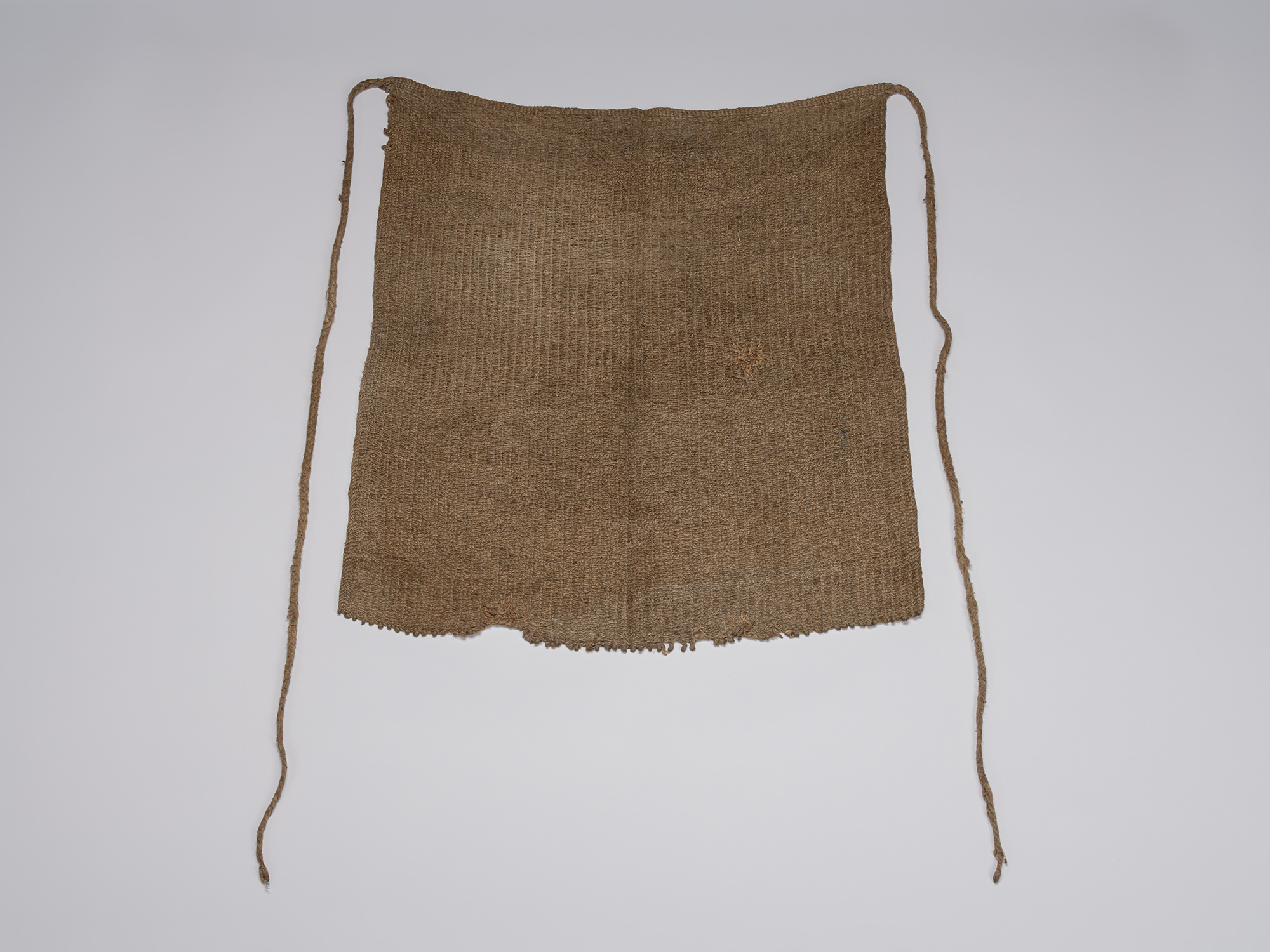
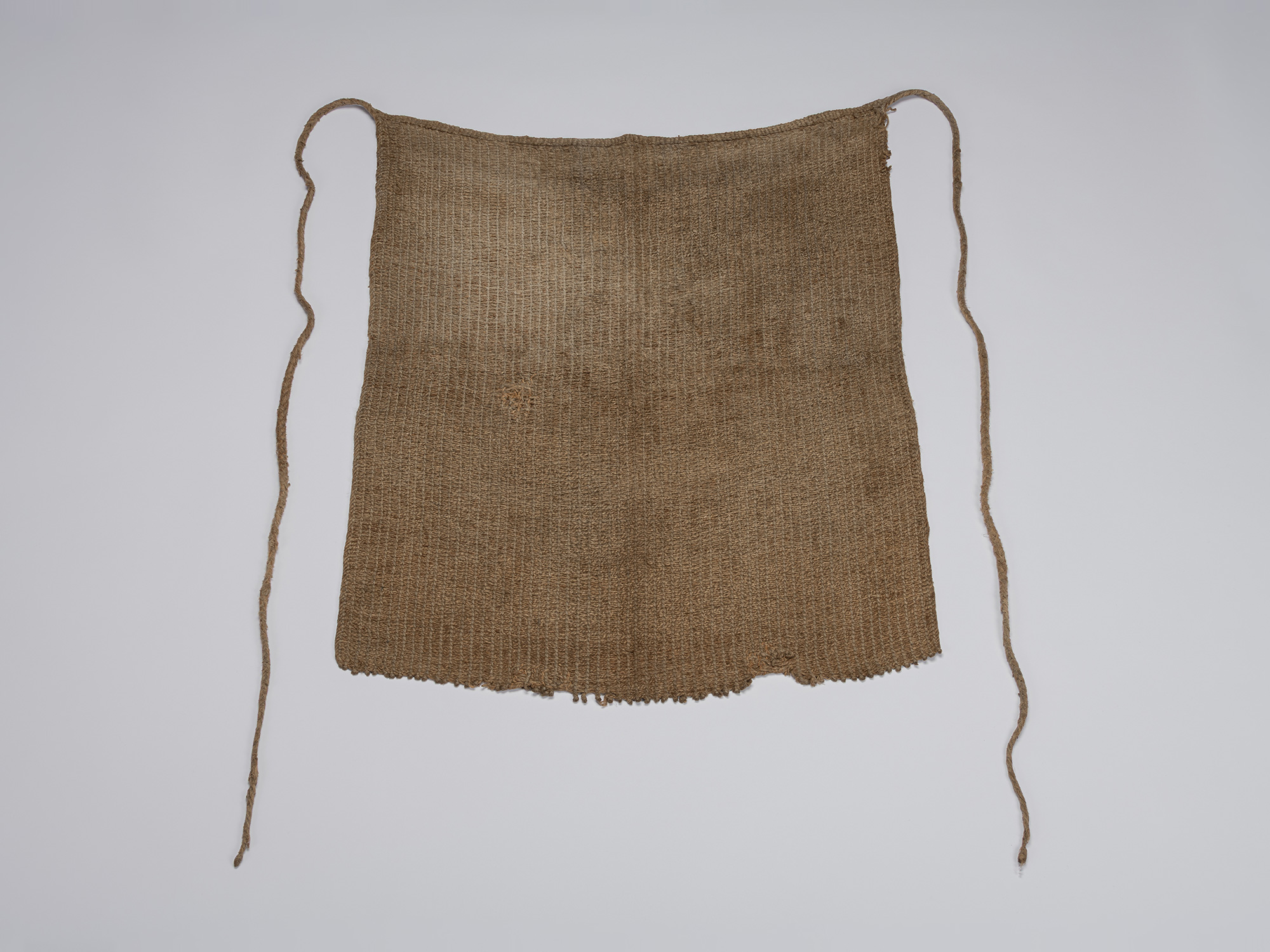
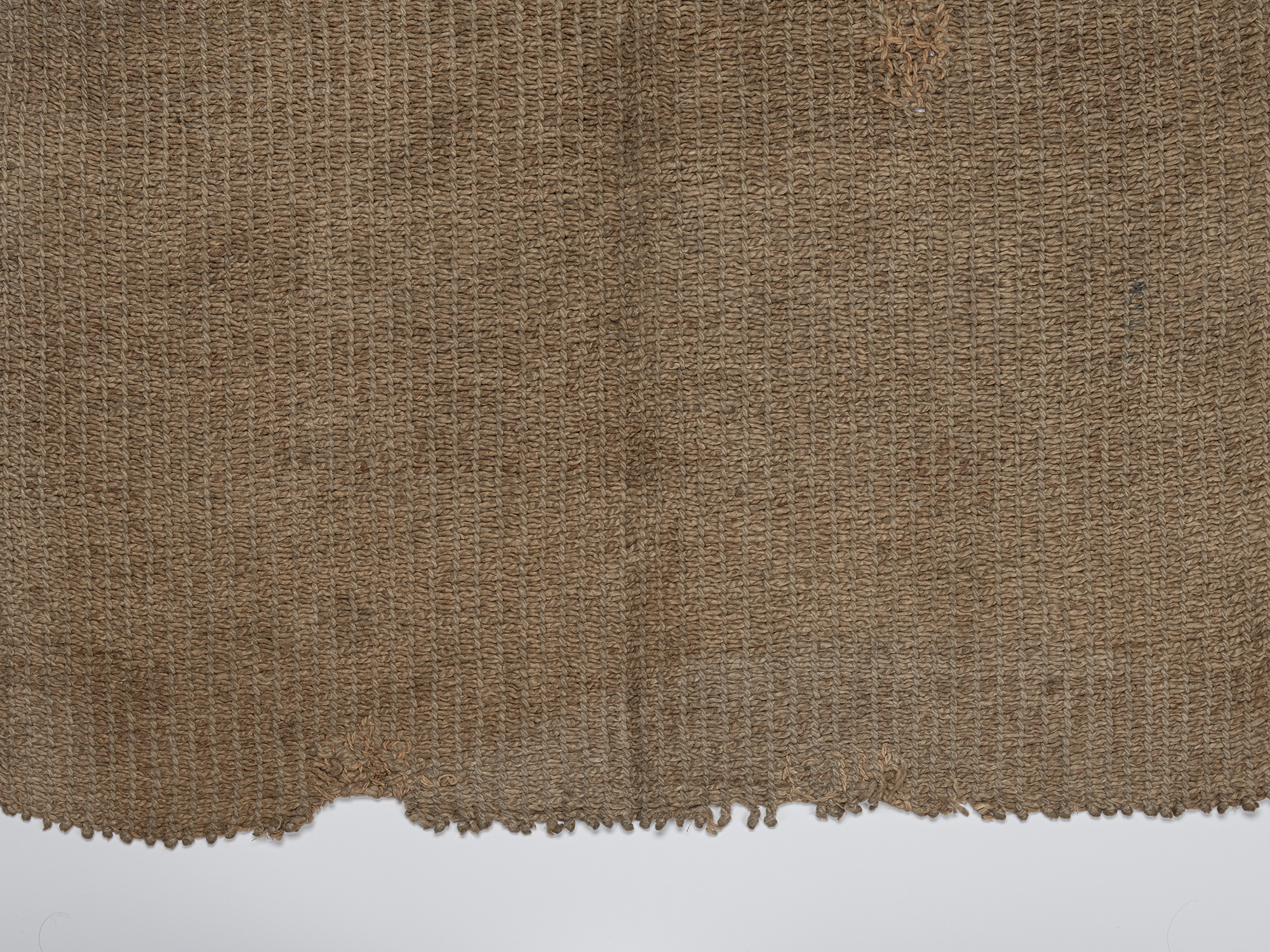
Dating to the late nineteenth or early twentieth century, this angin maekake (apron) is made from natural bast fiber using the distinctive open interlacing technique known as angin. The technique has ancient origins in Japan, with archaeological evidence of angin-type textiles dating to the Jōmon period. In more recent centuries, production was concentrated primarily in present-day Niigata Prefecture, where ramie, nettle, or a combination of the two provided fibers for these durable textiles.
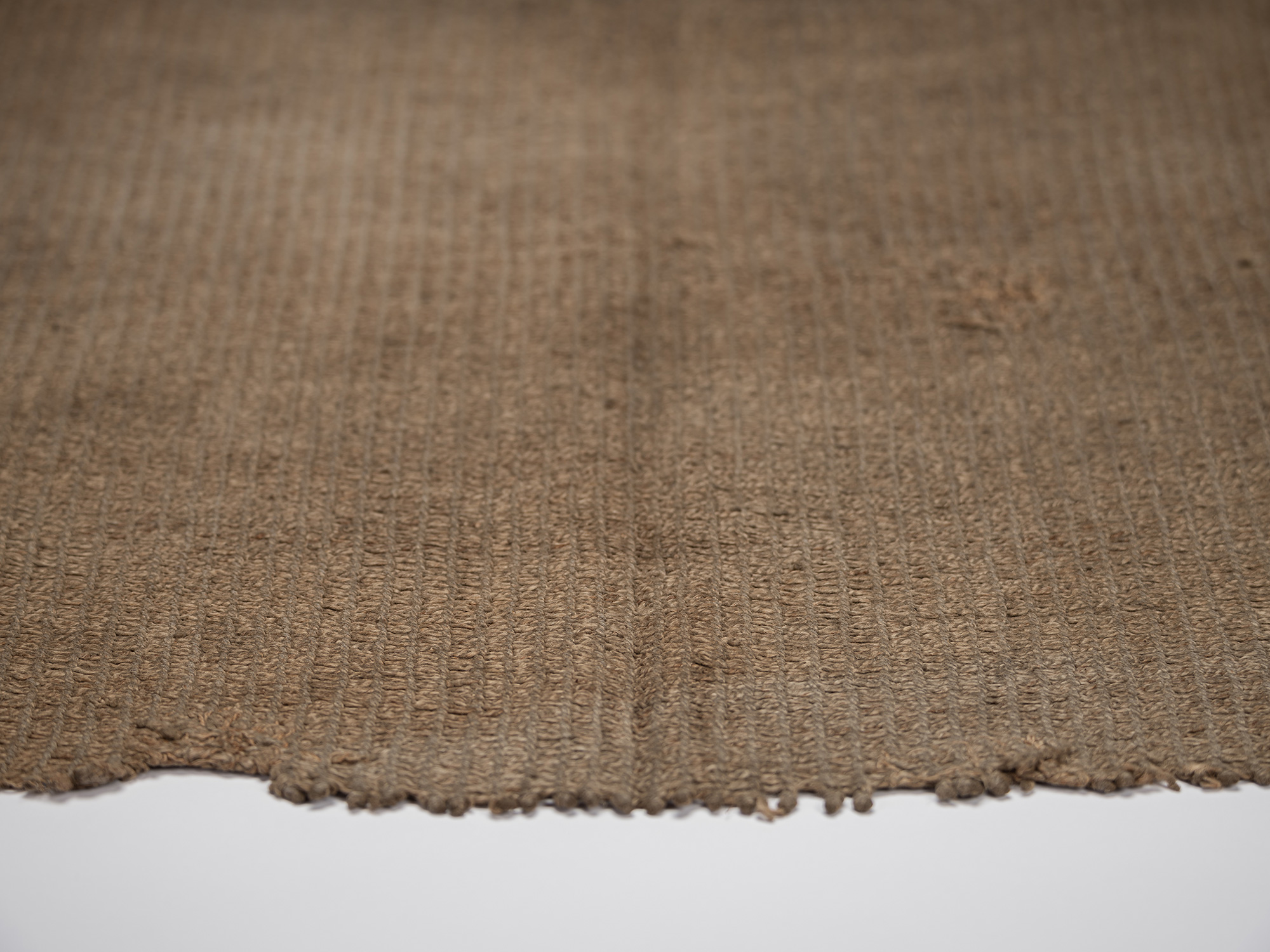
Maekake, or aprons, were practical garments worn by both children and adults throughout Japan, protecting clothing during work and everyday activities. This example retains the coarse, irregular texture characteristic of handworked bast fiber, with subtle variations in the weave revealing its method of construction. Particularly notable is the survival of both original ties, which remain intact. Its condition and completeness offer a rare example of an everyday textile tradition with roots extending far into Japan’s material history.