This site uses cookies to deliver a better site experience. View our Privacy Policy
Kamiko Surcoat


Kamiko Surcoat
Mulberry Bast Paper and Silk
- Category
- Dimensions45" x 54"
- Region
- Description
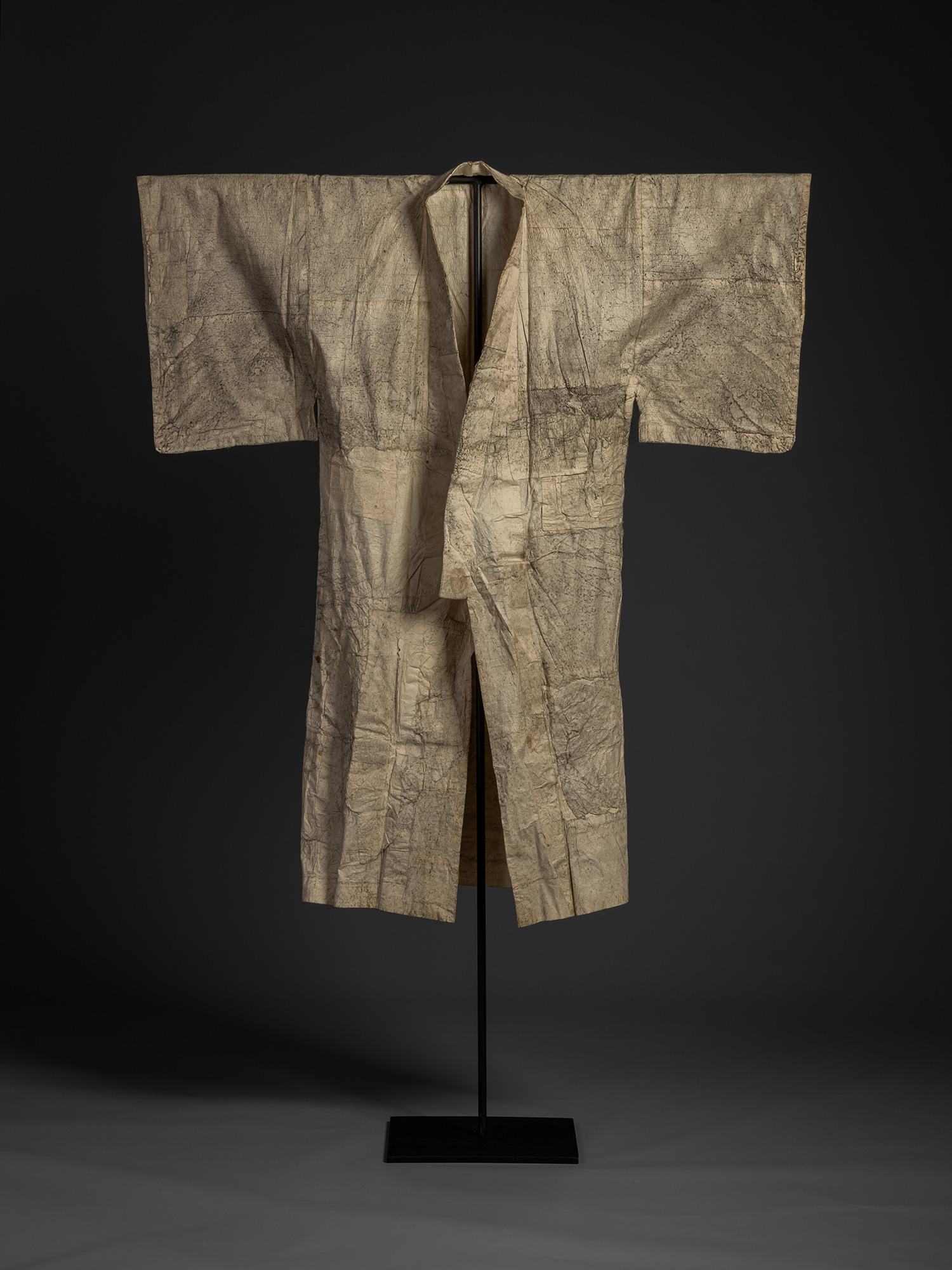
Kamiko, garments made from handmade paper, occupy a distinctive place in the history of Japanese textiles. Produced by treating sheets of paper with persimmon tannin and other finishing techniques to increase durability and flexibility, these garments were valued for their light weight, insulating properties, and resistance to insects. Because paper is inherently fragile, surviving examples are uncommon, making well-preserved kamiko garments particularly significant.
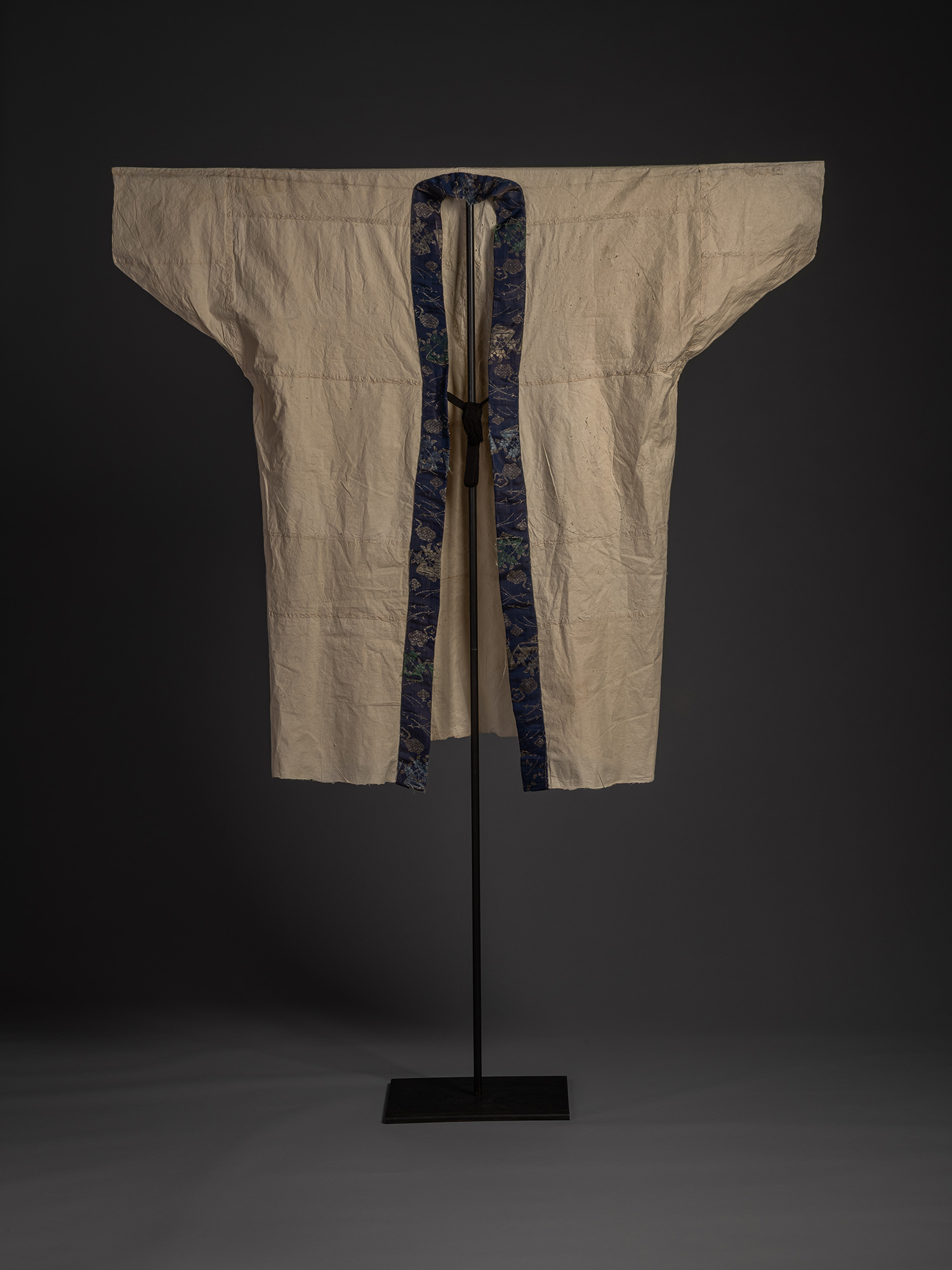
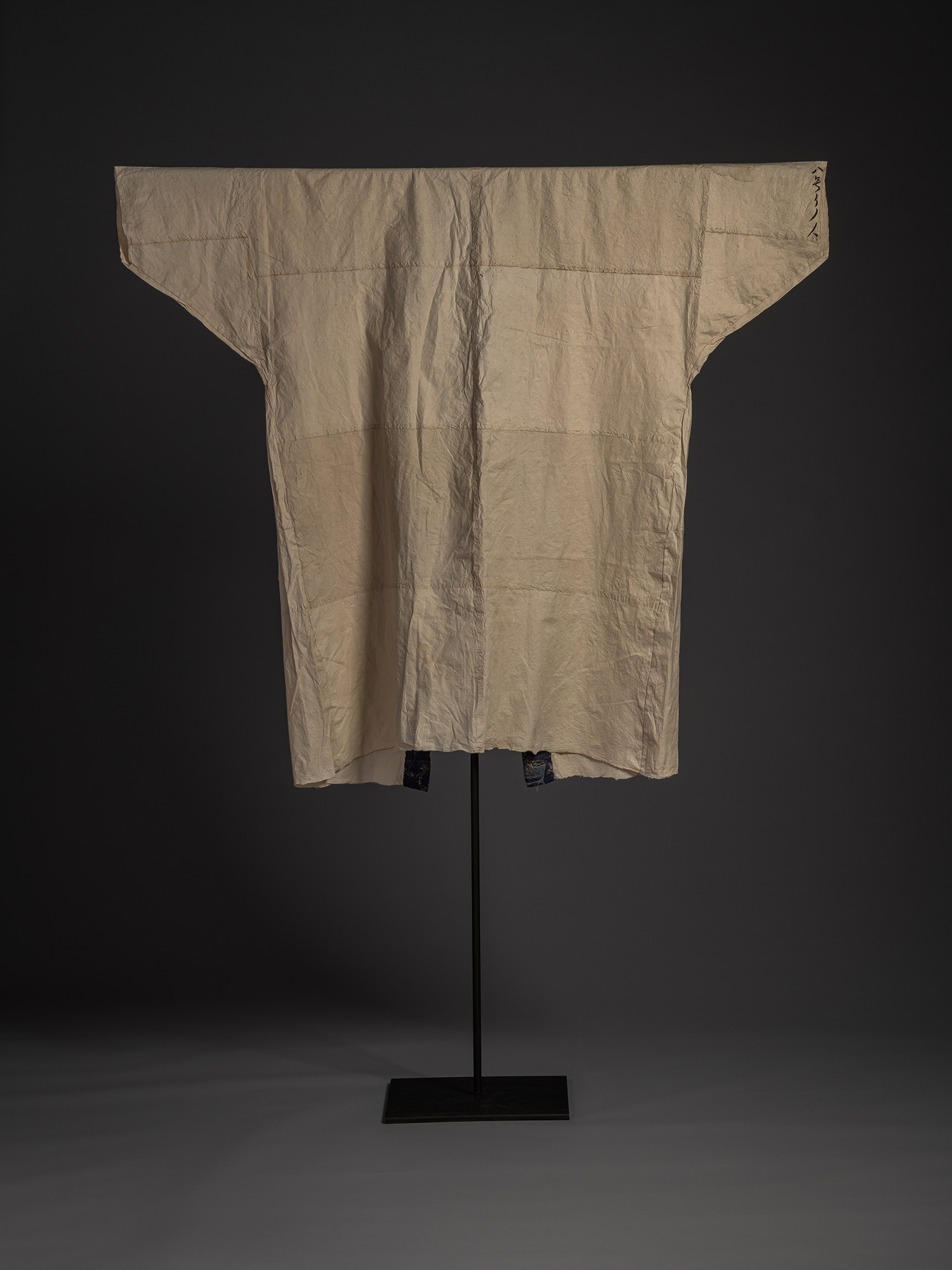
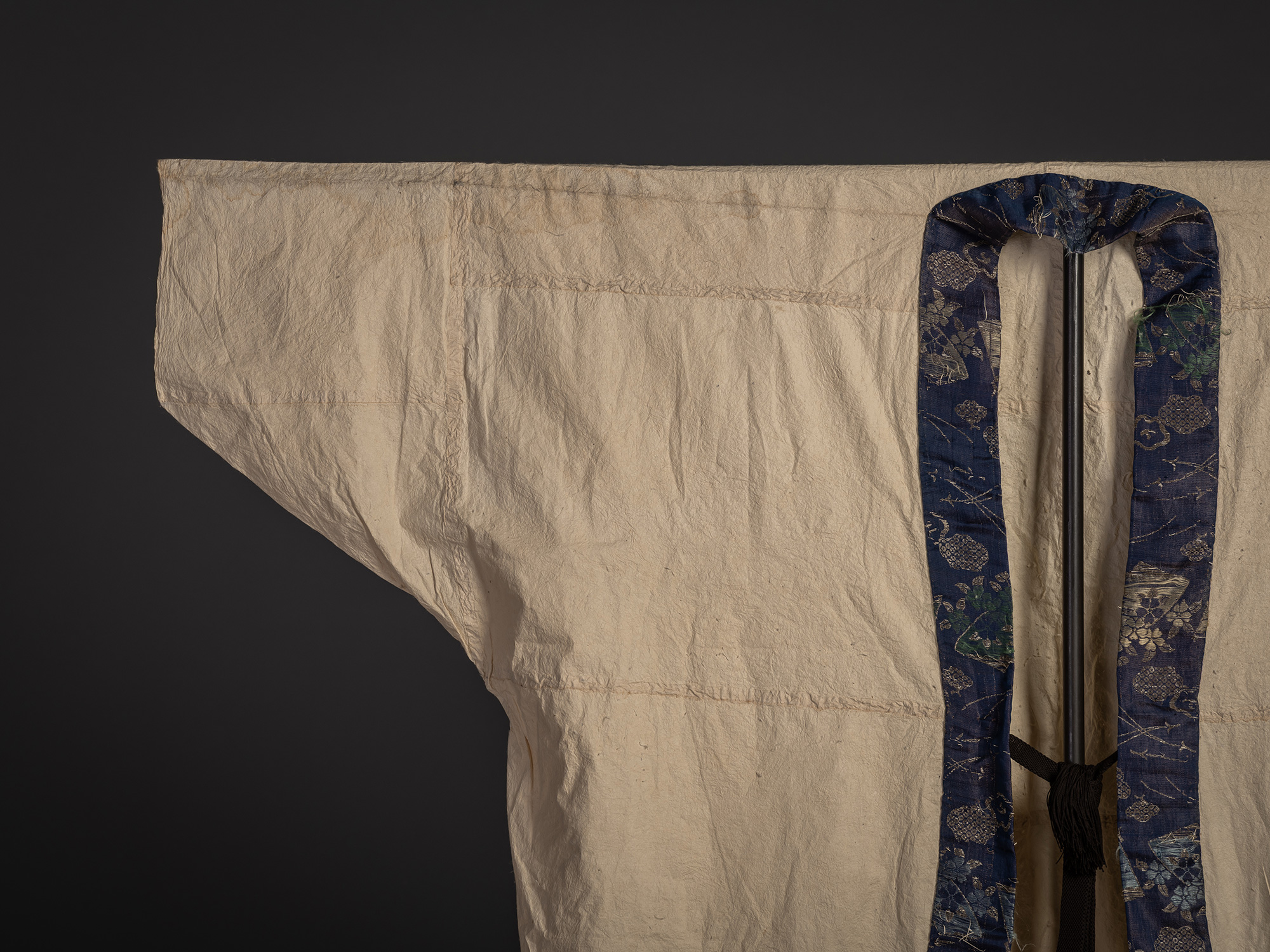
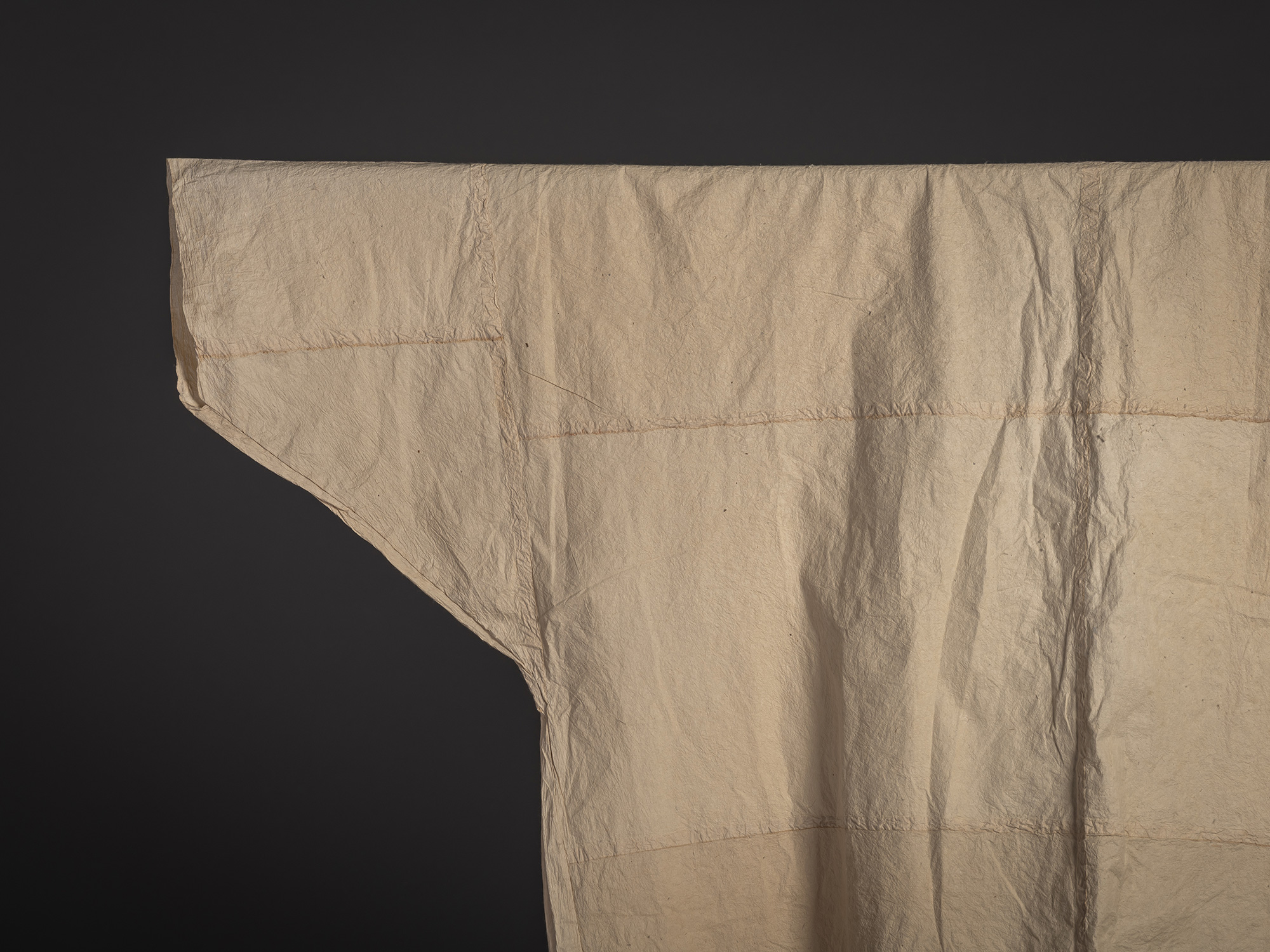
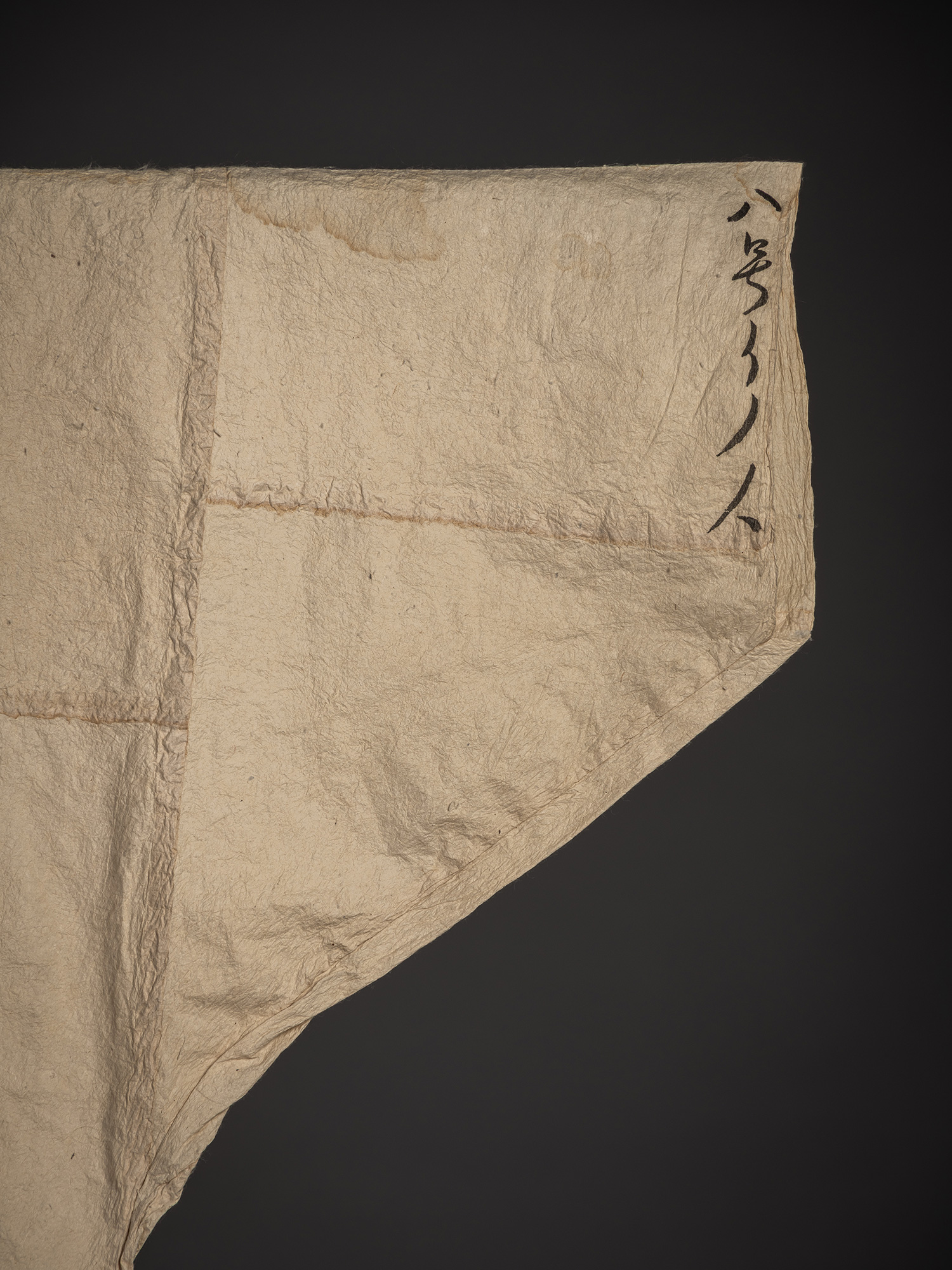
This Kamiko Surcoat is believed to have served as an outer garment for a Buddhist or Shinto priest. The garment possesses a commanding presence, its broad silhouette emphasizing both function and ceremonial dignity. Constructed from mulberry bast paper, the surface retains a remarkable suppleness despite its age, with visible fibers, creases, and joined panels revealing the material’s handmade character. Notably, the seams are bonded with rice paste rather than stitching, a traditional method that demonstrates the specialized techniques employed in paper garment construction.
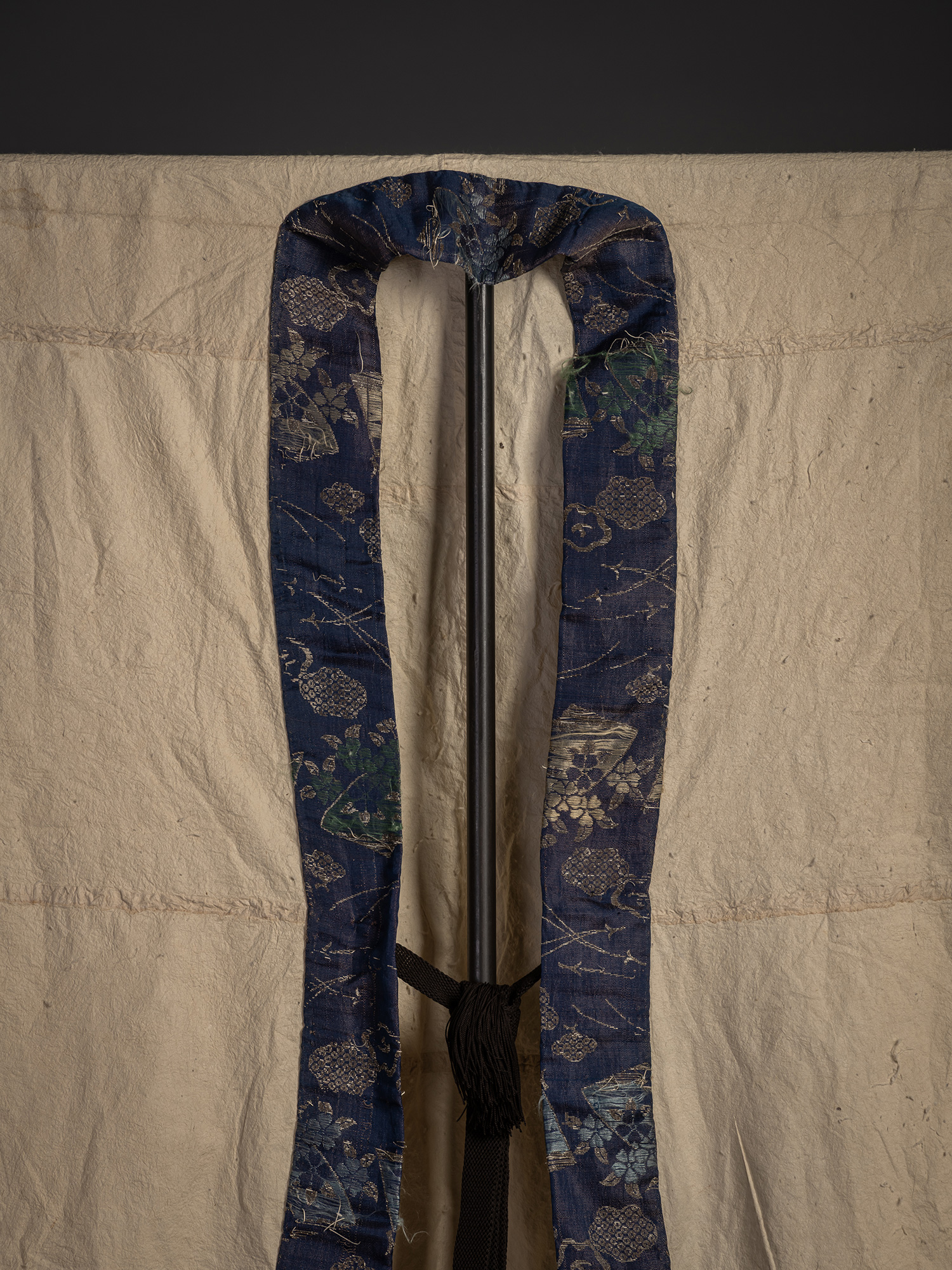
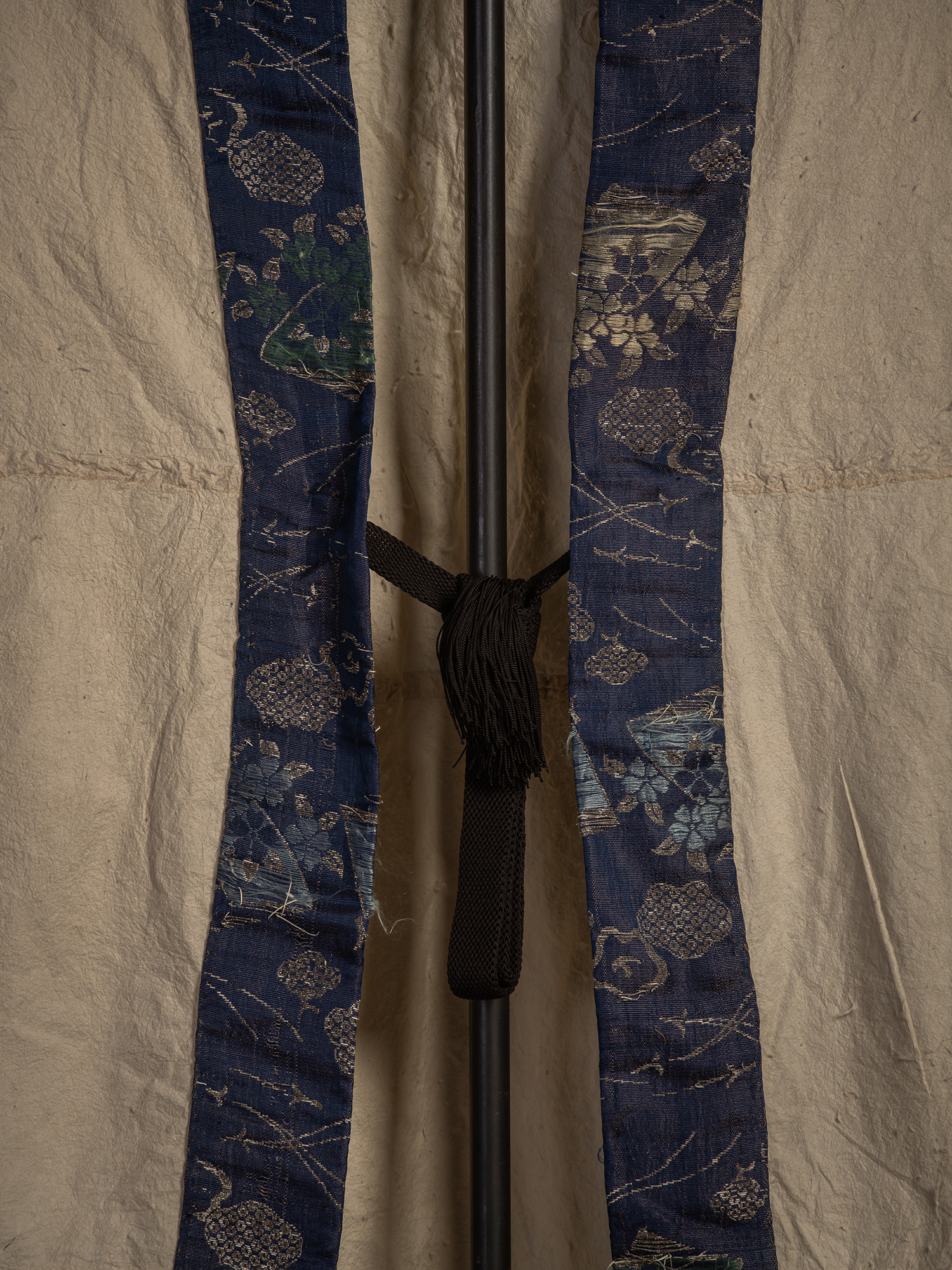
The deep blue silk brocade collar, woven with decorative motifs, dates to the Edo period and is thought to be contemporary with the garment itself. Rich in age yet exceptionally well preserved, the surcoat survives without holes or significant staining. Its rarity, scale, and condition offer a compelling example of Japan’s inventive use of humble materials transformed into garments of remarkable refinement and cultural importance.
- Photo CreditJames Lane