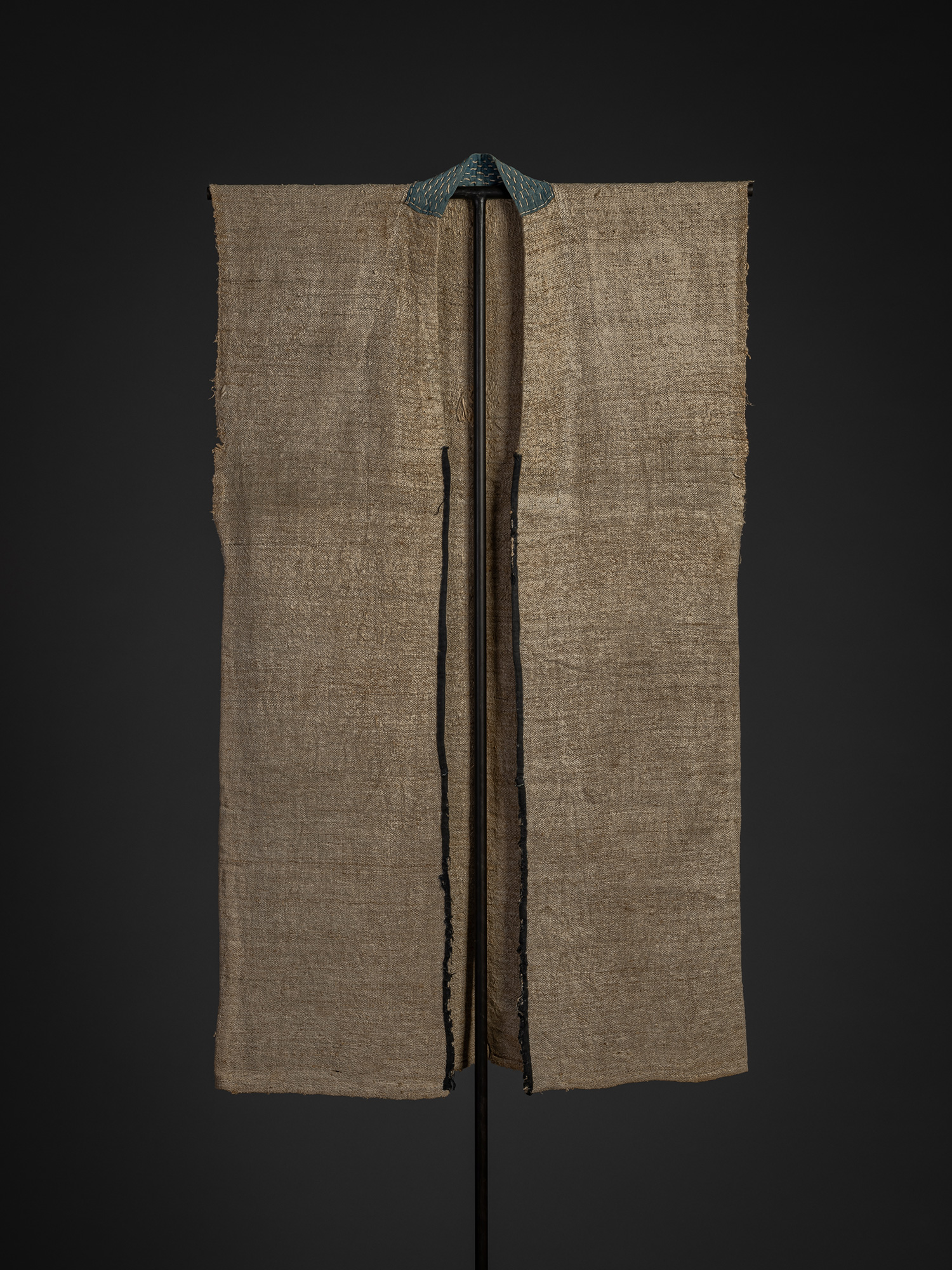
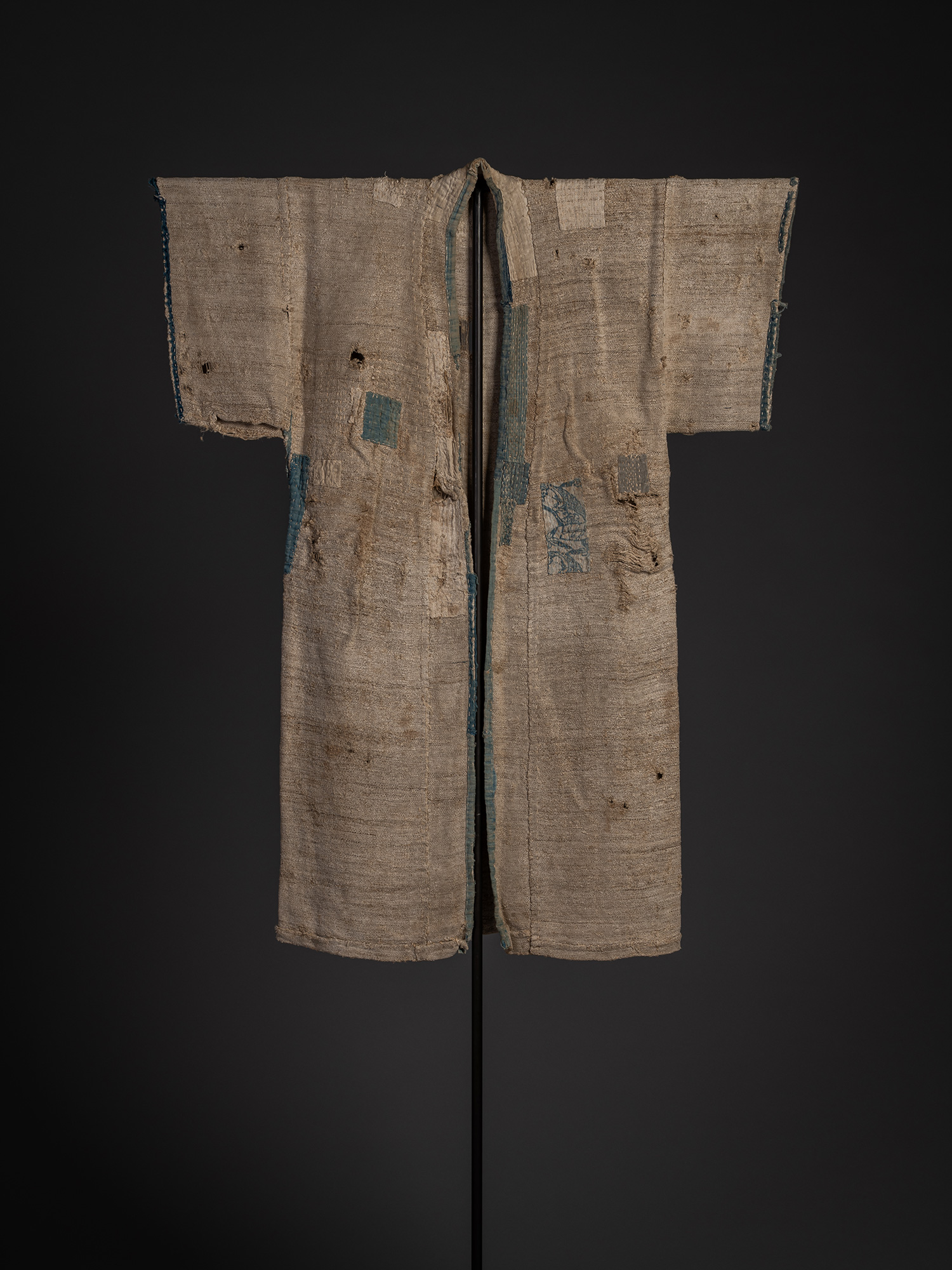
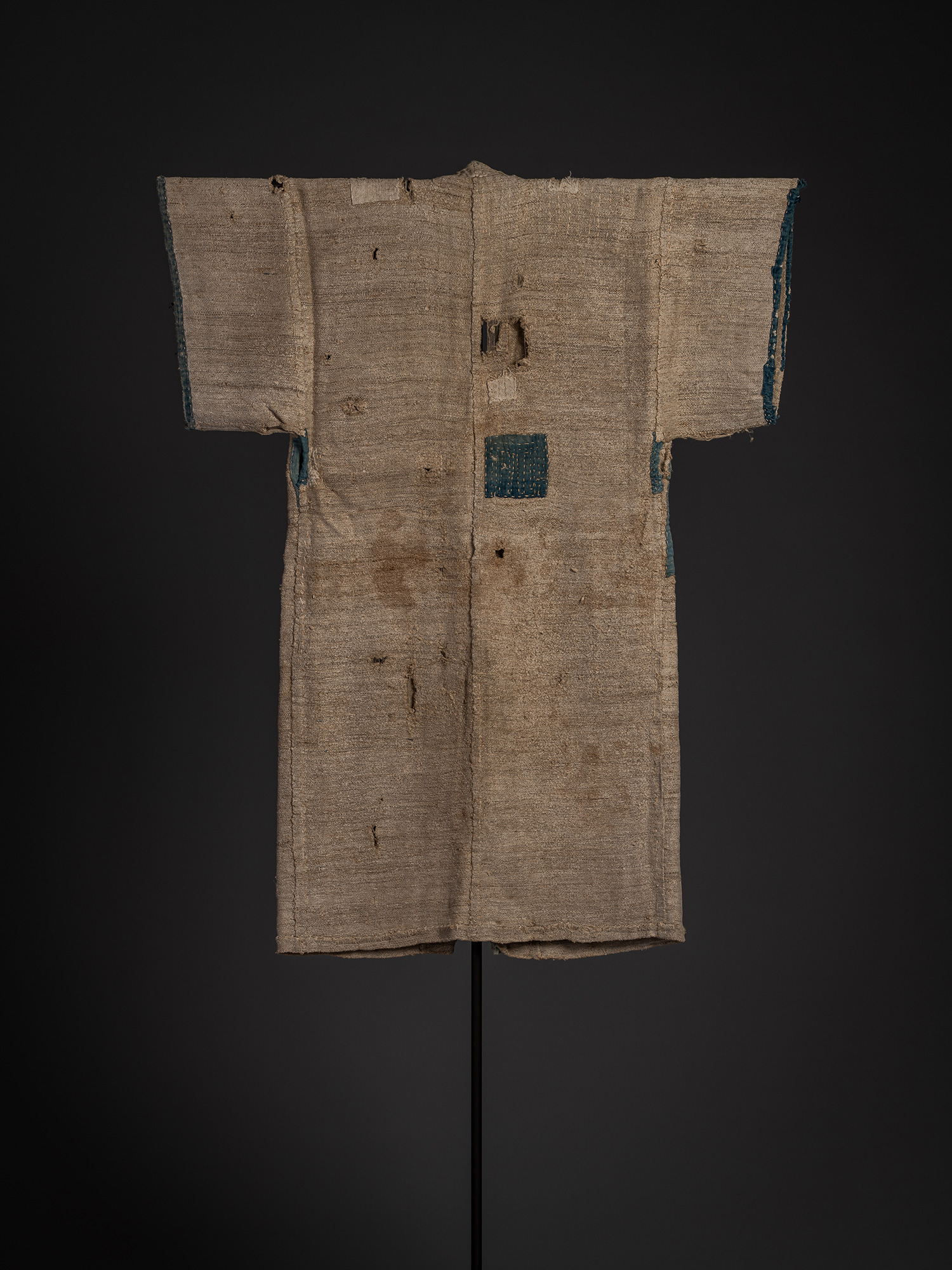
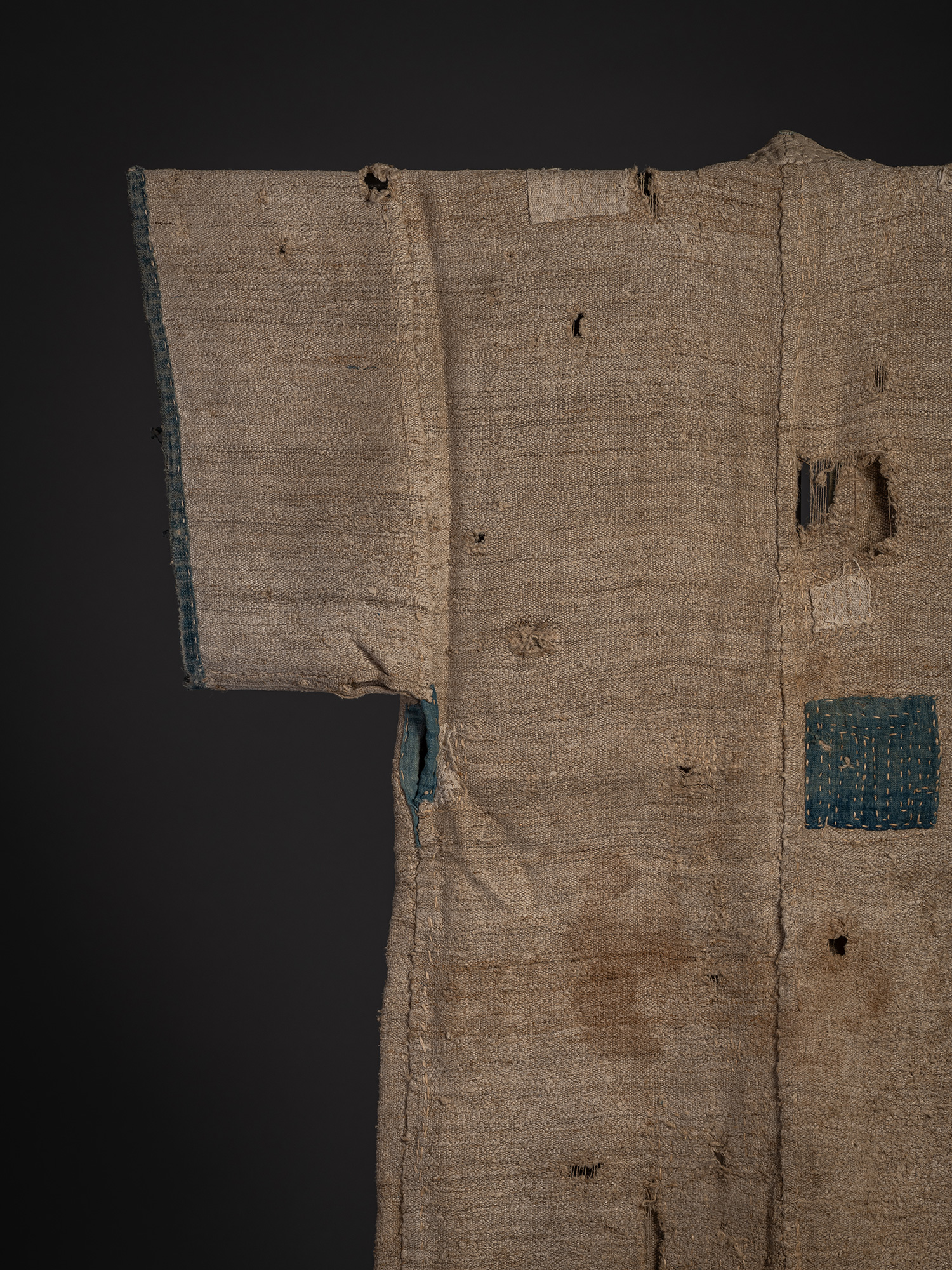
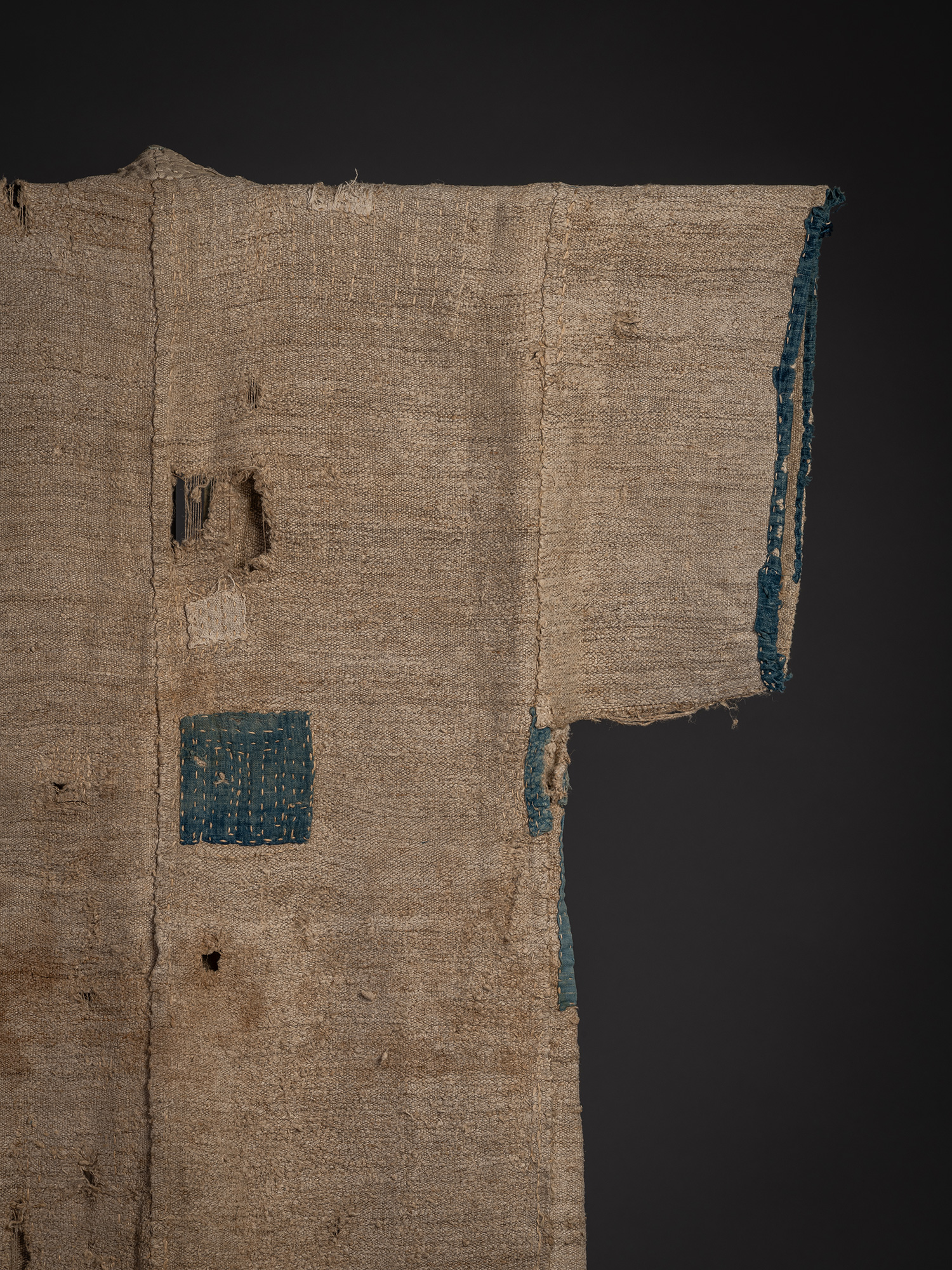
Okusozakkuri are garments woven from okuso, the coarse bast-fiber waste left behind during the production of fine hemp yarn. While hemp was most commonly used, fibers from wisteria, ramie, and nettle were also incorporated into such textiles. Inferior or damaged fibers that could not be spun into high-quality thread were instead processed into a rough, durable yarn, creating cloth suited to the demands of everyday labor.
Produced primarily along Japan’s northern coast, particularly in the regions that are now Fukui, Toyama, and Niigata Prefectures, okusozakkuri were valued for their strength and resilience. Their dense, coarse weave provided protection against thorns, vines, and underbrush, making them well suited for work in fields and mountain landscapes.
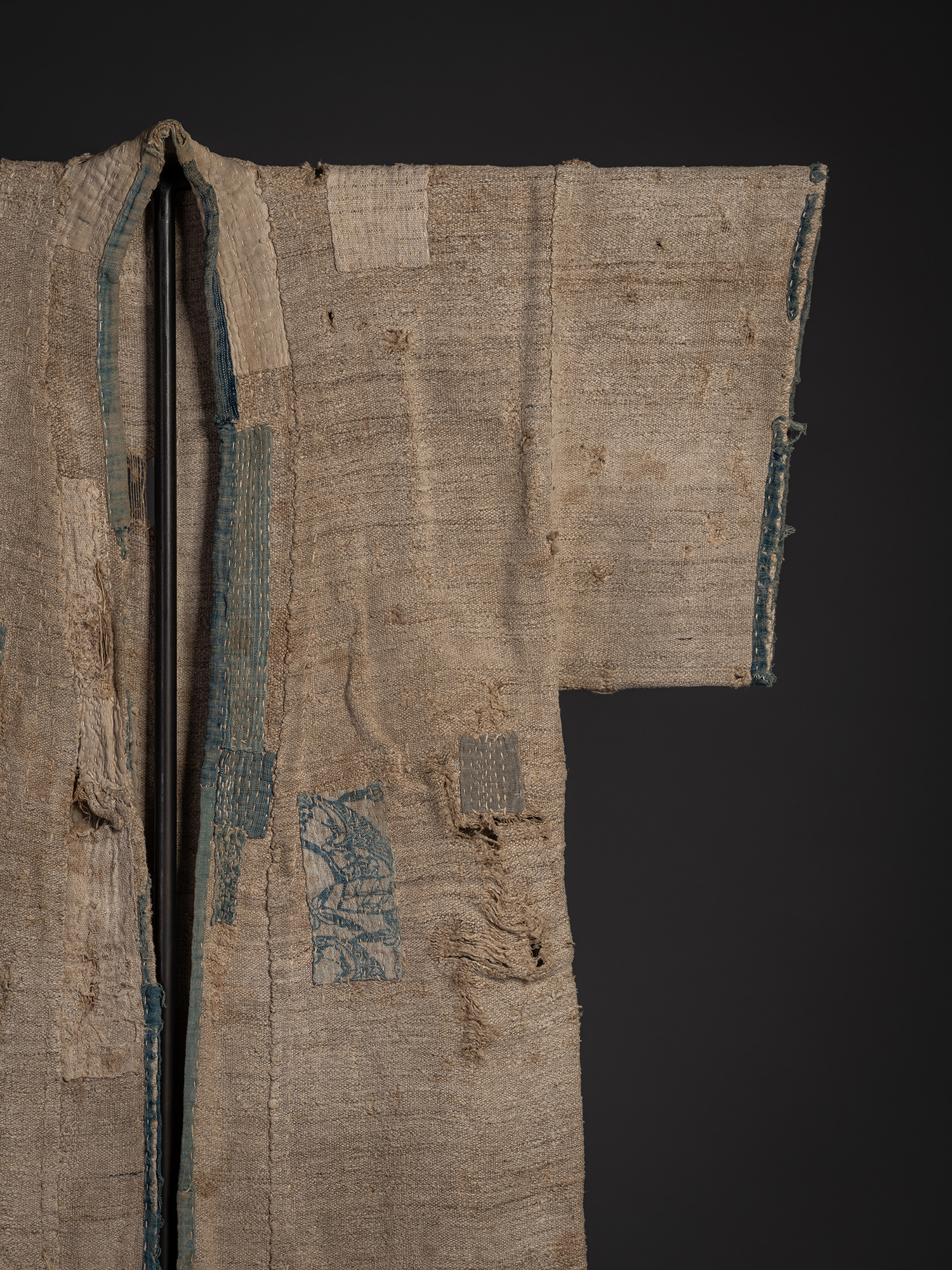
This late nineteenth-century example bears extensive evidence of use and repair. Pale indigo-dyed cotton strips reinforce the garment’s edges, while patches of cotton cloth (including a fragment of blue-and-white katazome (stencil-resist dyed) fabric) have been carefully applied to areas of wear.
At a time when cotton remained relatively scarce in many rural communities, such repairs served both practical and aesthetic purposes. Together, the garment’s materials, construction, and accumulated mends preserve a tangible record of how clothing was made, maintained, and valued in nineteenth-century Japan.
Exhibitions
Japão a Cru, Boro: O Tecido da Vida, Museu do Design e da Moda, Lisbon, Portugal
Boro: Stoffe des Lebens, Museum für Ostasiatische Kunst, Cologne, Germany