This site uses cookies to deliver a better site experience. View our Privacy Policy
Okusozakkuri Sodenashi


Okusozakkuri Sodenashi
Hemp and Indigo Dyed Cotton
- Category
- Region
- Description
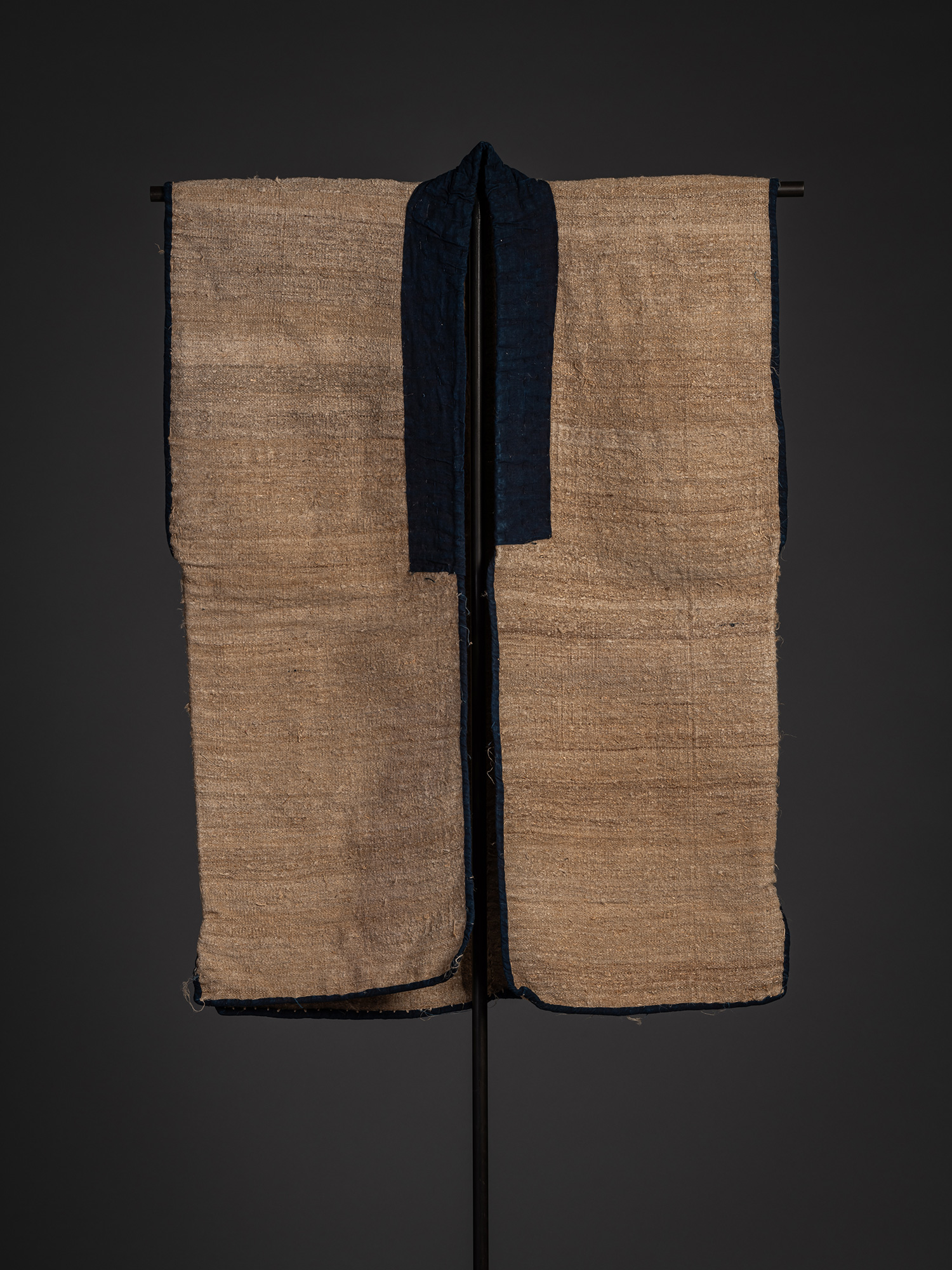
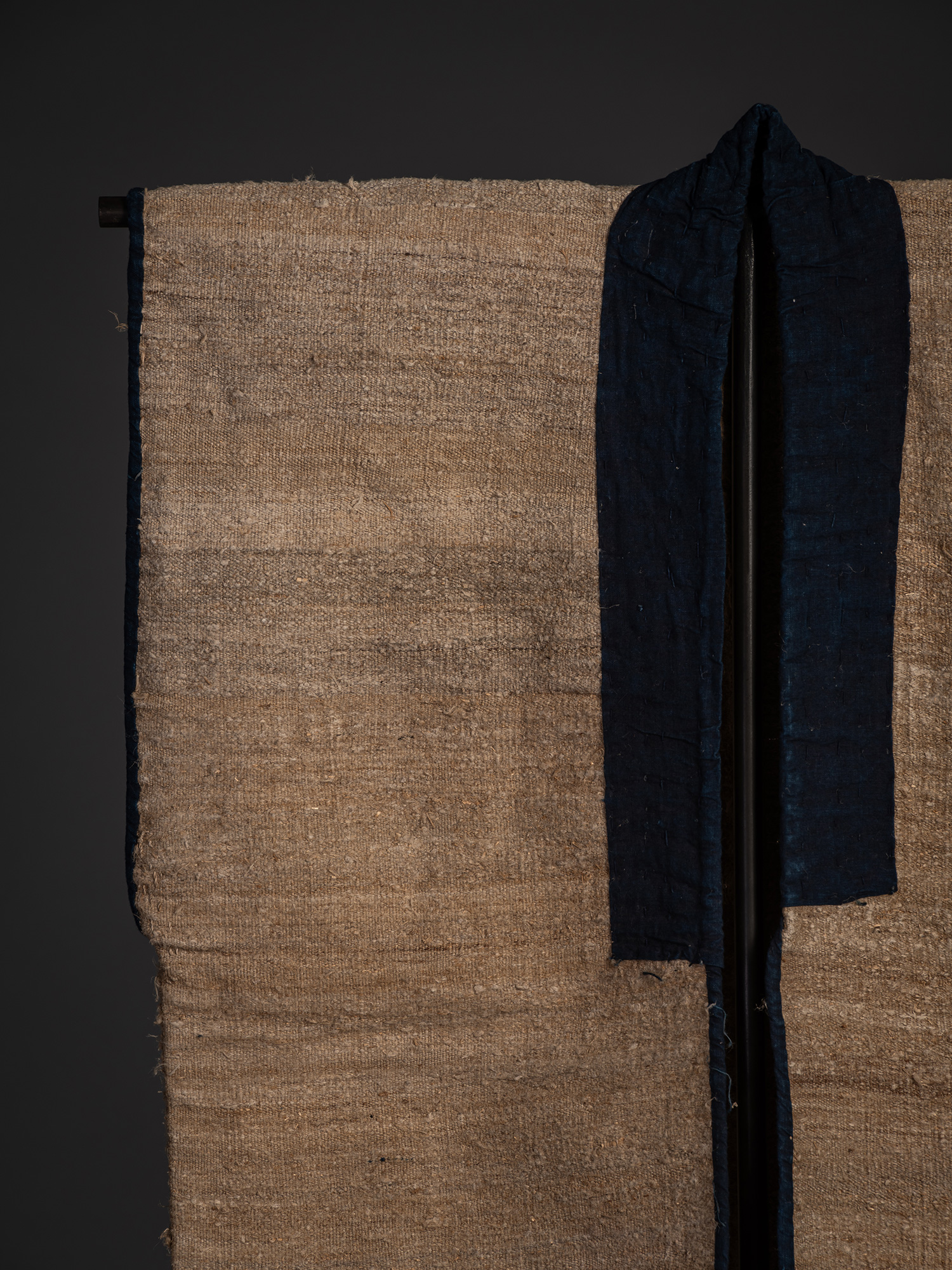
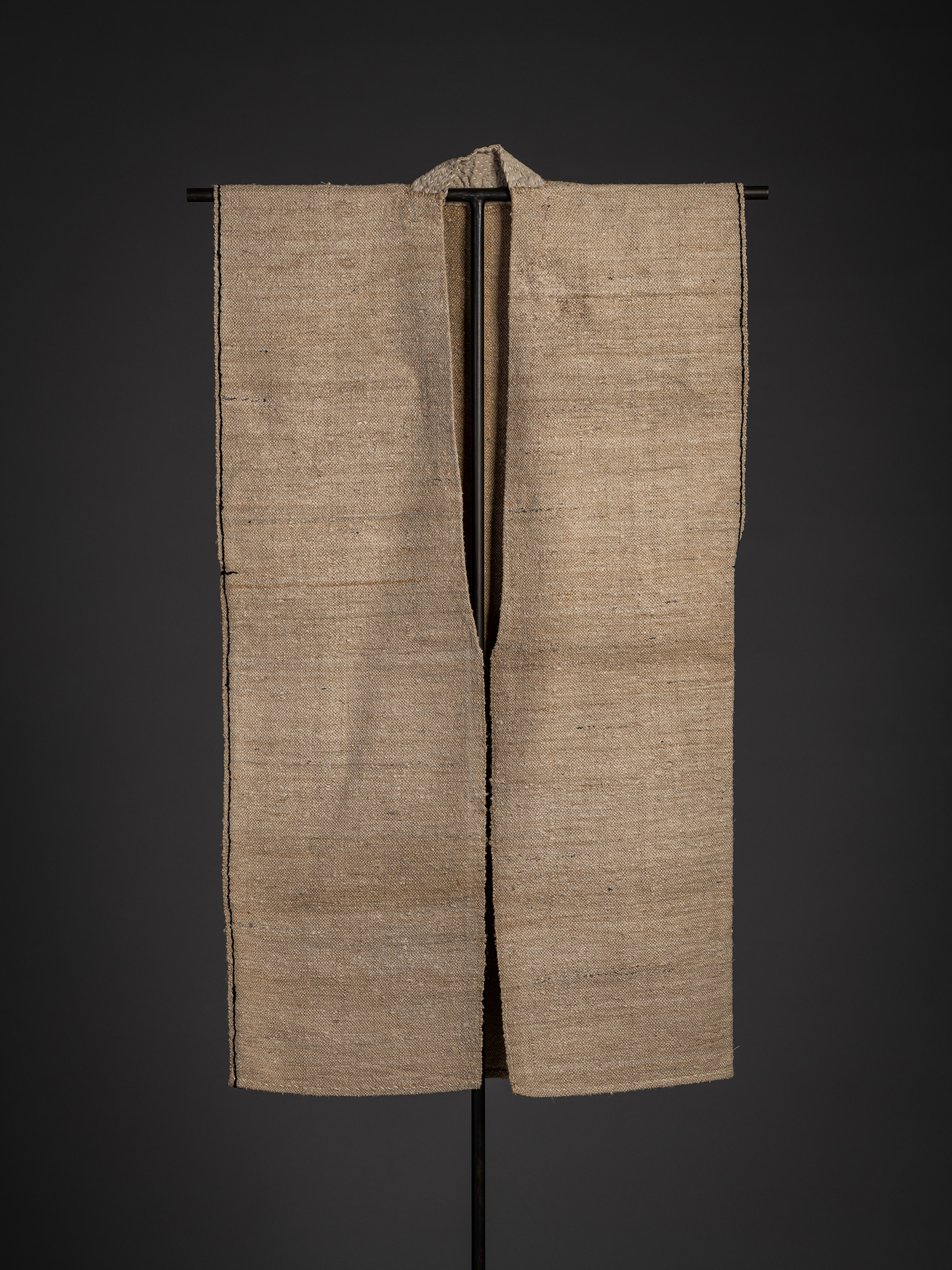
This Okusozakkuri Sodenashi is an exceptional example of traditional Japanese rural workwear, distinguished by its dense bast-fiber weave, restrained construction, and remarkable state of preservation. Sodenashi, meaning “without sleeves,” describes a garment intentionally made sleeveless rather than one with removable sleeves. Every edge is finished with deep indigo-dyed cotton binding, indicating that the garment was designed from the outset to be worn in this form.
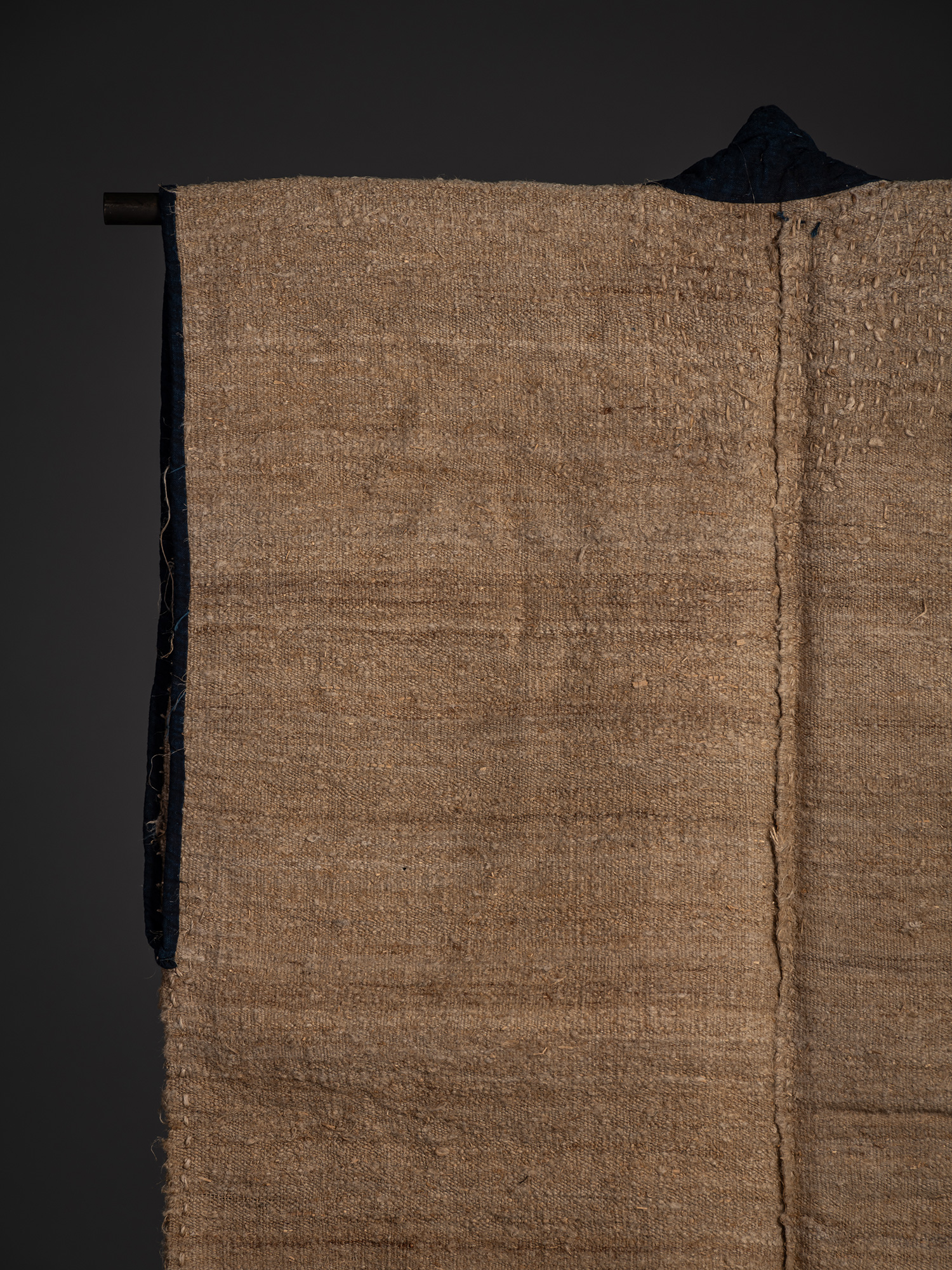
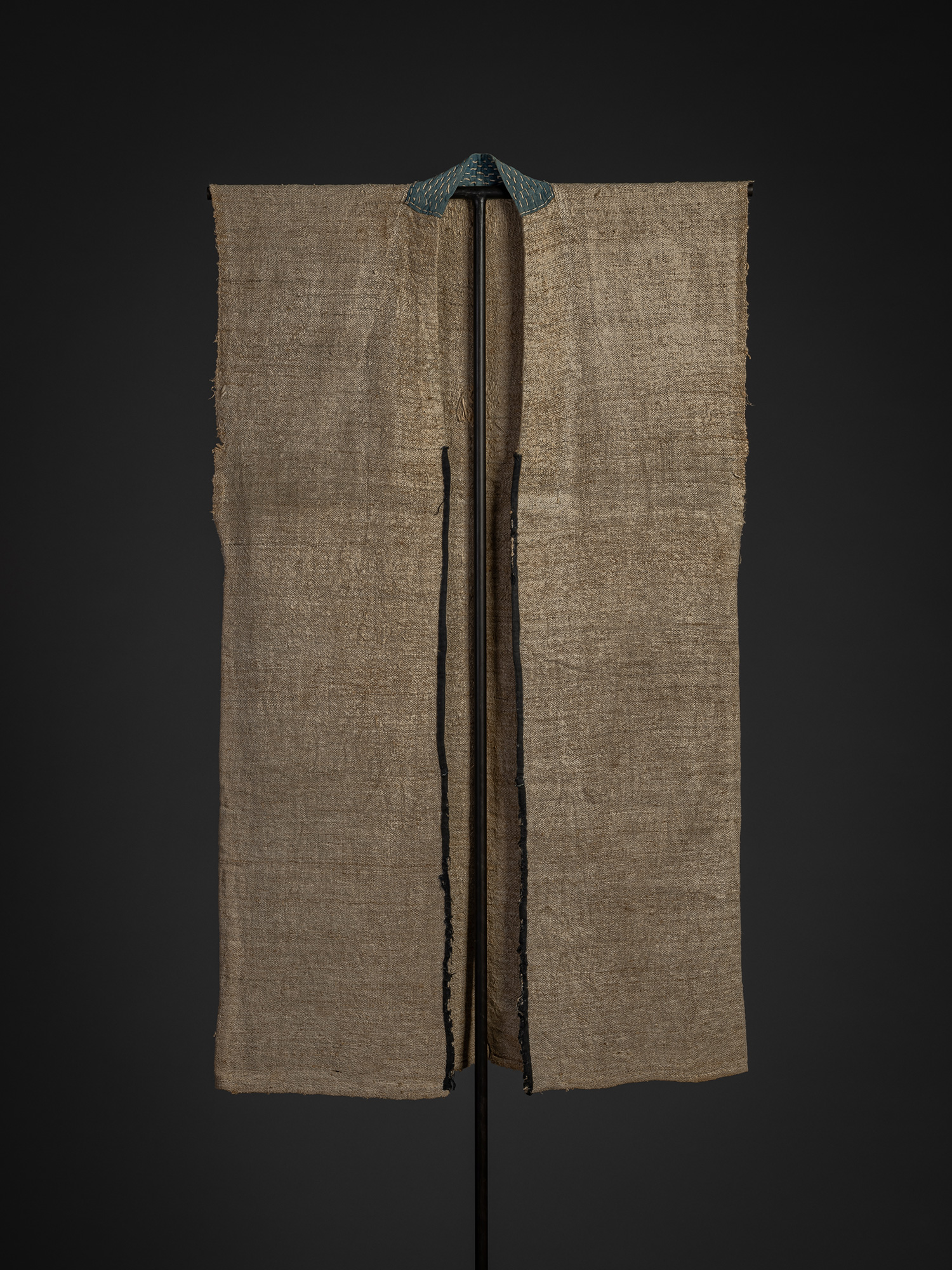
The finely woven bast fiber textile demonstrates the considerable skill required to produce durable clothing from locally available materials. Its robust weave and careful finishing reflect the time and labor invested in its creation, while the contrast between the natural fiber body and indigo trim lends the garment a quiet visual sophistication. Particularly noteworthy are the carefully executed stitches at the nape of the neck, a subtle detail that further reflects the maker’s attention to quality and finish.
Unlike most surviving examples of rural workwear, this garment shows little evidence of use. Its pristine condition suggests it may have been reserved for special occasions or completed just as commercially produced clothing became more readily available, leaving it unworn. Whatever its history, the garment survives as an unusually well-preserved example of vernacular Japanese textile craftsmanship.
- Photo CreditJames Lane