Raku Collection
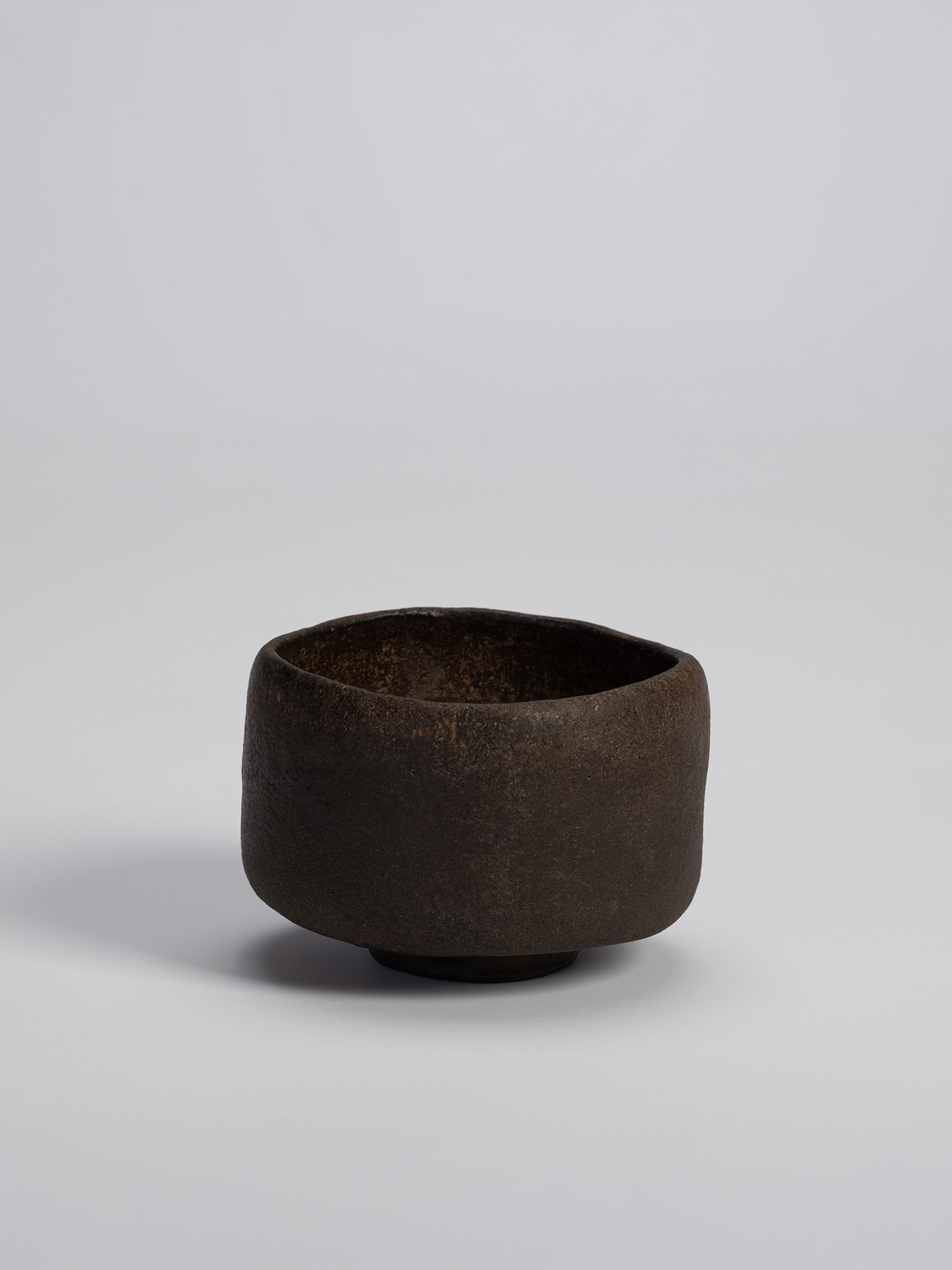
Raku Collection
Few artistic traditions have shaped the cultural identity of Japan as profoundly as Raku. For more than four and a half centuries, sixteen successive generations of the Raku family have explored a single aesthetic question first posed in late sixteenth-century Kyoto: How might a humble hand-formed tea bowl embody the philosophical ideals of wabi (simplicity, intimacy, restraint, and quiet contemplation)? Born from the collaboration between the potter Chōjirō and the tea master Sen Rikyū, Raku elevated the tea bowl from a utilitarian vessel into one of Japan’s most quietly influential artistic and spiritual forms. As Japan negotiated its place in the modern world, chanoyu (Japanese tea culture) came to occupy an increasingly important role as an expression of national identity in relation to the West, and Raku tea bowls assumed a corresponding place as enduring embodiments of Japanese aesthetic thought.
Through the isshi sōden tradition (the transmission of artistic knowledge to a single successor) the Raku lineage has remained unbroken for more than 450 years, making it one of the world’s longest continuous artistic dynasties. Rather than preserving a fixed style, each hereditary head was expected to reinterpret the tradition in response to his own time, ensuring that continuity arose through philosophy rather than repetition.
The Trahan Raku Collection presents an opportunity to consider this remarkable lineage as a continuous artistic conversation rather than as a sequence of isolated masterpieces. Encompassing works from nine of the sixteen Raku Kichizaemon masters, the collection traces the aesthetic evolution within a single family. Viewed together, these works reveal how individual masters confronted the same essential questions of form, surface, proportion, and spiritual presence while arriving at distinctly artistic solutions. Together, these works remind us that tradition is not the preservation of the past, but its continual reimagining.
Fondation Trahan is committed to advancing public access to our internationally recognized collection by lending artworks to accredited museums and galleries around the world. The Foundation collaborates with exhibiting venues to share works that illuminate pivotal histories of material, form, and cultural exchange. By making these works available for loan, the Foundation supports exhibitions and research that spark creativity, promotes cross-cultural and understanding, broadens visibility of the artists in our collection, and offers fresh insight to the fields in which we collect.
To ensure meaningful presentation, all loan requests must be submitted at least three months prior to an exhibition’s opening. Institutions are invited to begin the process through the online request form.
To request permission to reproduce or obtain images held by Fondation Trahan, please complete the request form. Image usage is reviewed on a case-by-case basis and subject to approval.