This site uses cookies to deliver a better site experience. View our Privacy Policy
RAKU Chōjirō I
circa b. 1516 - d. 1589
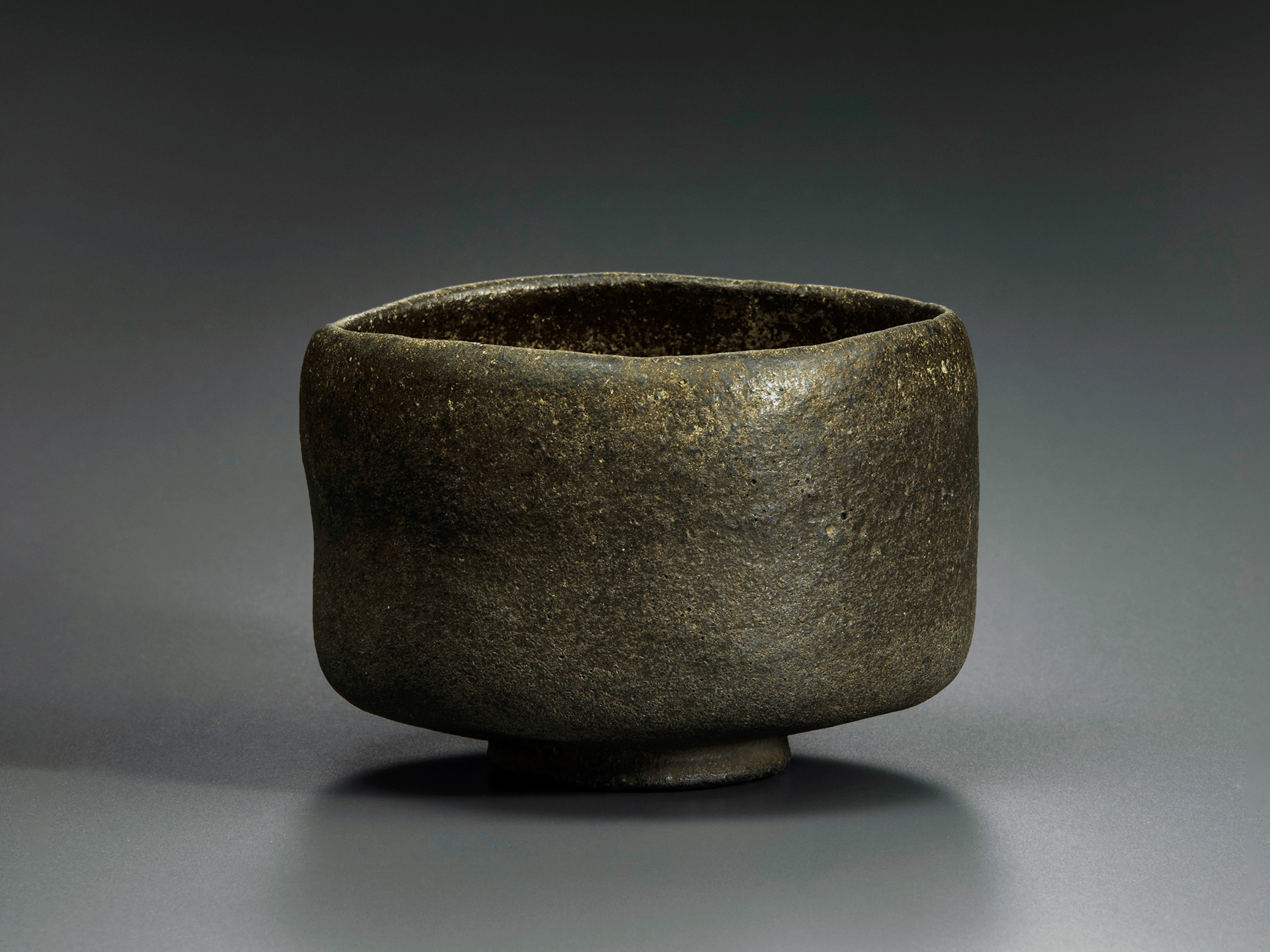
Chōjirō, founder of the Raku tradition, stands as one of the most influential figures in Japanese history. Born to Ameya, a potter from Fujian, China, and his wife Teirin, he inherited a deep knowledge of firing techniques that later shaped his own groundbreaking approach. His talent was first recognized while producing ridge tiles for Toyotomi Hideyoshi’s Jurakudai Palace in 1574, a commission that brought him into the orbit of Sen no Rikyū, the seminal tea master who revolutionized chanoyu through the wabi-cha aesthetic of simplicity, tranquility, and humility.
At Rikyū’s request, Chōjirō created a new kind of tea bowl, hand-molded rather than wheel-thrown, unadorned, and finished in striking monochrome red or black. These humble yet spiritually resonant vessels embodied wabi ideals and became the avant-garde of their time. So admired were Chōjirō’s creations that in 1584 Hideyoshi awarded him a golden seal inscribed with 楽 (raku), meaning pleasure and contentment, establishing the Raku family name and marking the birth of a dynasty defined by intimate collaboration between potter, patron, nature, and the philosophy of tea.
Work by Artist