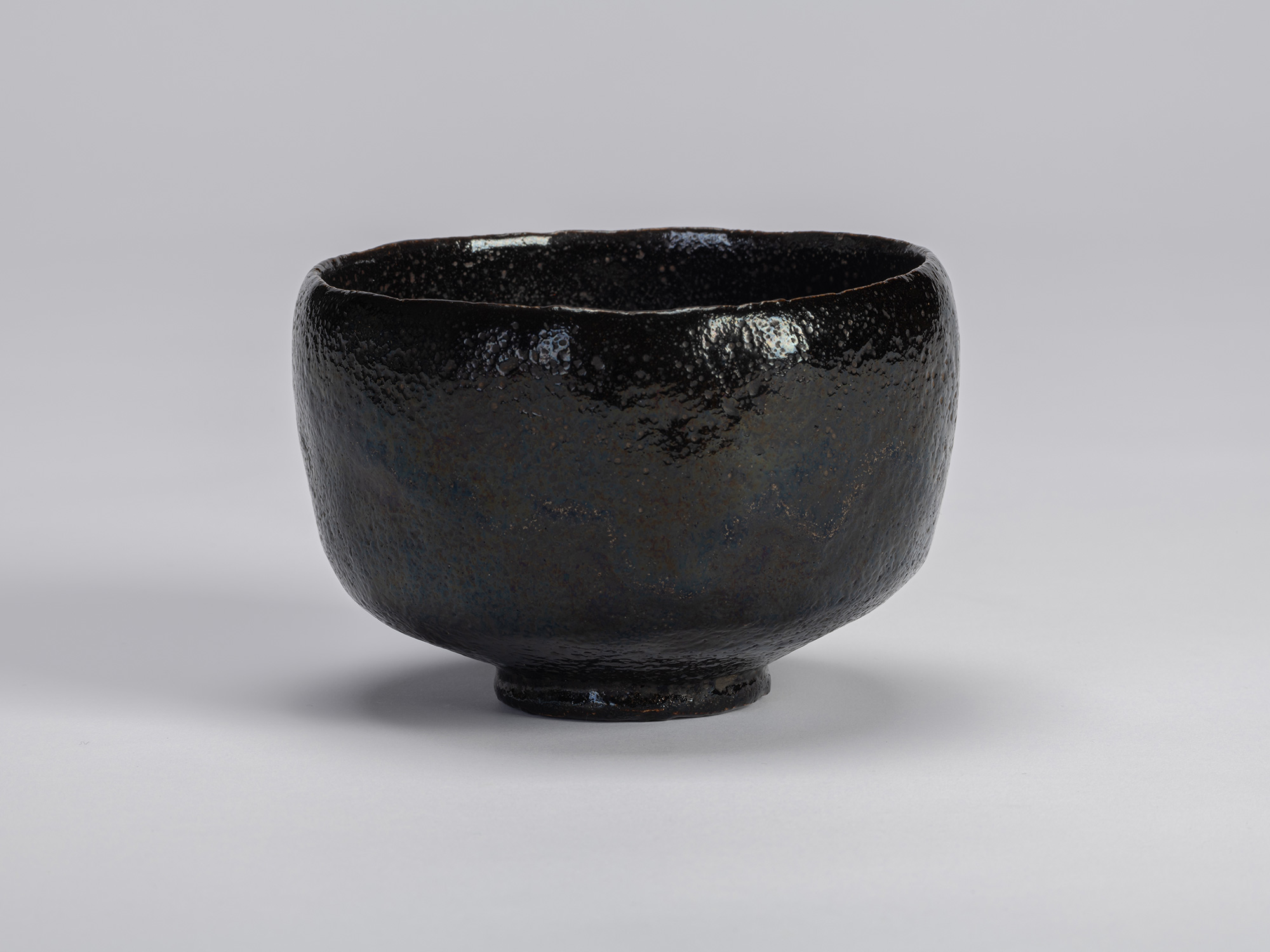
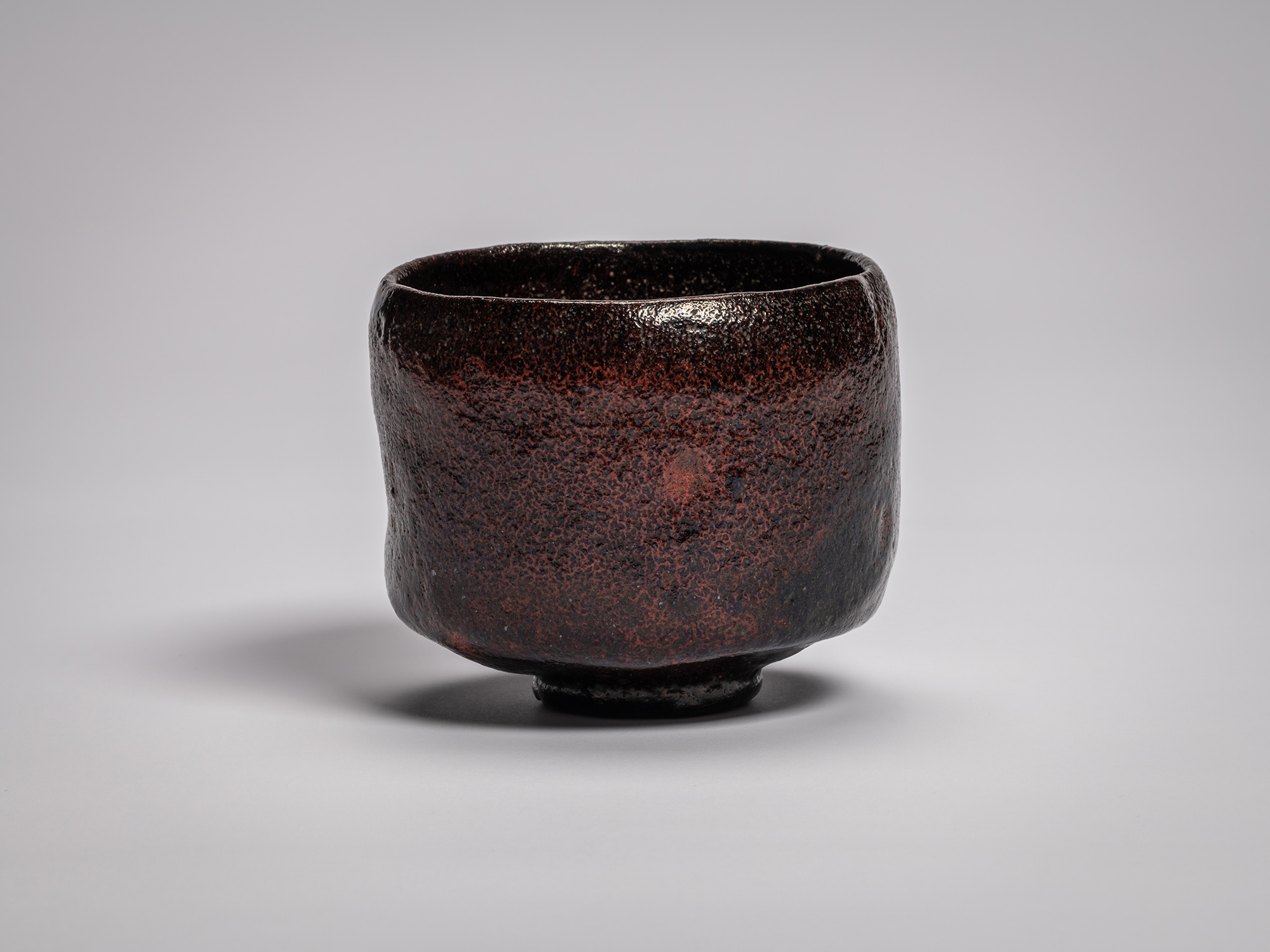
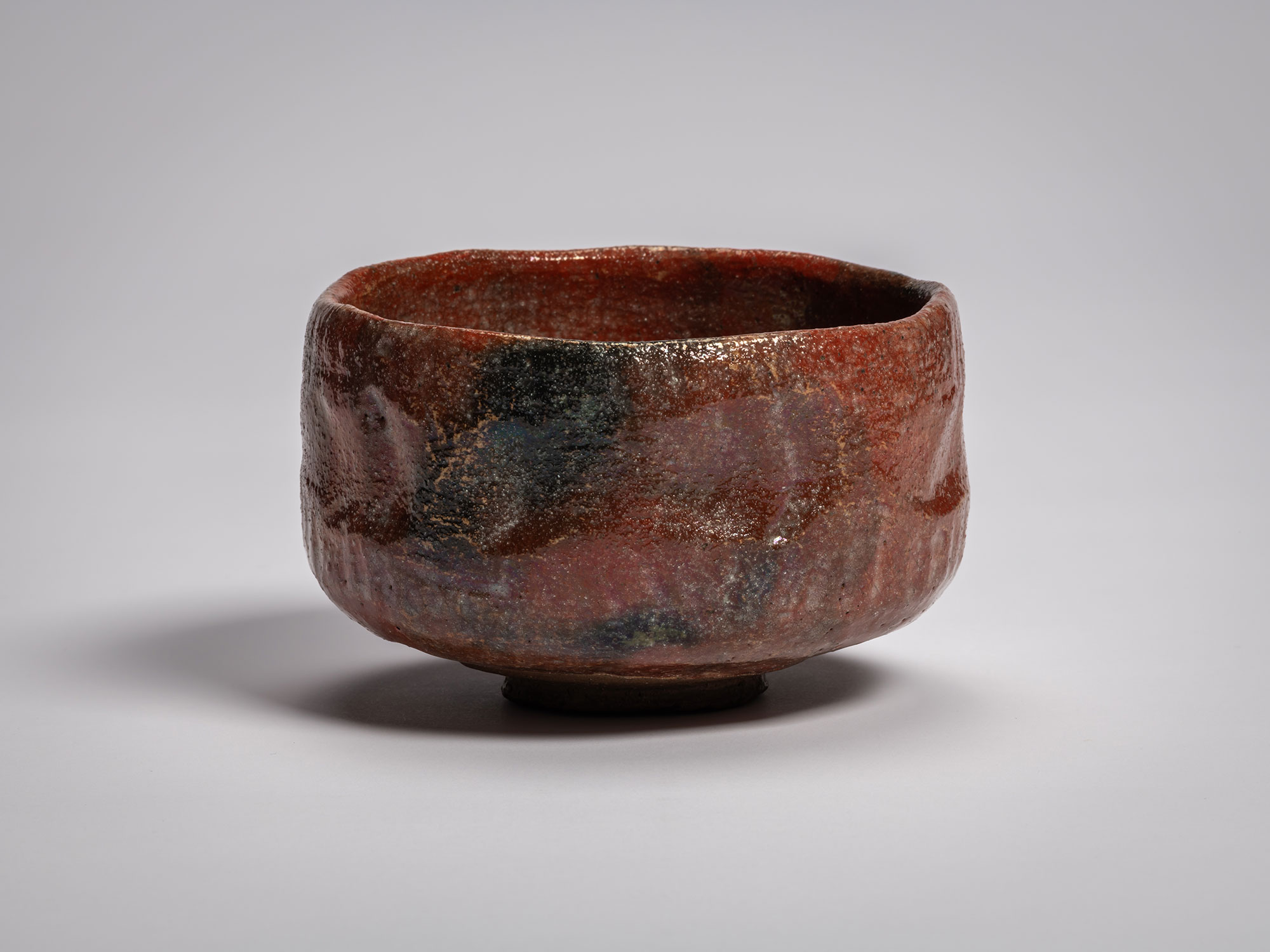
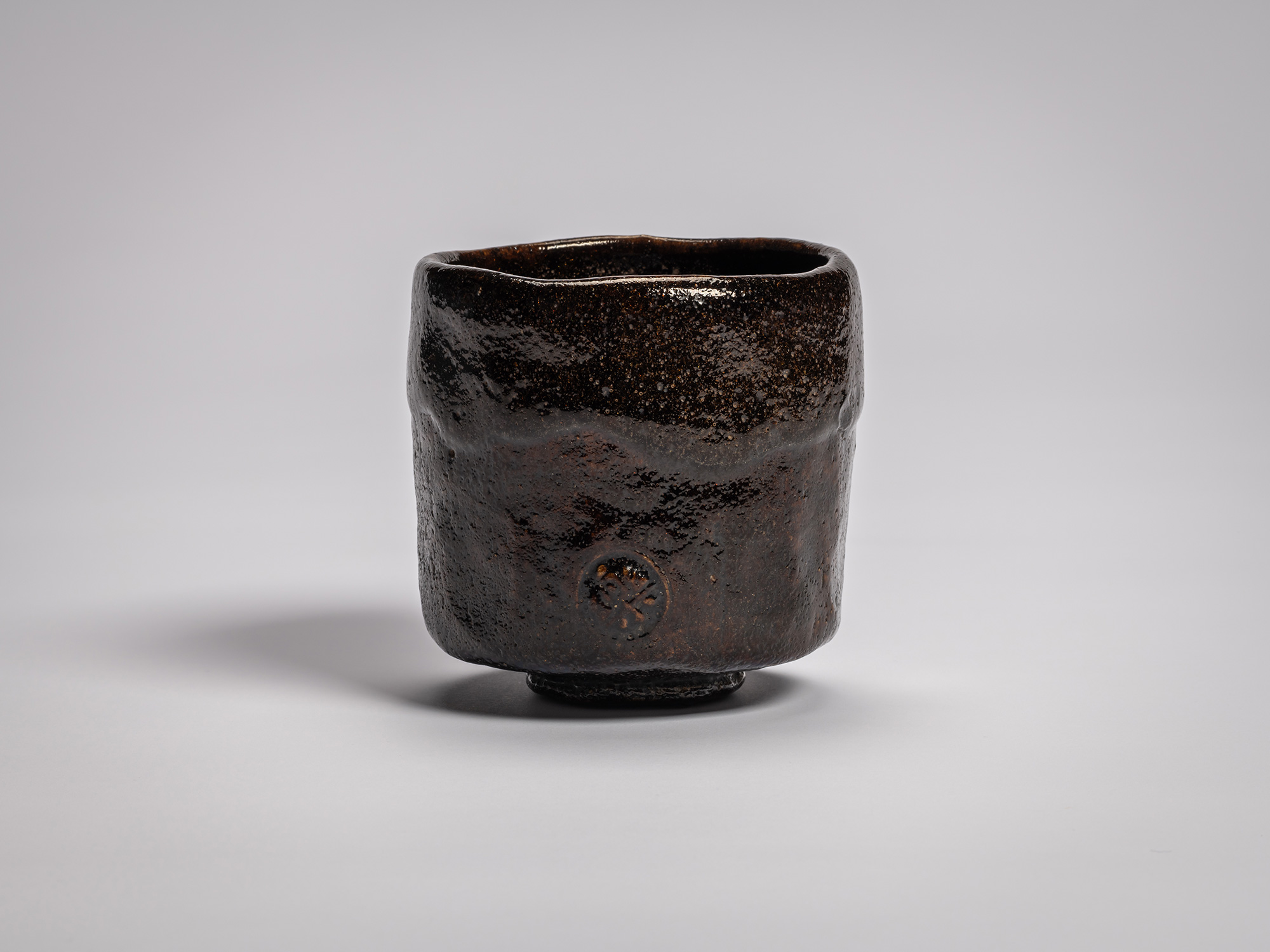
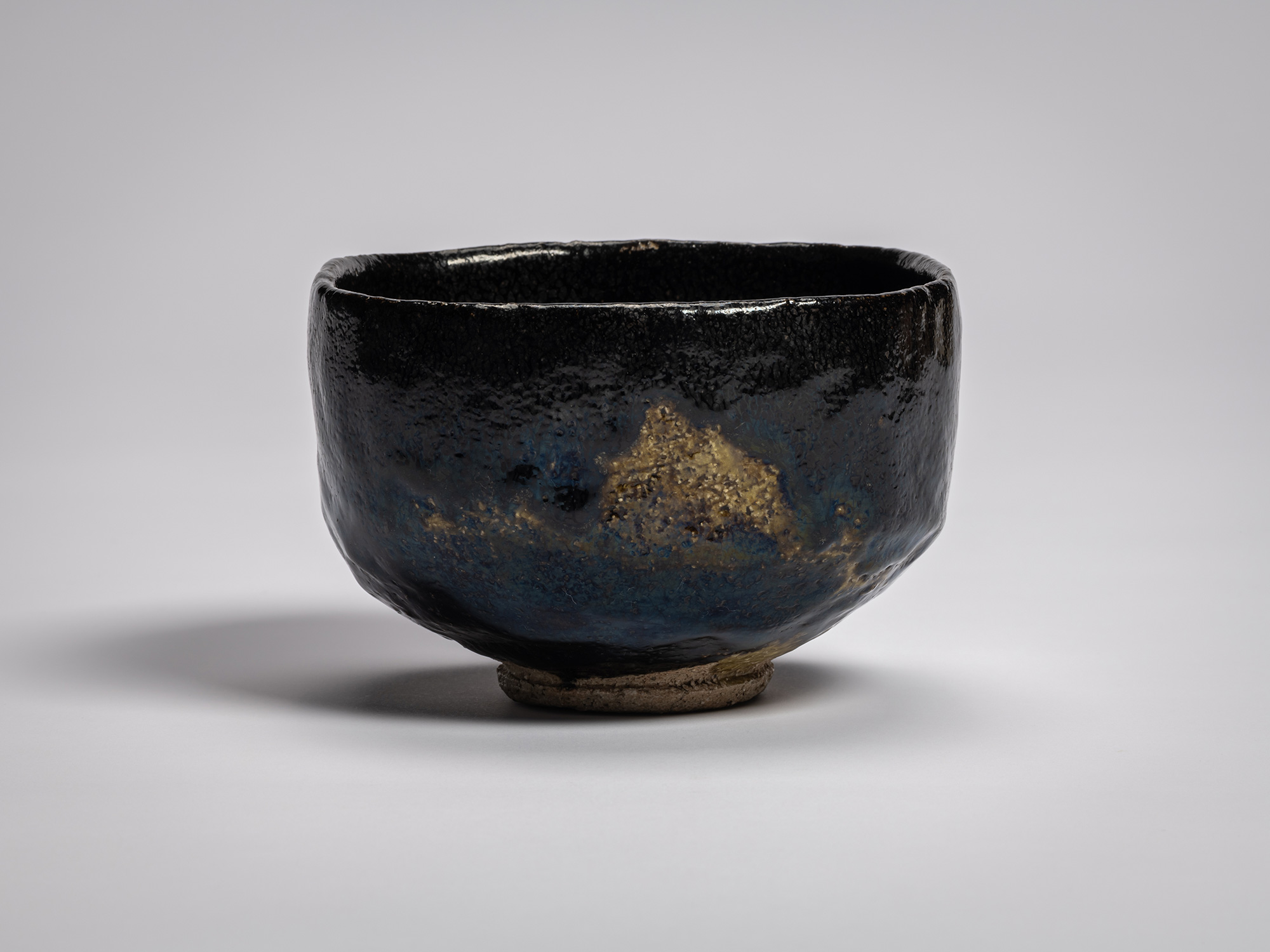
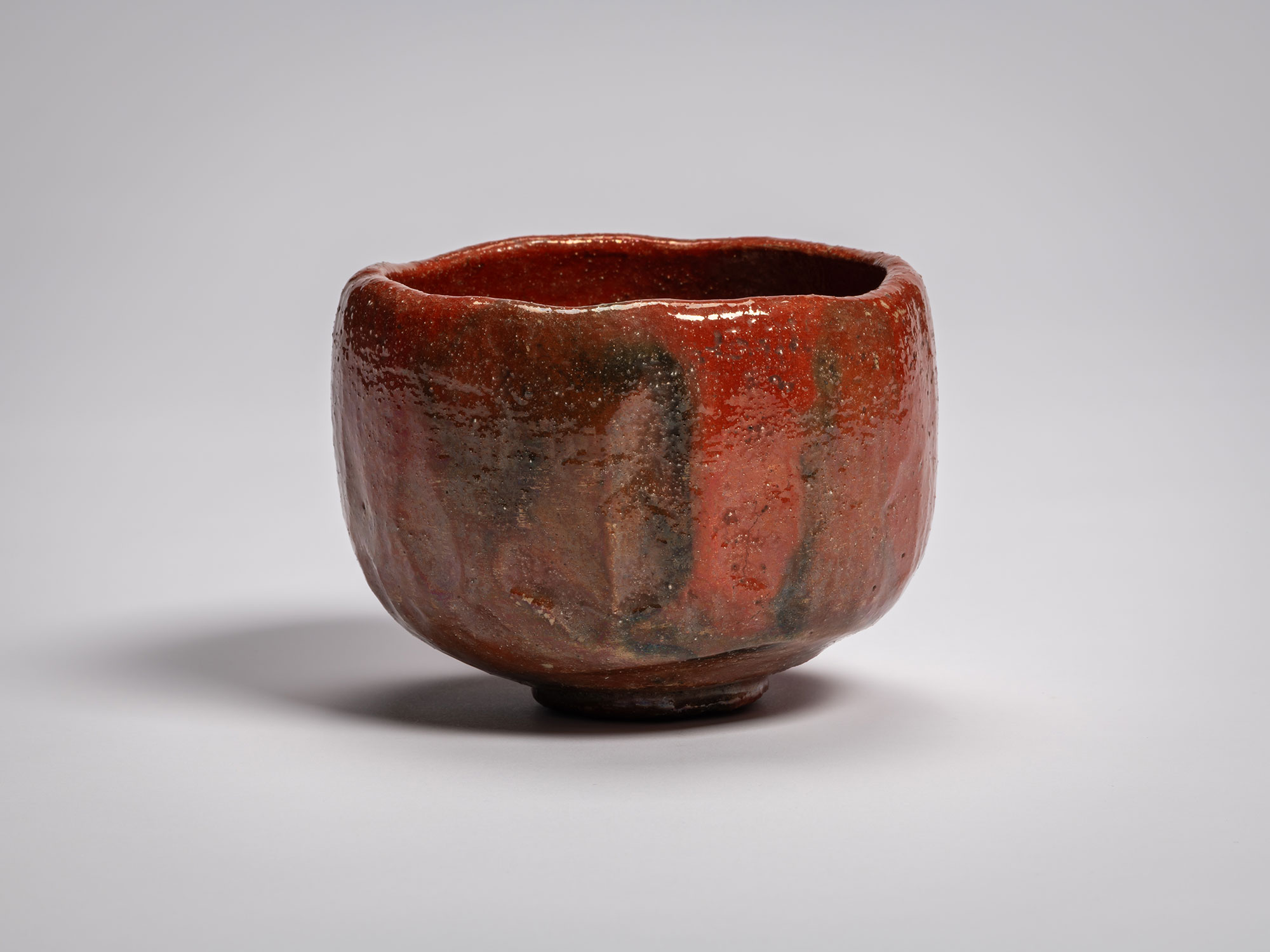
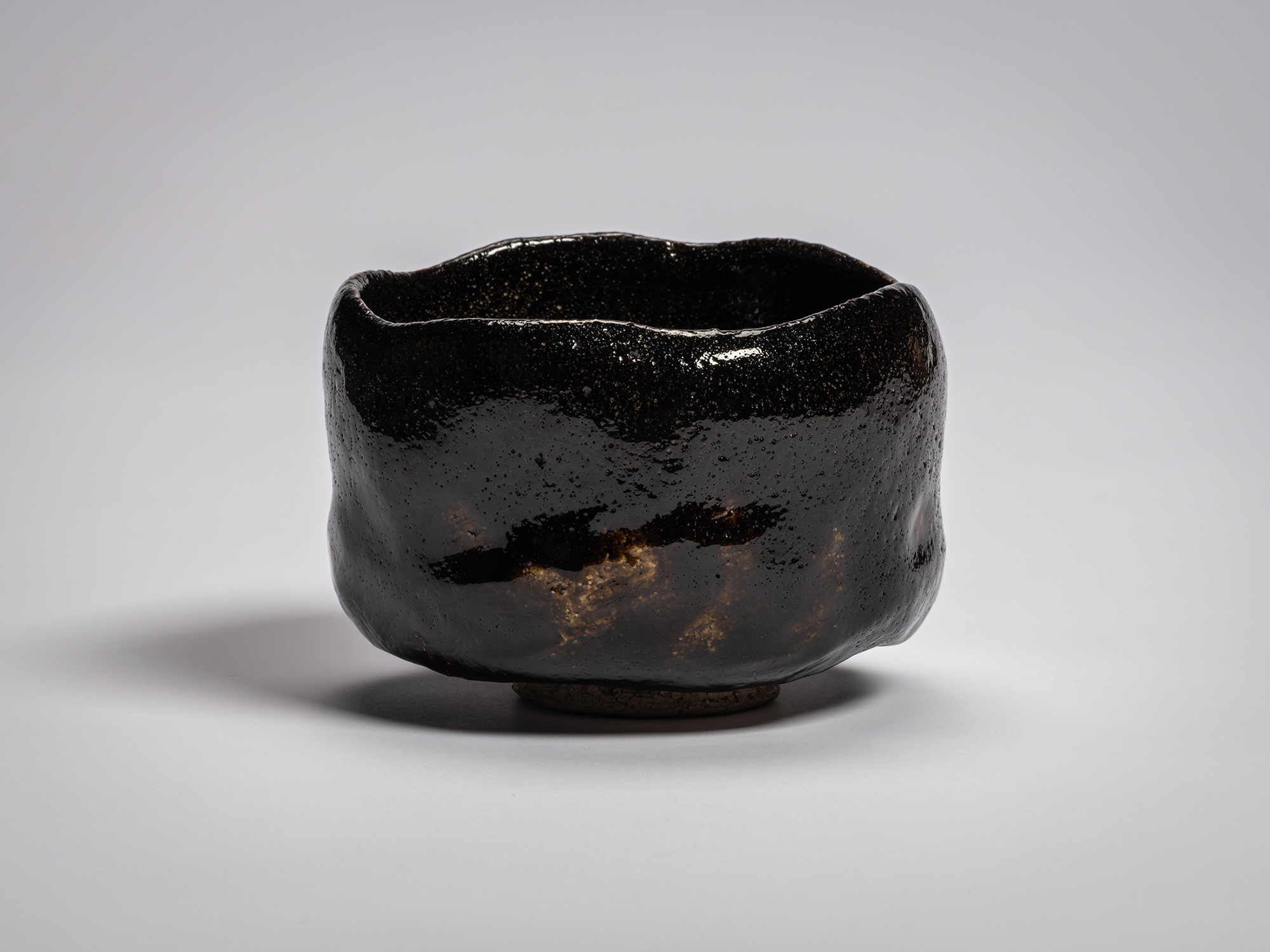
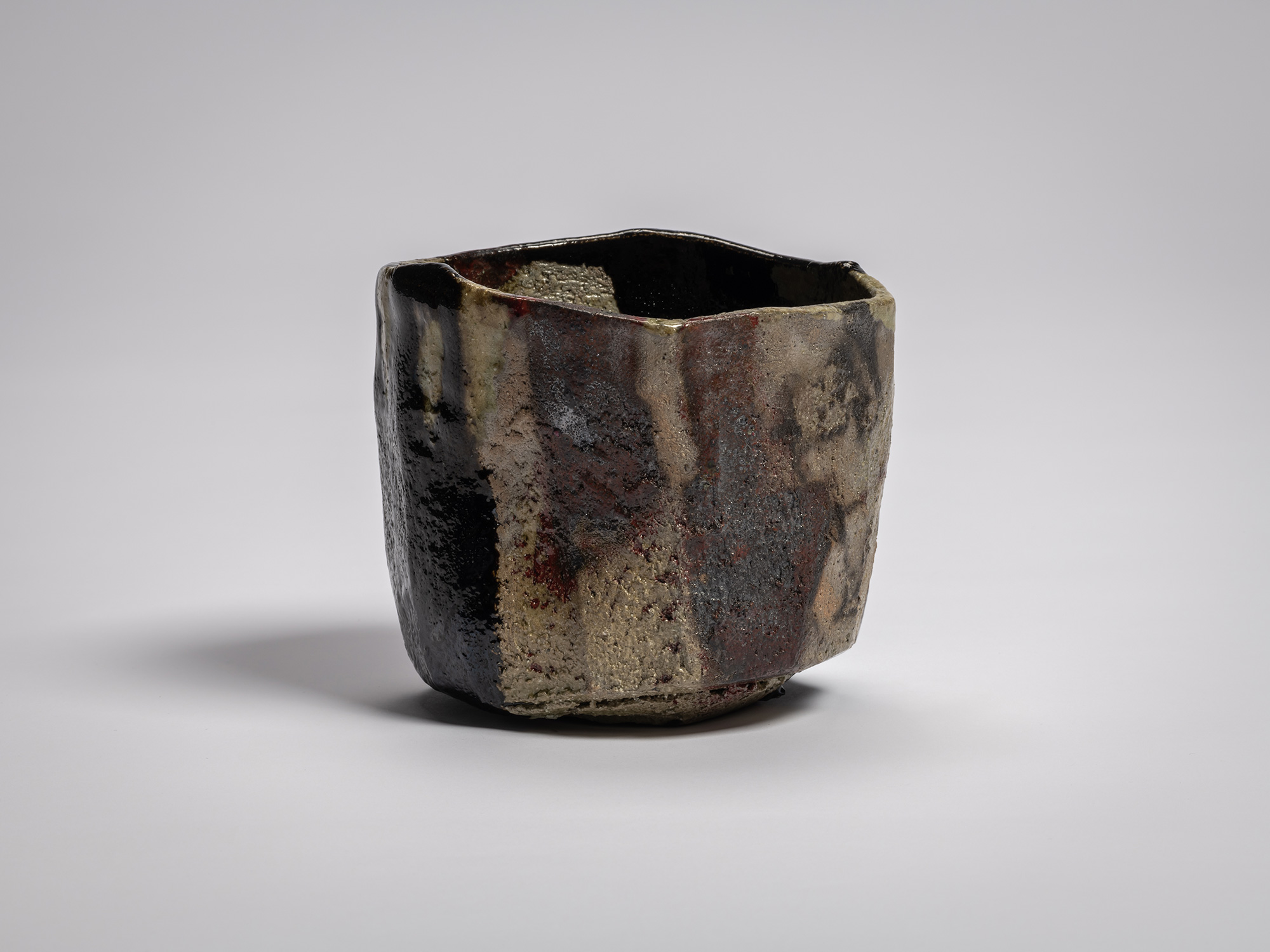
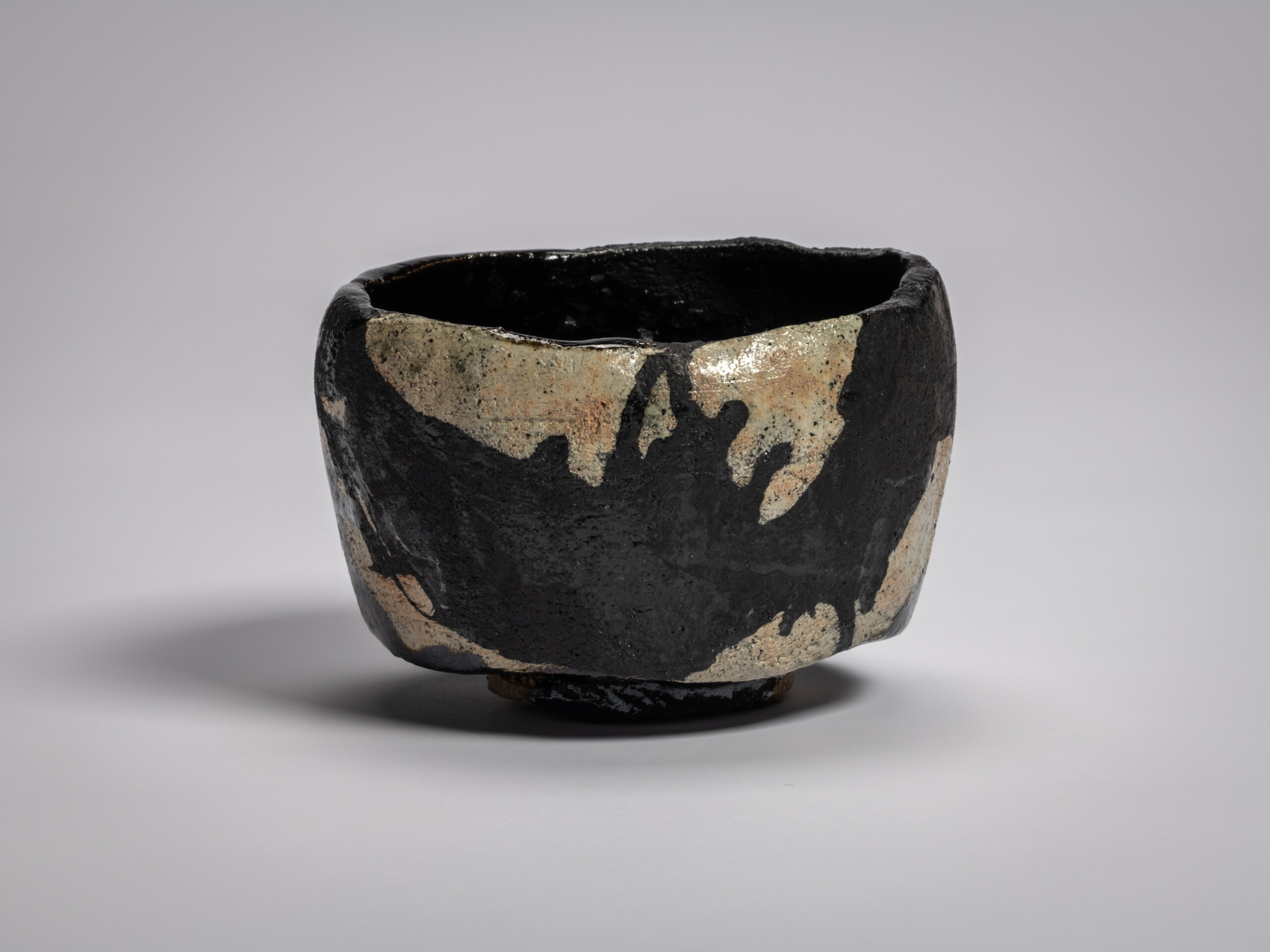
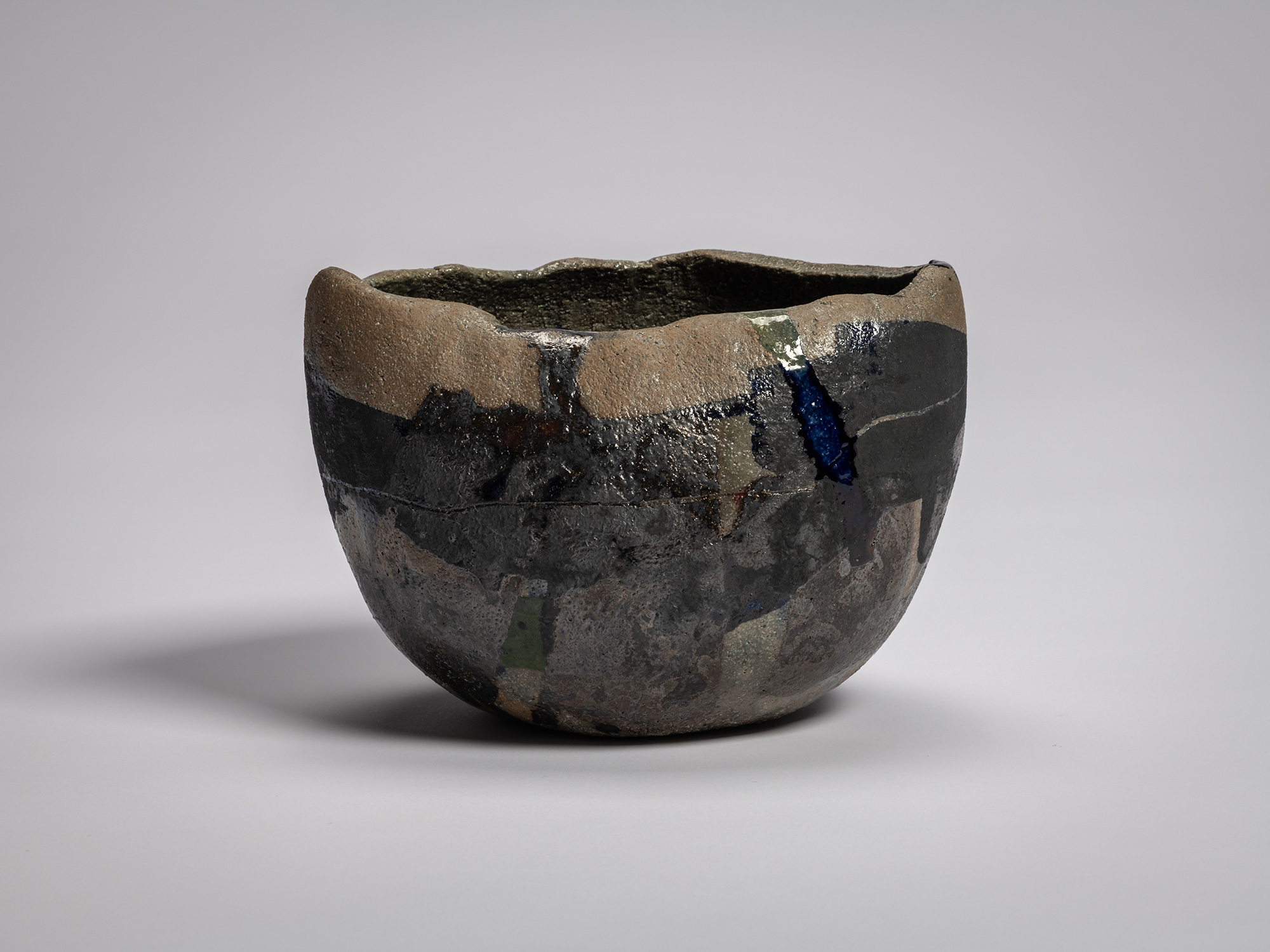
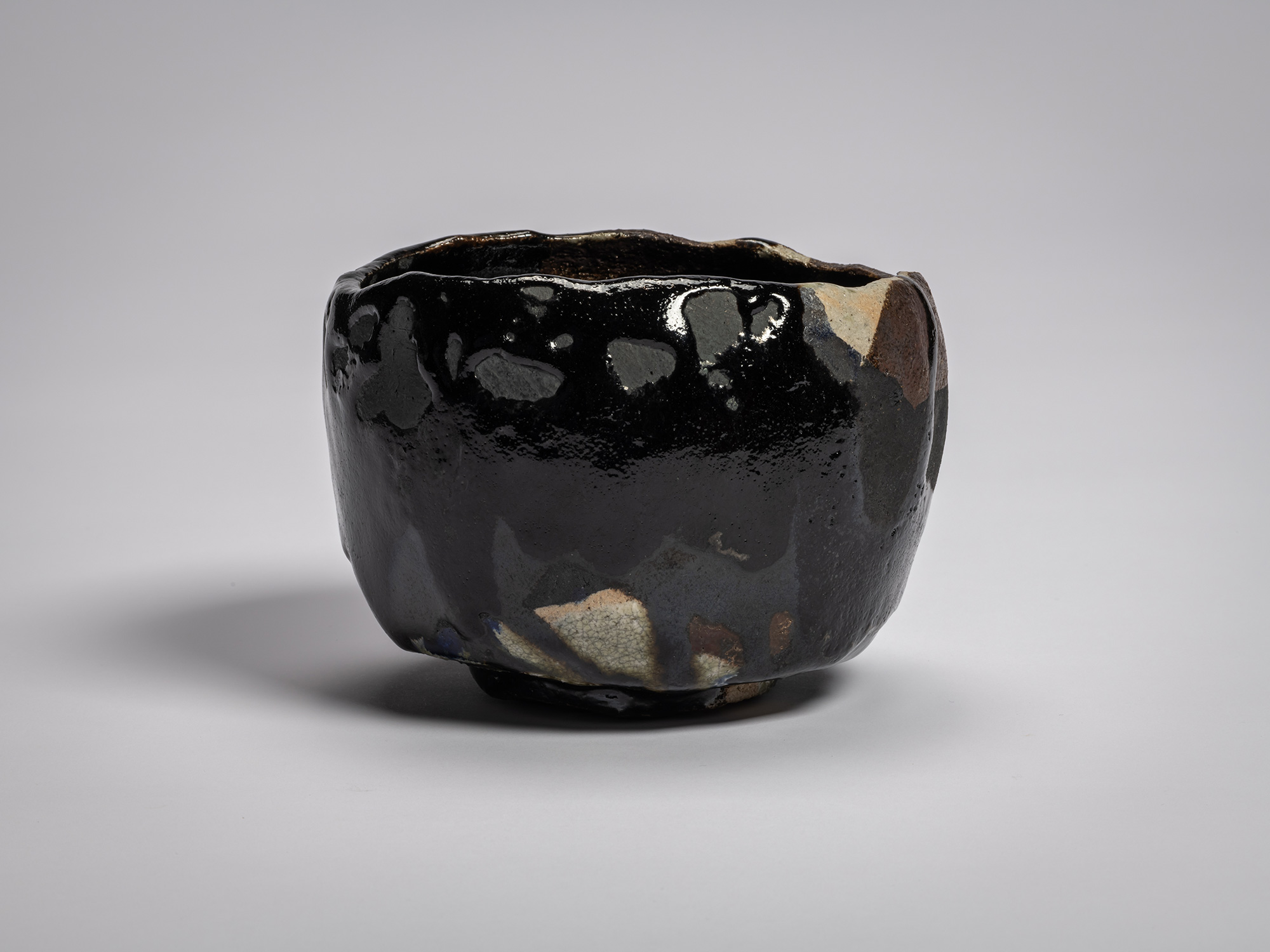
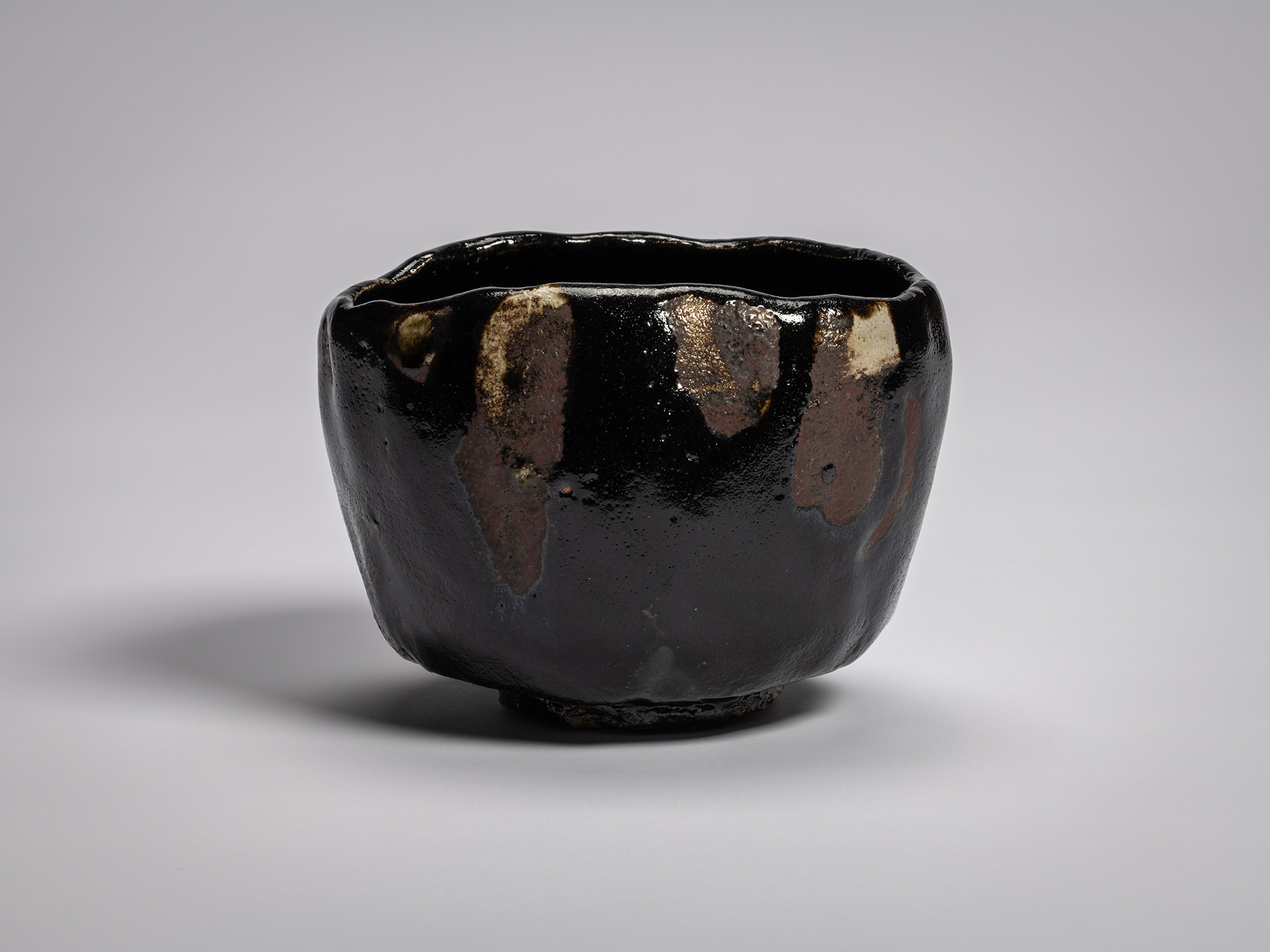
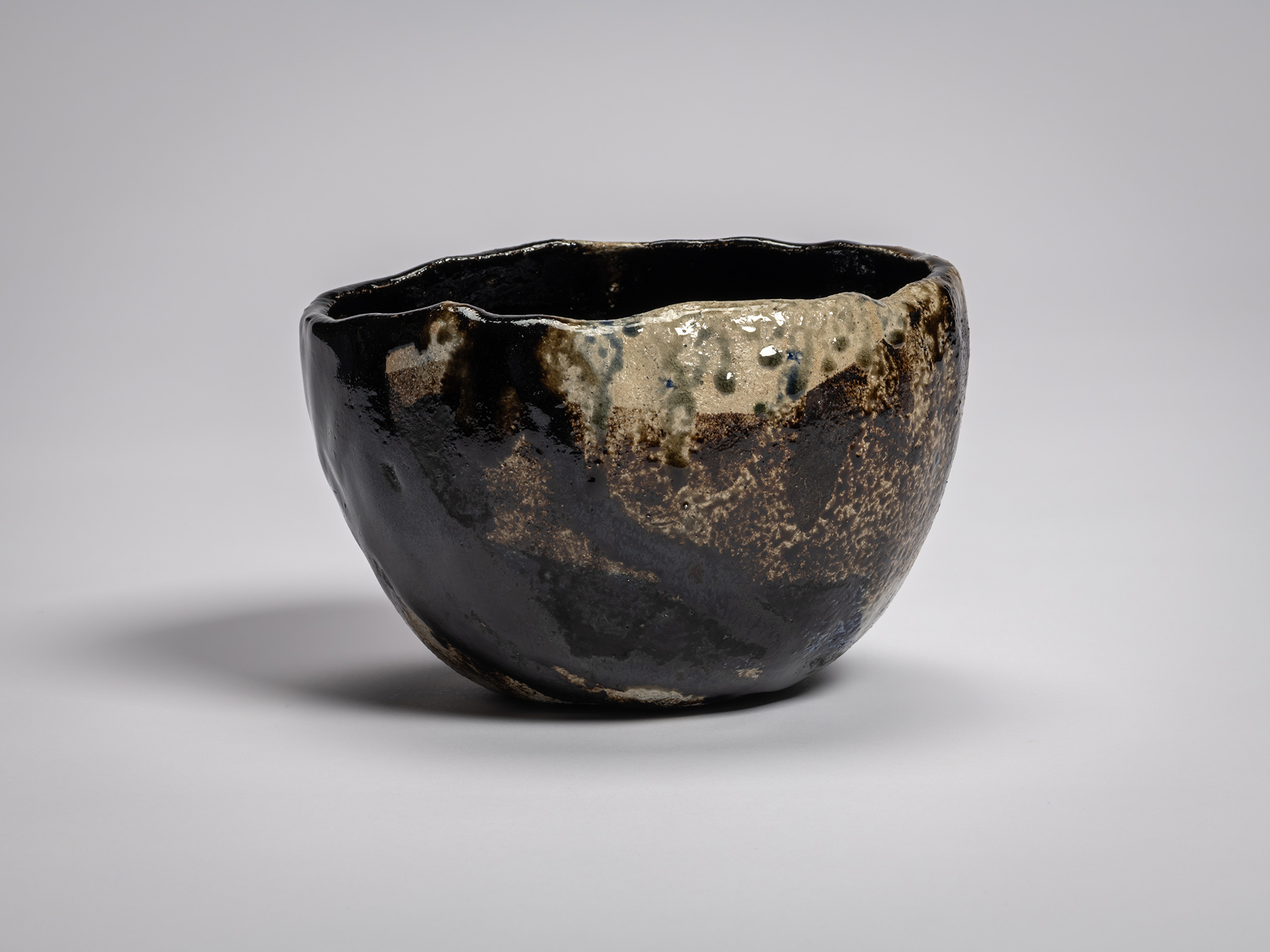
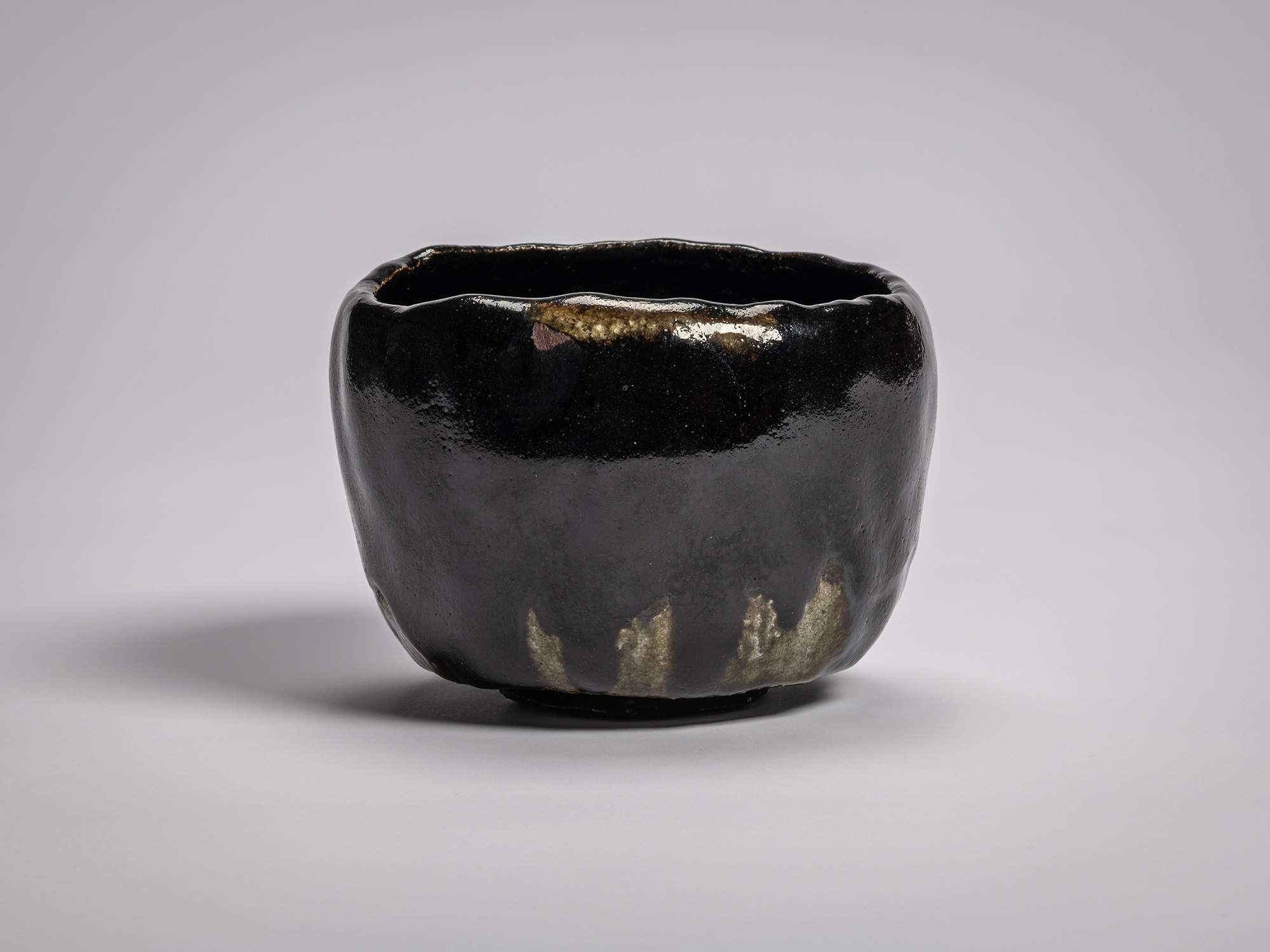
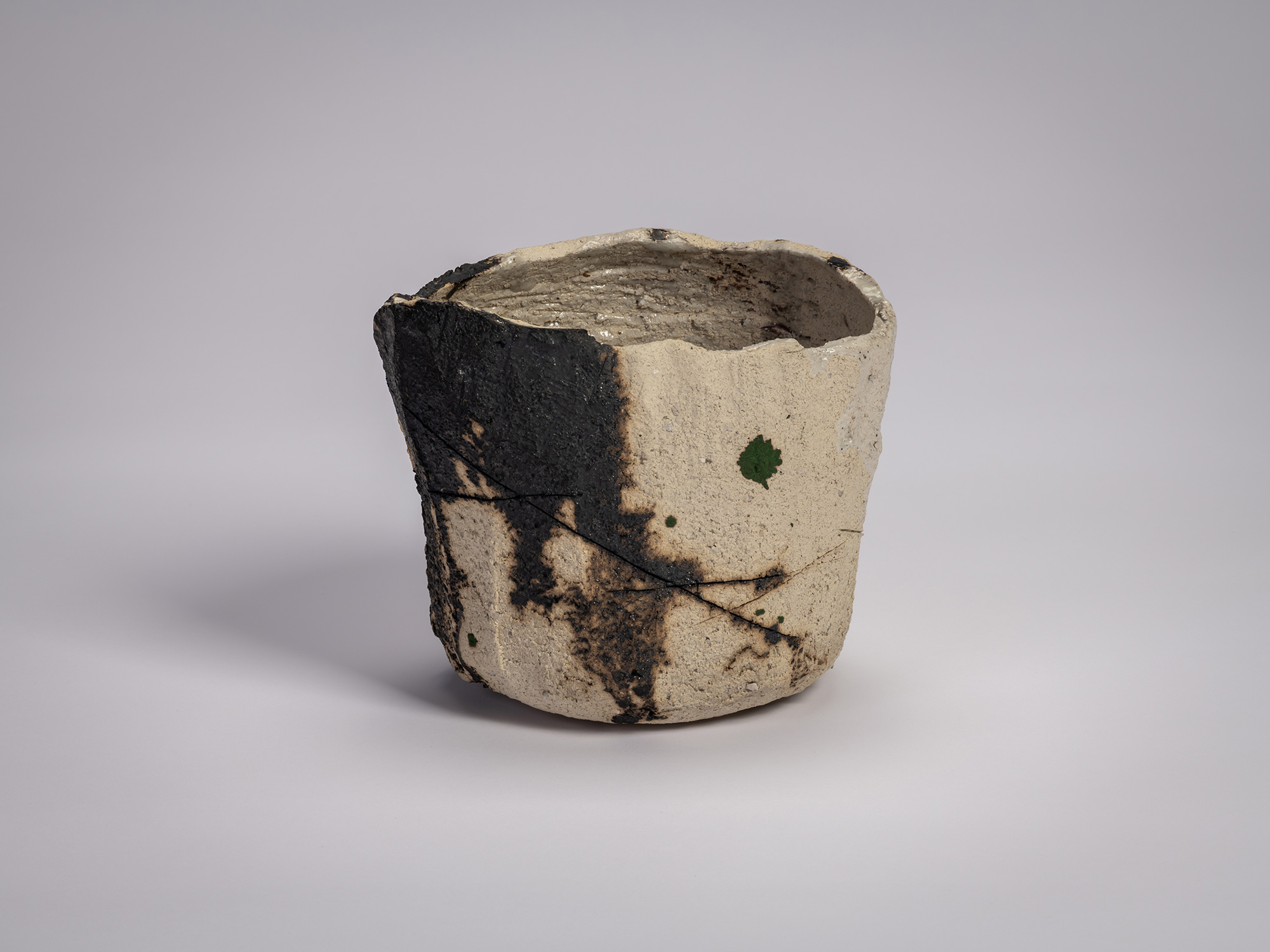
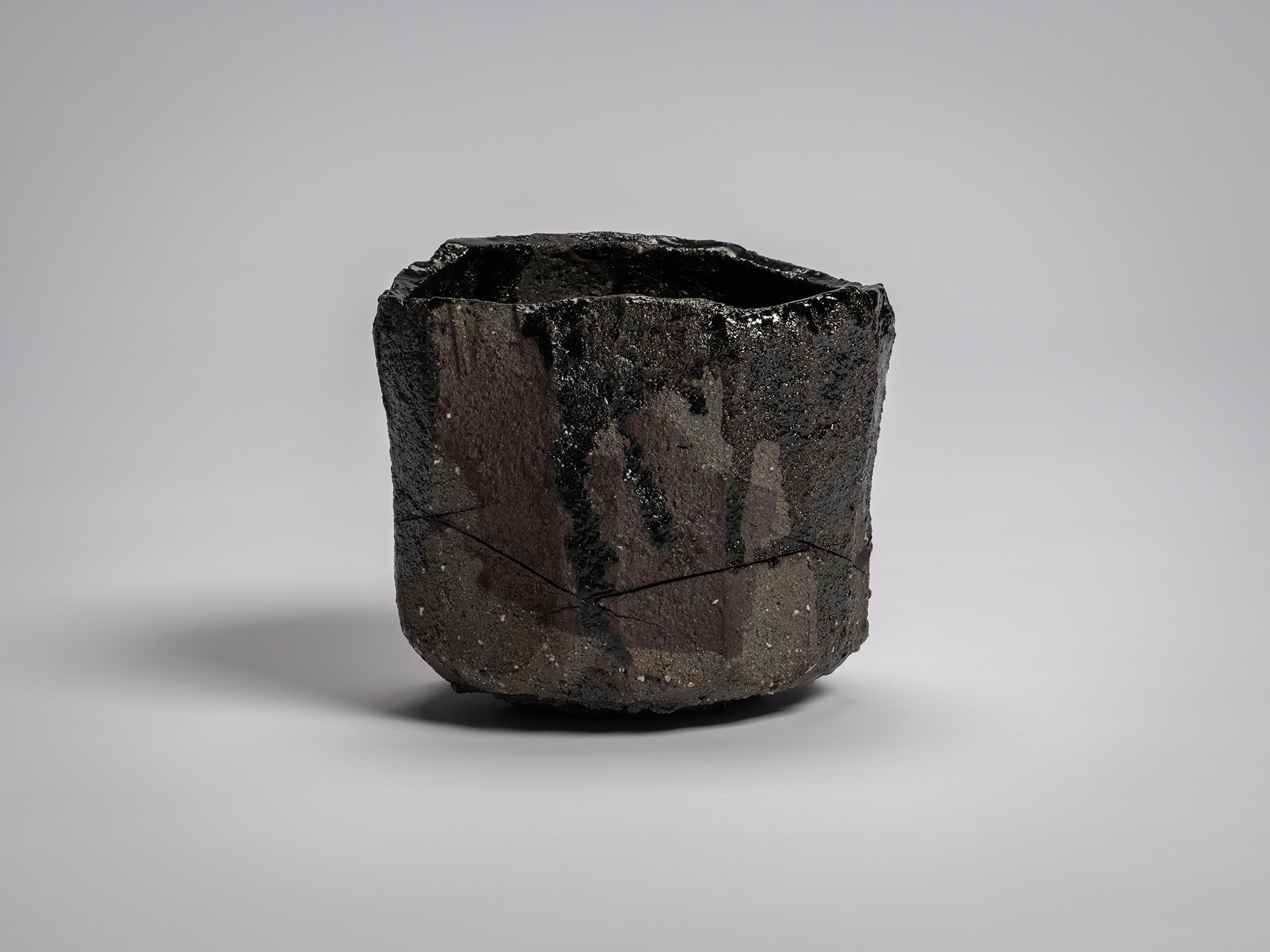
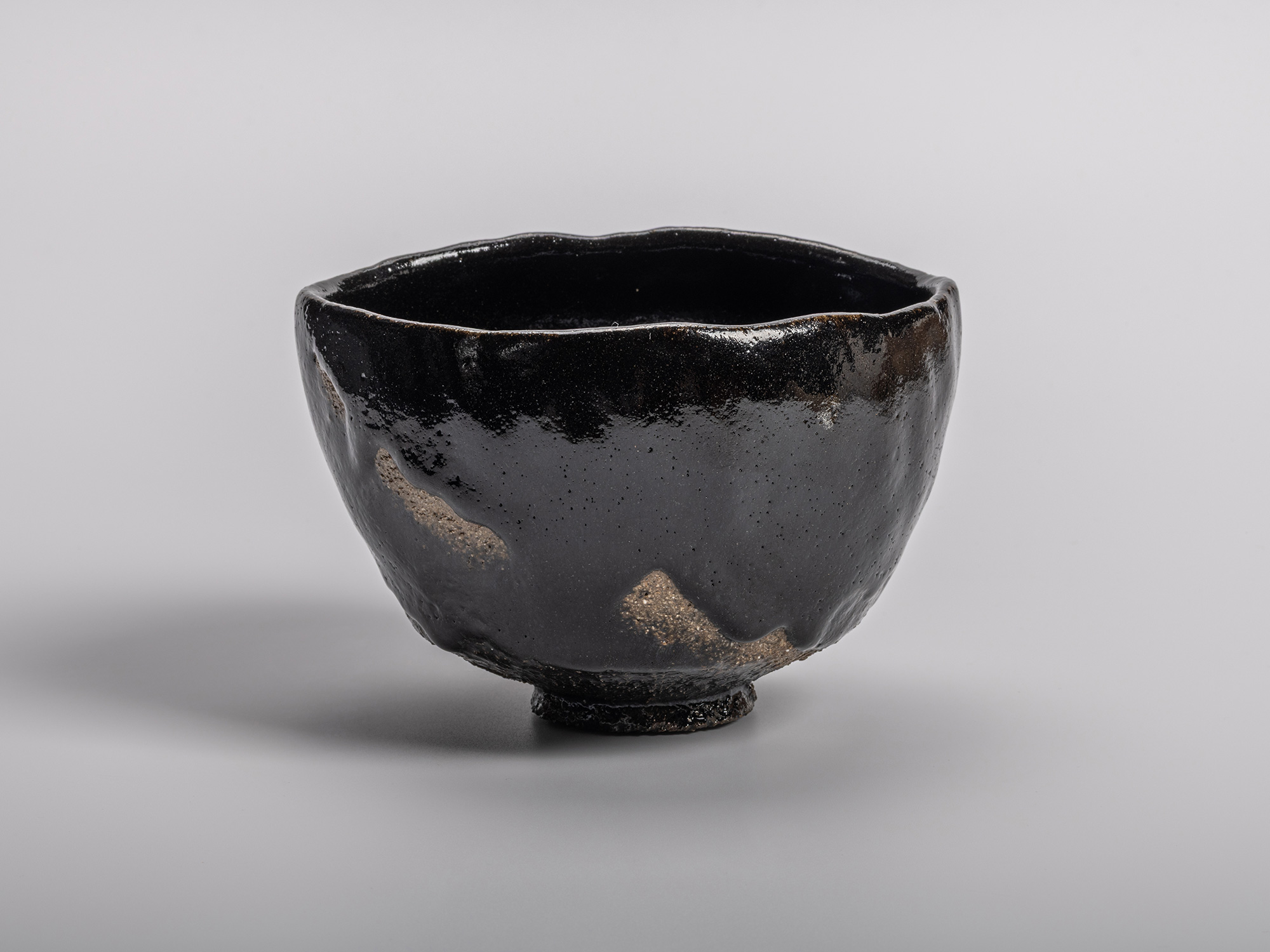
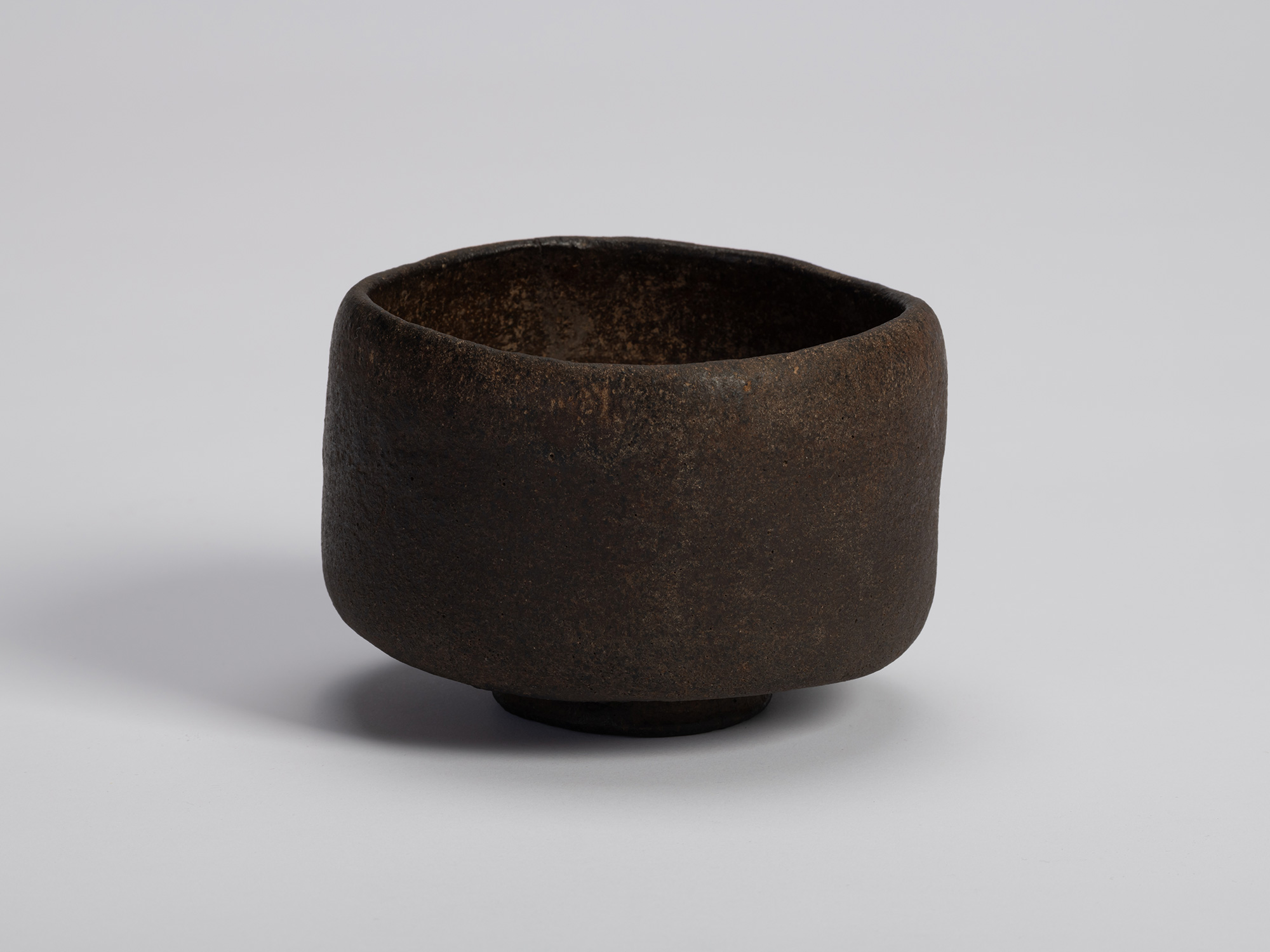
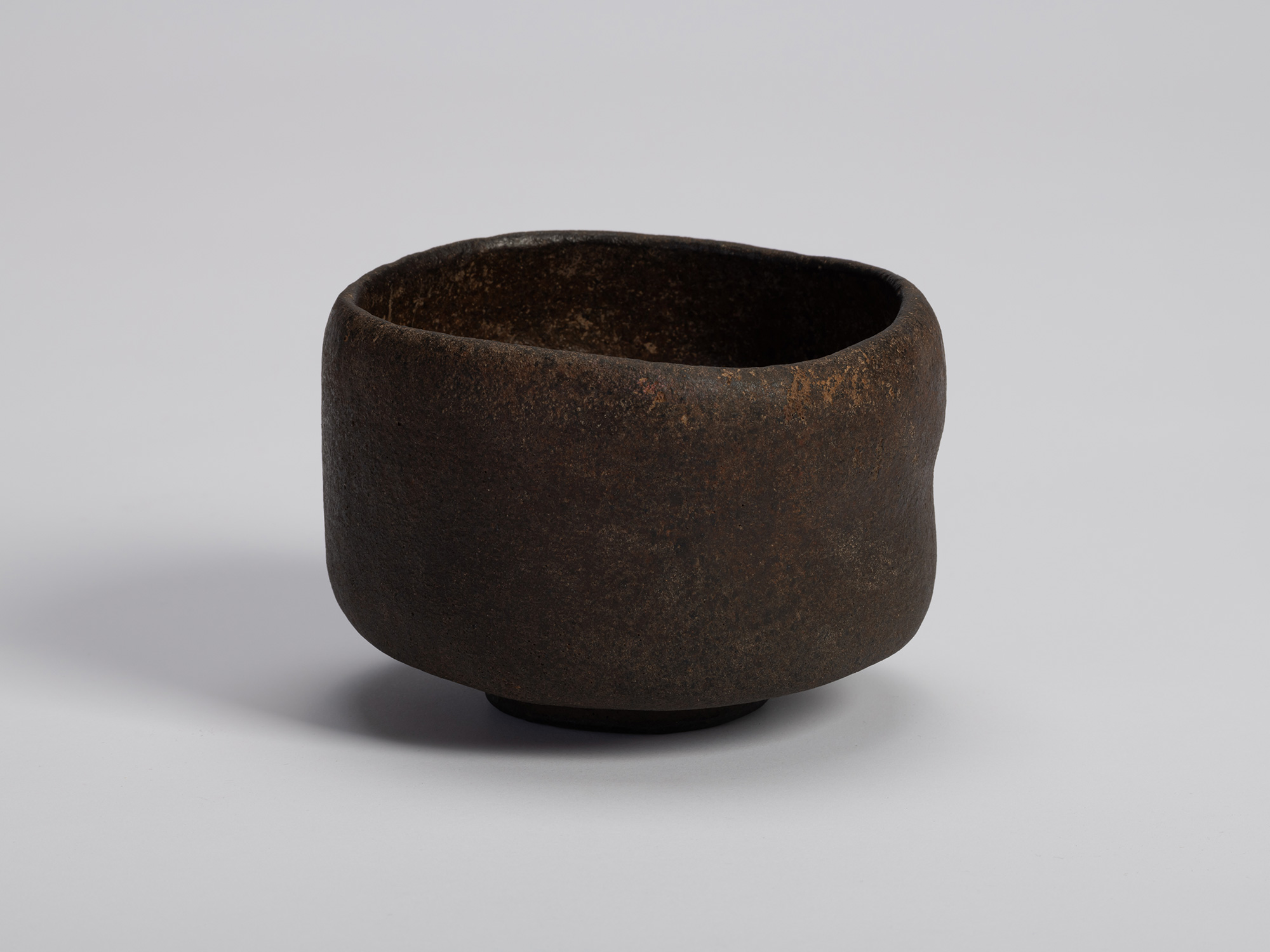
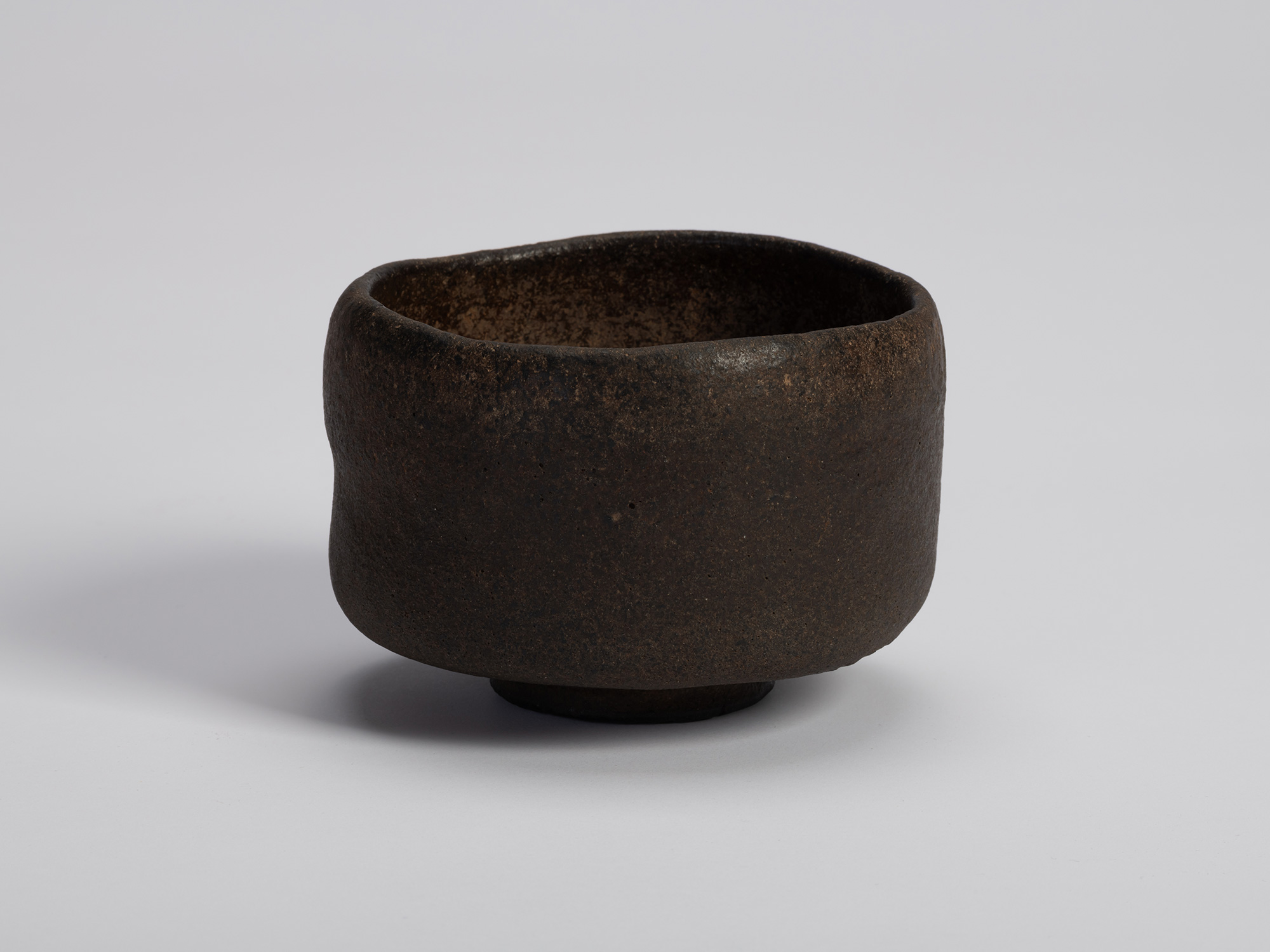
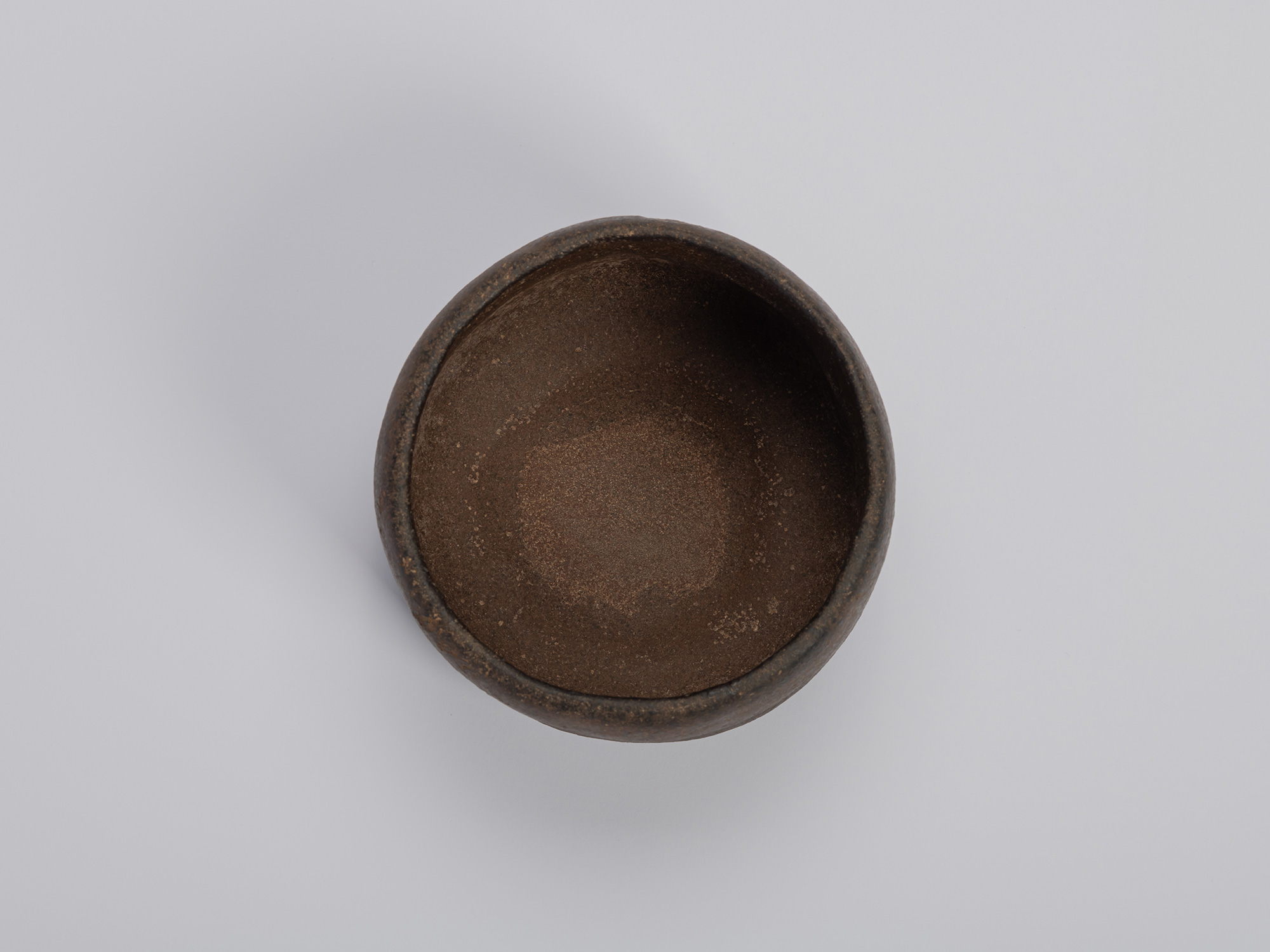
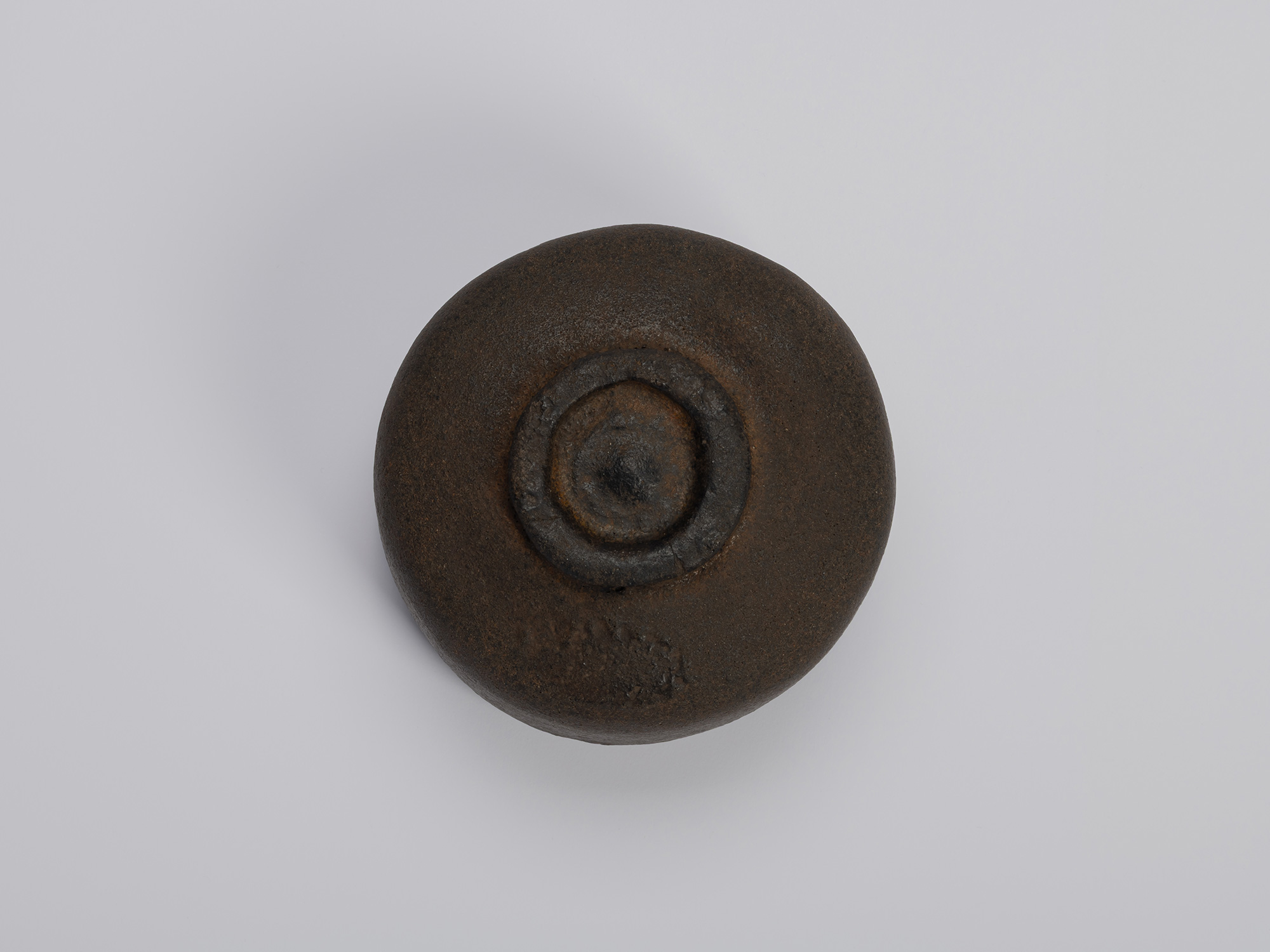
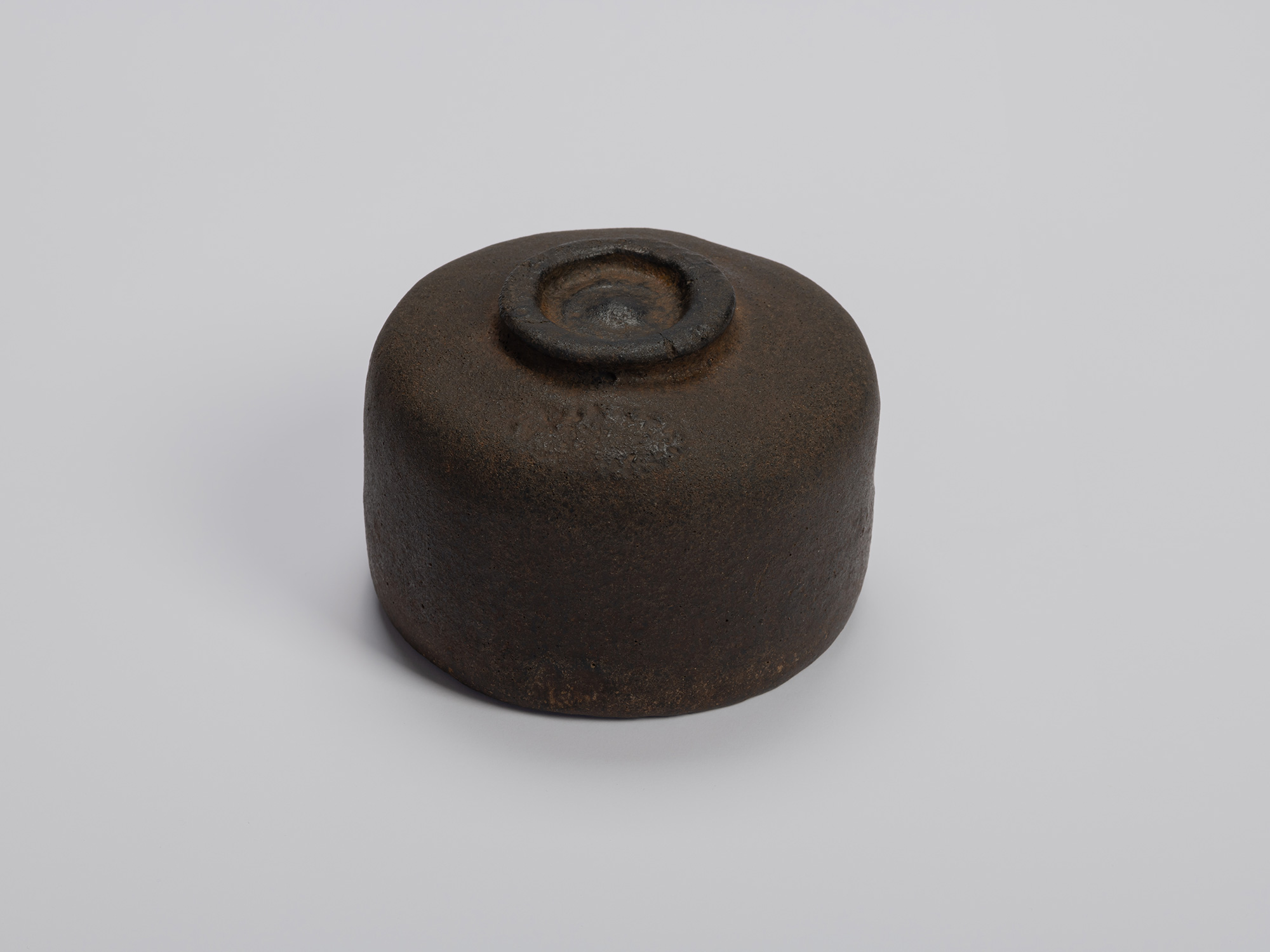
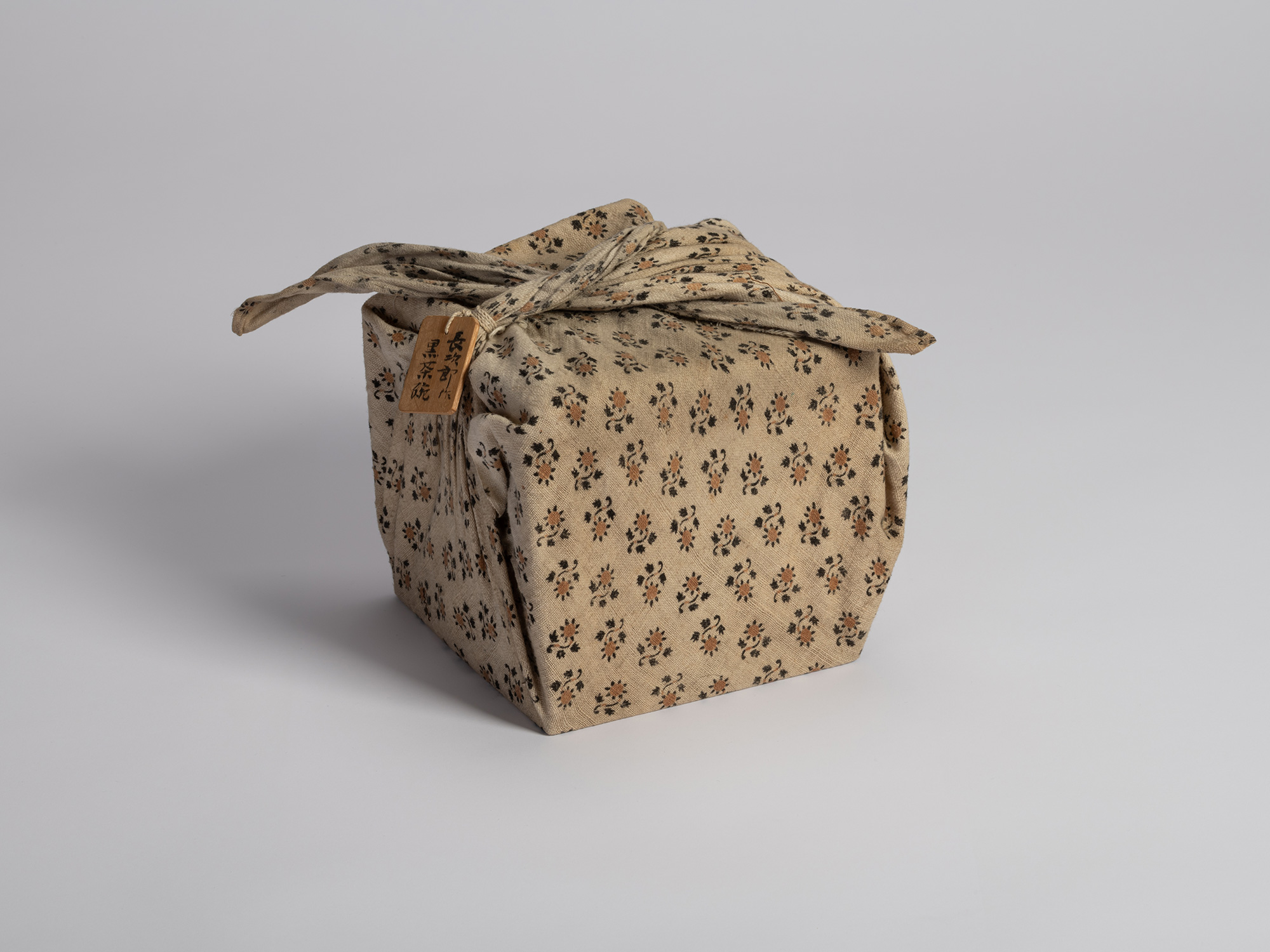
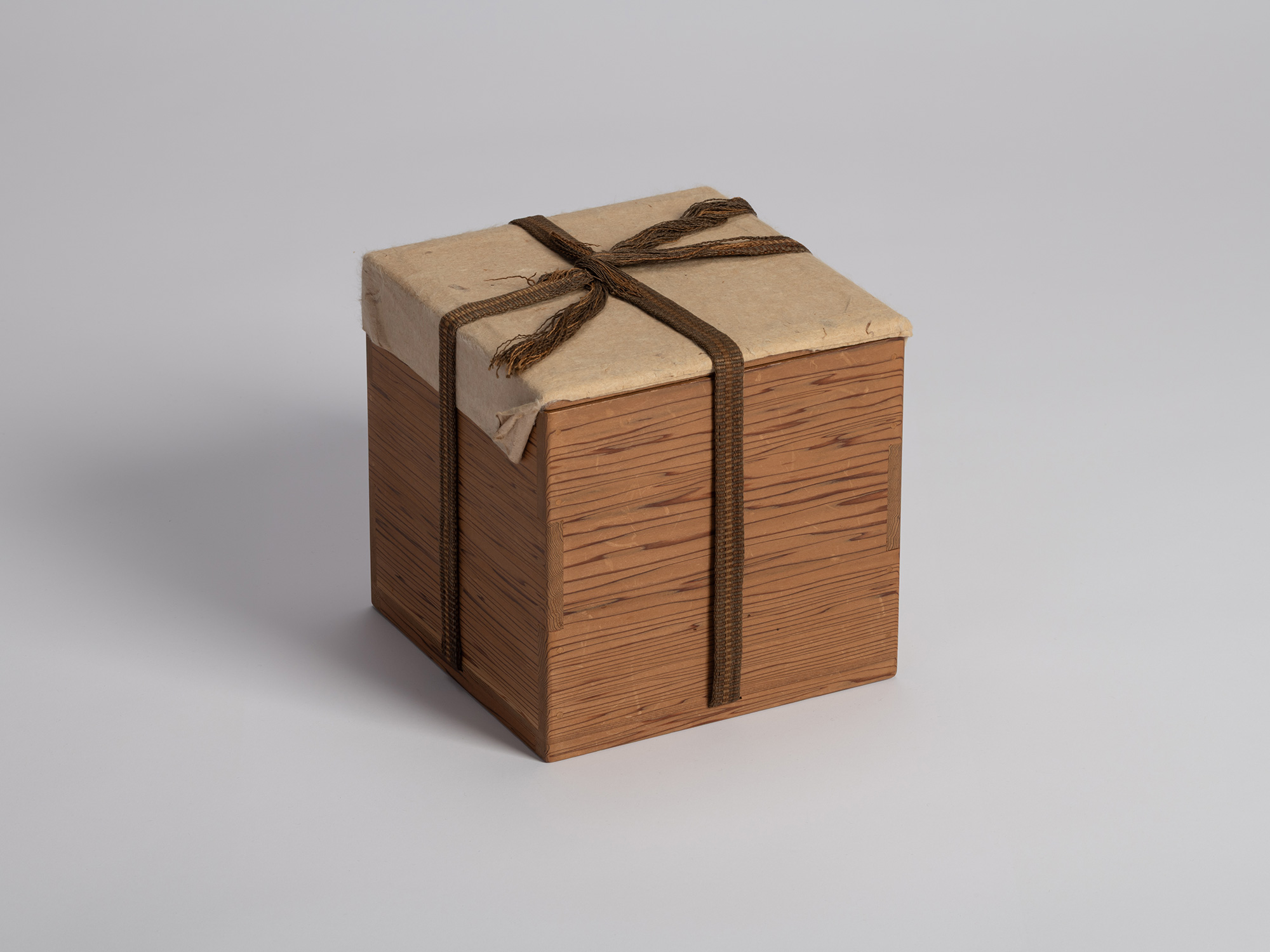
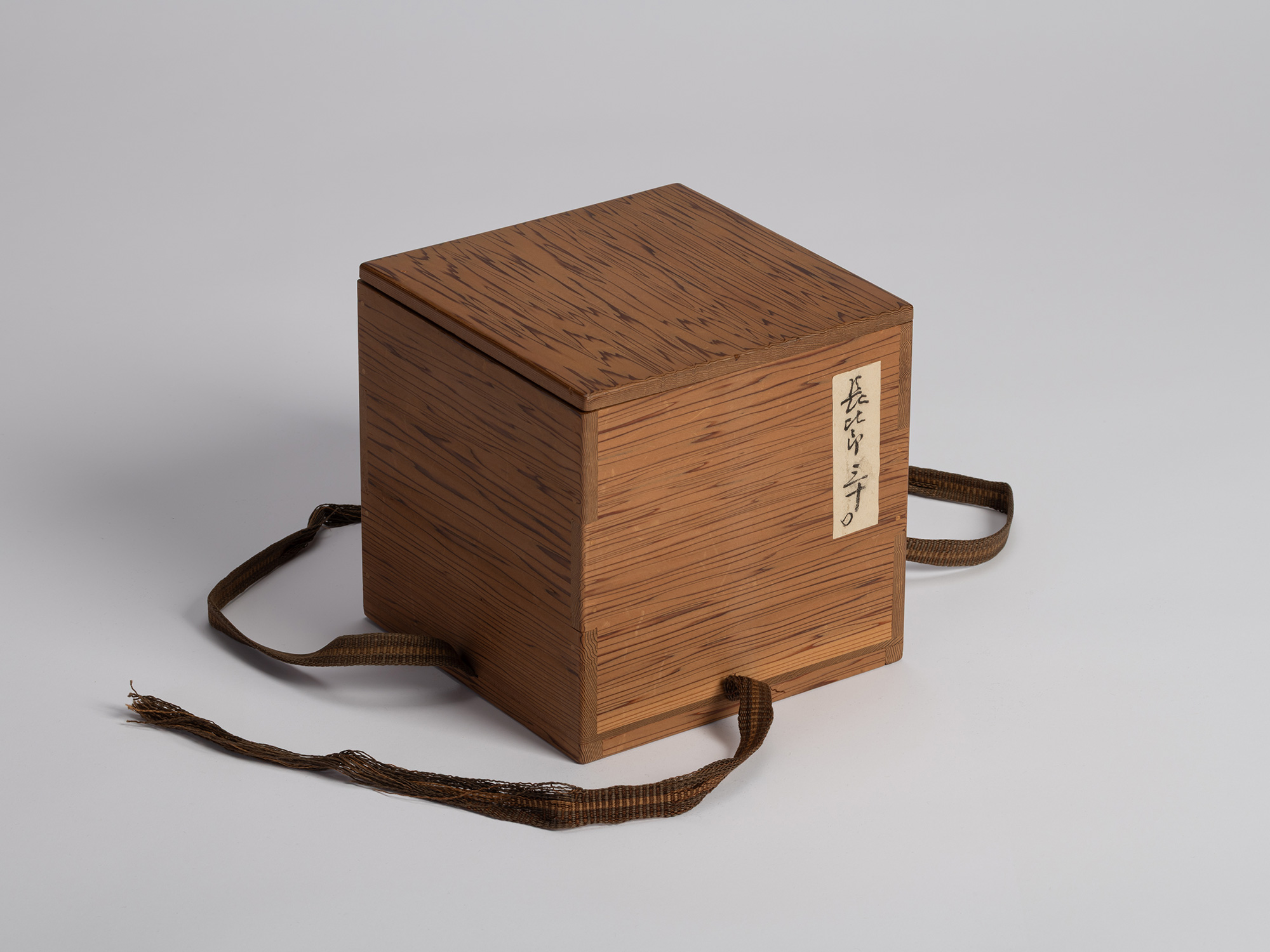
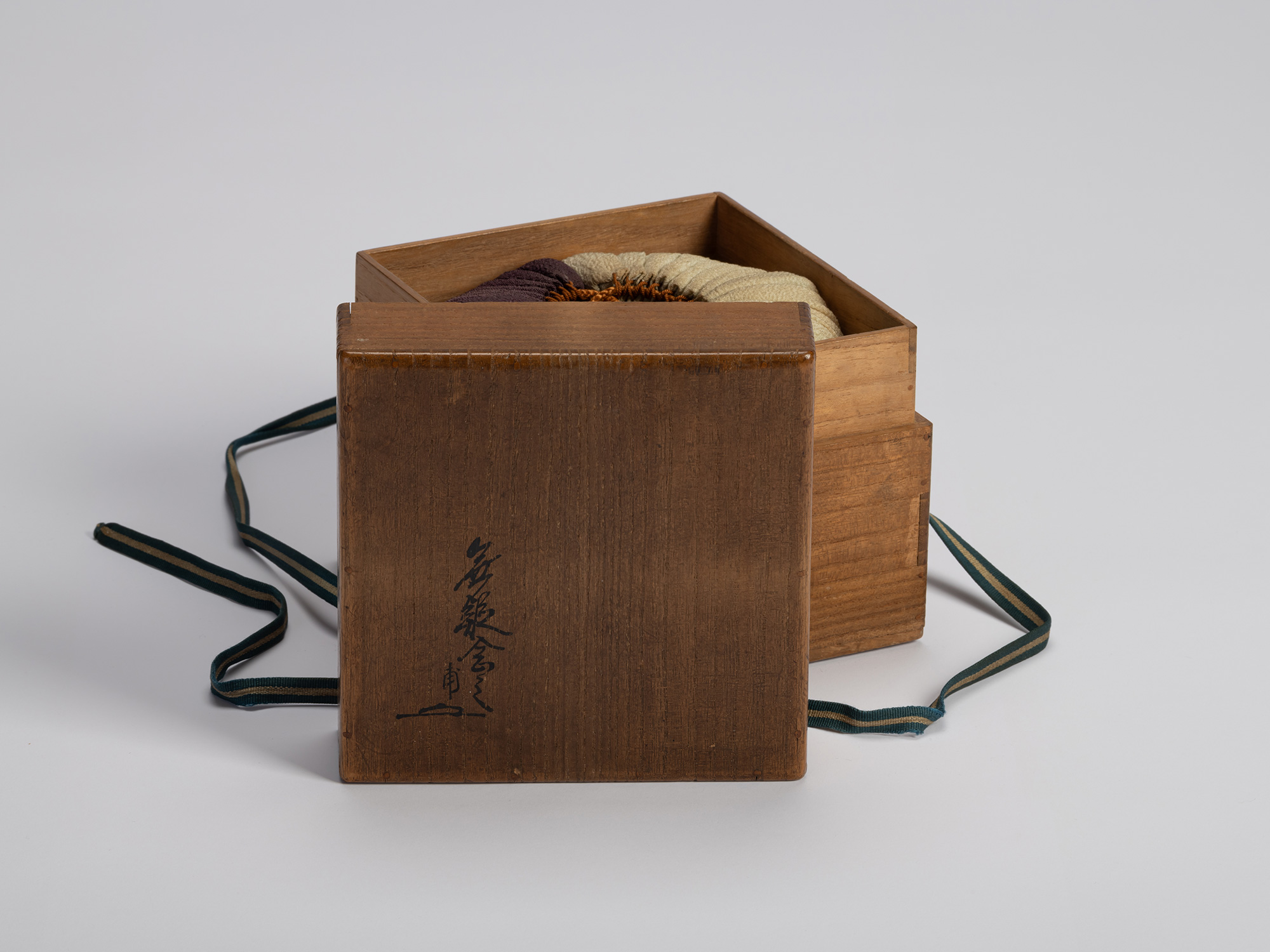
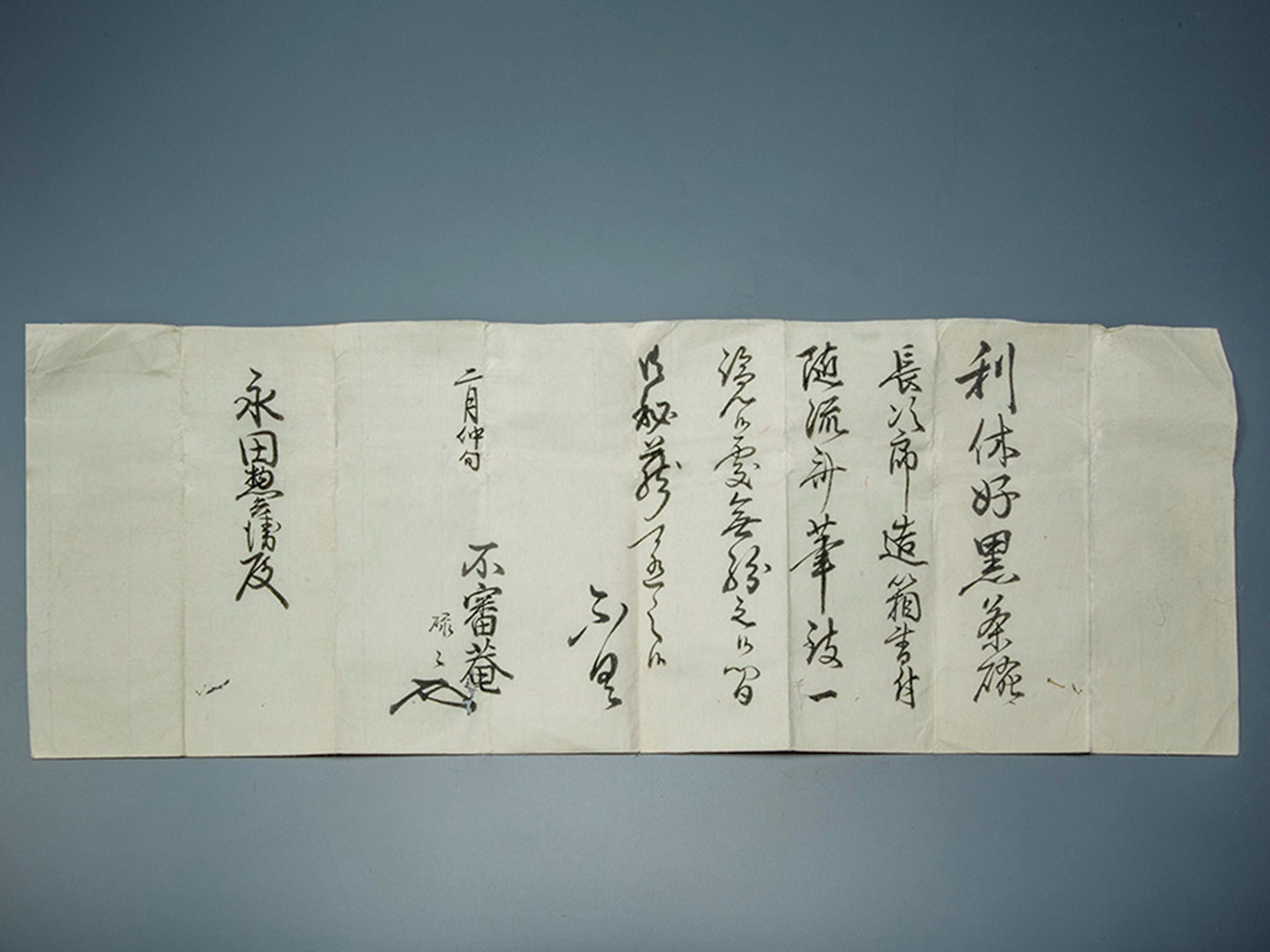
Authenticated as a work by Chōjirō by Zuiryūsai V (1650–1691), fifth head of Omotesenke, this masterpiece embodies the radical simplicity that transformed chanoyu in the late sixteenth century. Working in close association with tea master Sen Rikyū, Chōjirō stripped the tea bowl of decoration and overt expressive gesture, creating vessels of extraordinary restraint and presence. Here, the dry, matte black glaze produces a subdued, tactile surface, while a subtle brown patina within the bowl records centuries of use.
The bowl belongs to a group of works that developed directly from Chōjirō’s earliest, prototypical forms, when experimentation remained central to the emerging Raku tradition. Its seemingly simple form is subtly asymmetrical, with a slight distortion and movement along one side of the body that disrupts the otherwise balanced profile. Such understated manipulation of form reflects Chōjirō’s ability to achieve expressive presence through remarkably limited means.
Rooted in the wabi-cha aesthetics advanced by Rikyū, Chōjirō’s radical reduction of the vessel established a new conception of the tea bowl that successive generations of the Raku family would continue to explore. The bowl was later named Musashino (Vast Plain) by Hōunsai XV, fifteenth-generation Grand Master of Urasenke, a prominent school of Japanese tea ceremony.