This site uses cookies to deliver a better site experience. View our Privacy Policy
RAKU Chōnyū VII
b, 1714 - d. 1770
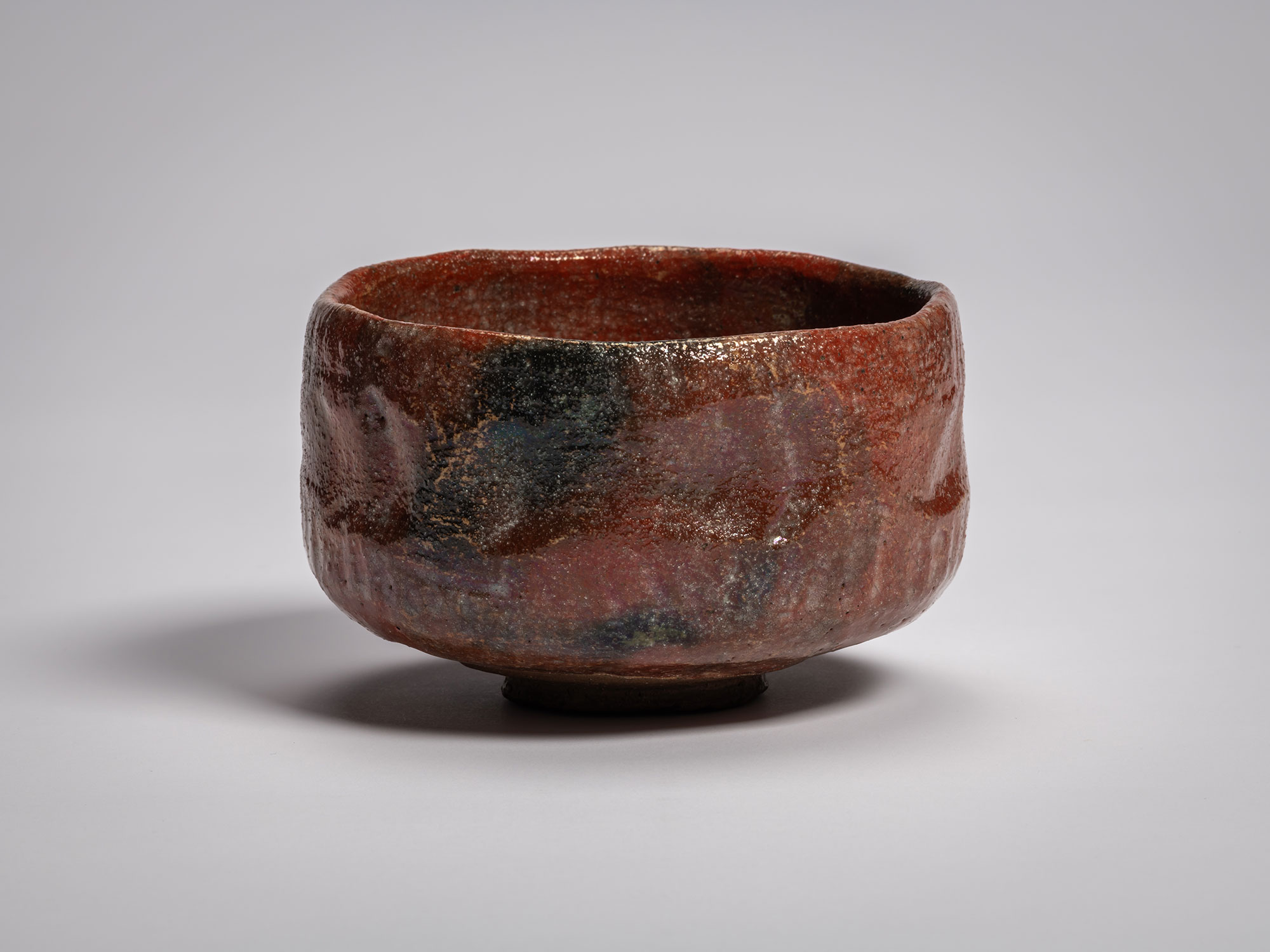
Raku Chōnyū VII, eldest son of Raku Sanyū V, led the Raku lineage during the vibrant mid-Edo period, a time when merchant culture flourished and interest in the tea ceremony expanded, particularly among women. Assuming headship at just fifteen, he worked with remarkable energy until his retirement at forty-nine, later continuing to make tea bowls until his death at fifty-seven. Chōnyū’s work reflects the confidence and prosperity of his era: his tea bowls are notably generous in form and marked by strong spatula impressions that give his pieces a dynamic, individualistic character unlike those of his predecessors. His Black Raku is distinguished by a jet-black glaze with lustrous, slightly translucent depth, while his Red Raku ranges from pale, milk-like hues with fine kanyū crackle to vivid reds with sandy textures.
Though surviving examples are relatively few, their bold, heavy clay bodies (often white or red Juraka) make his style unmistakable.
Work by Artist