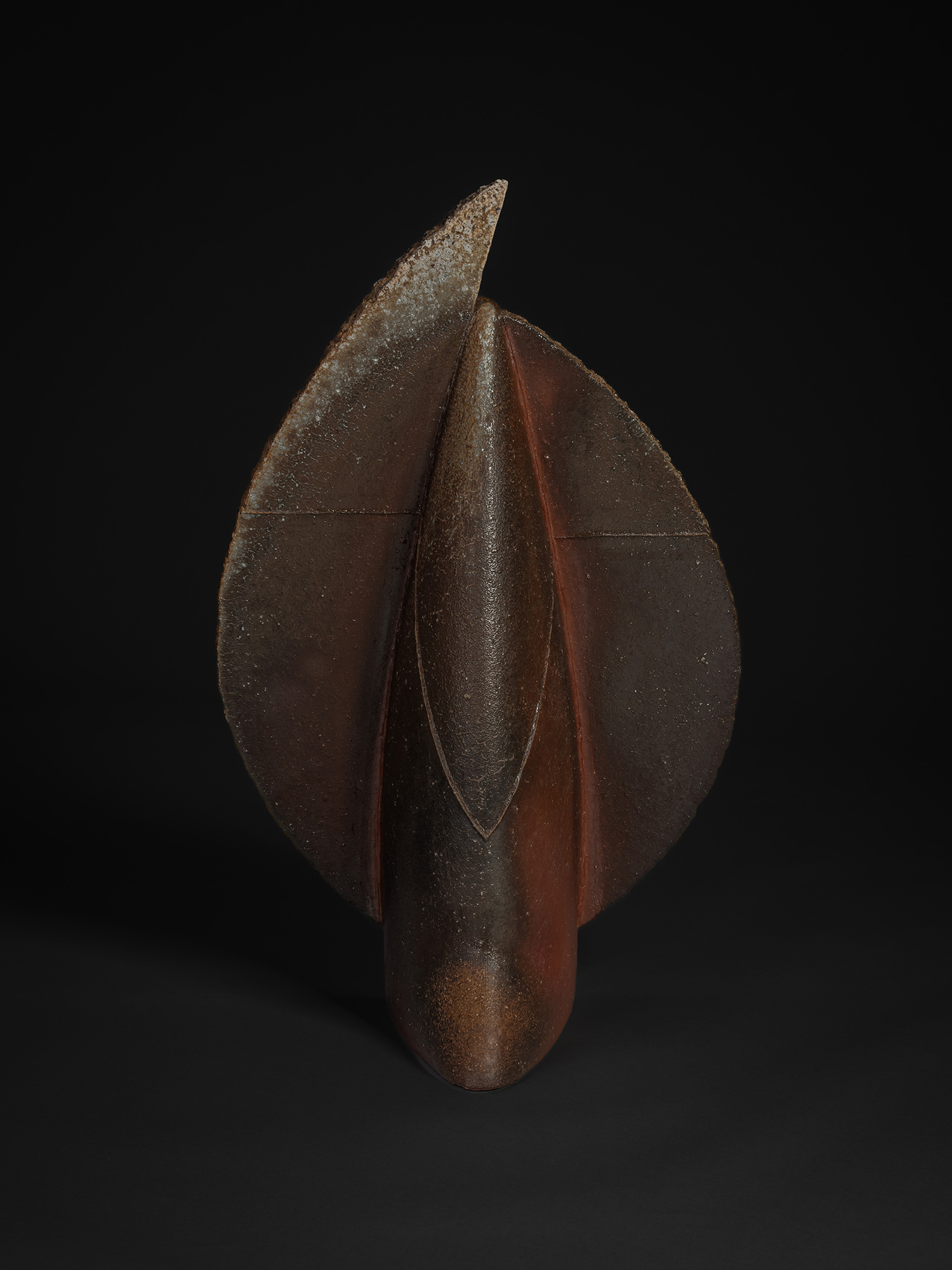
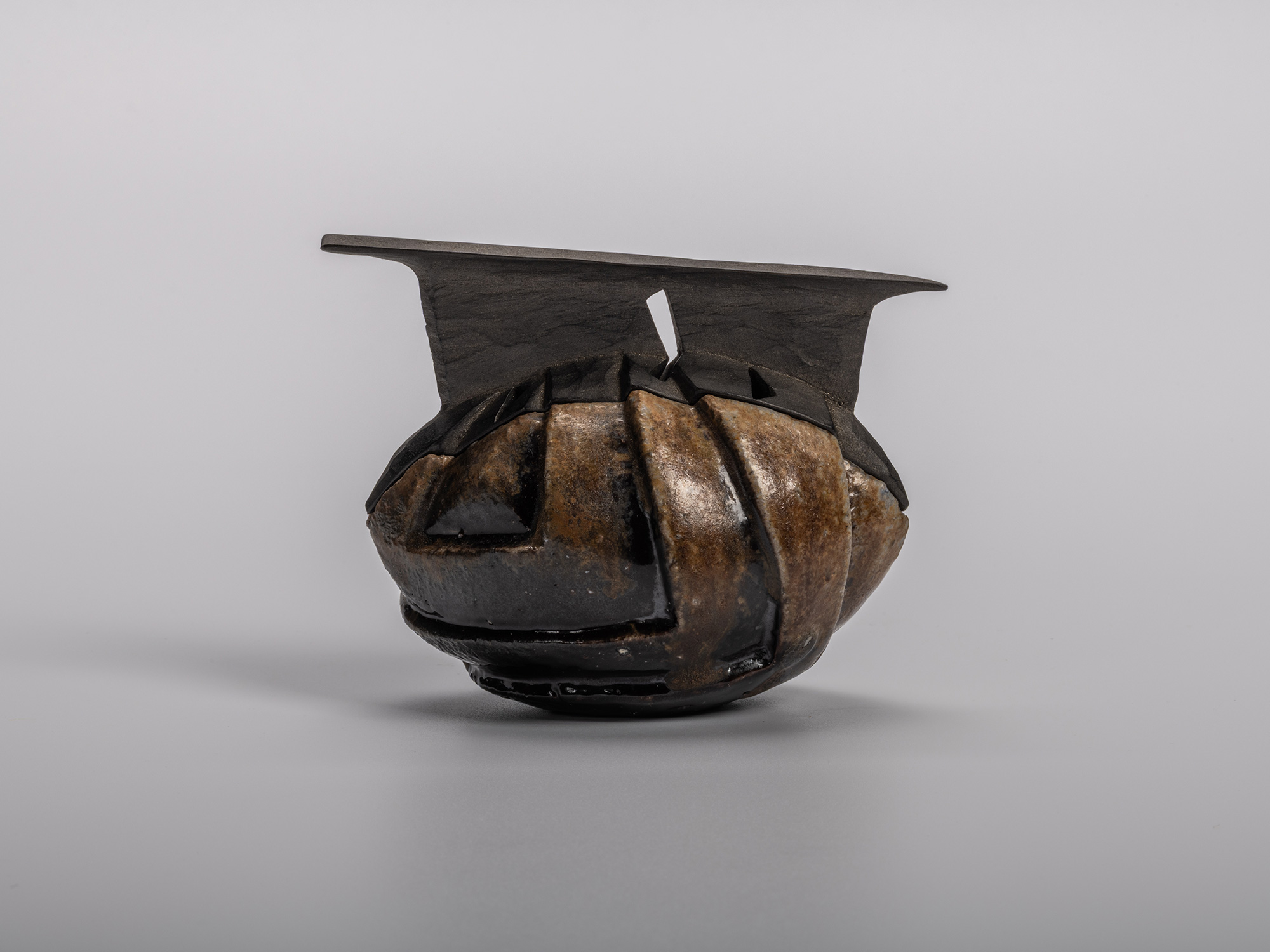
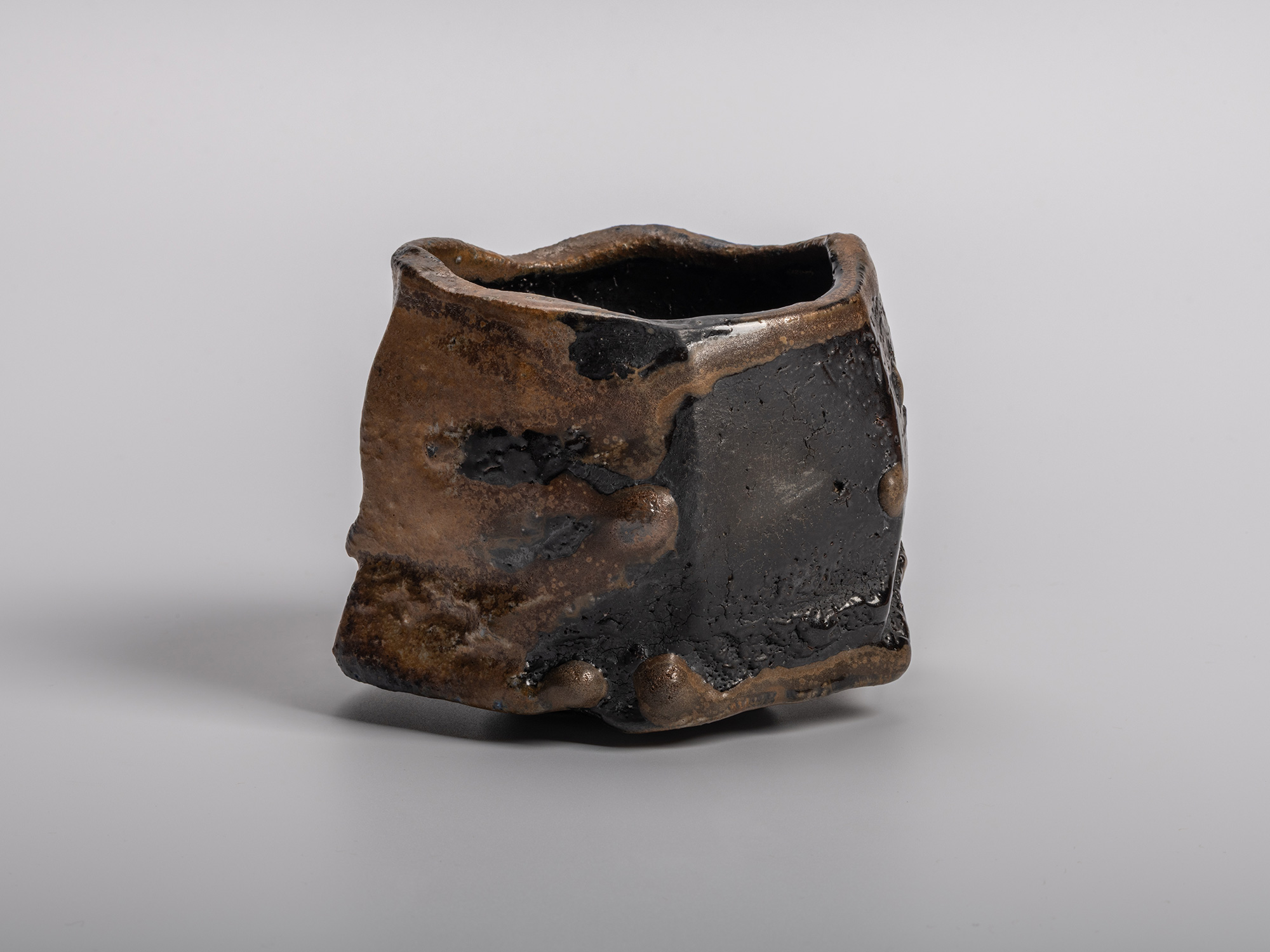
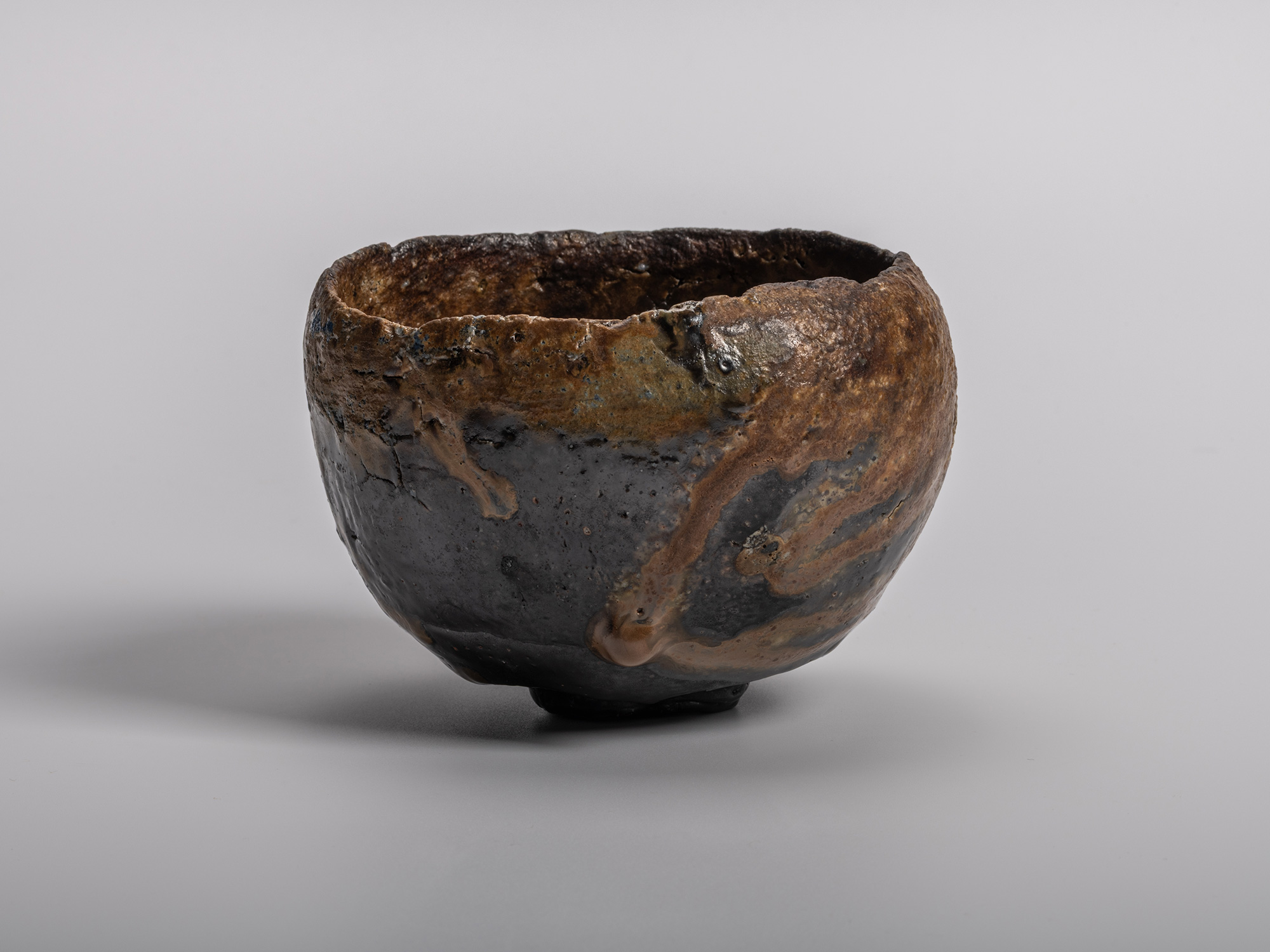
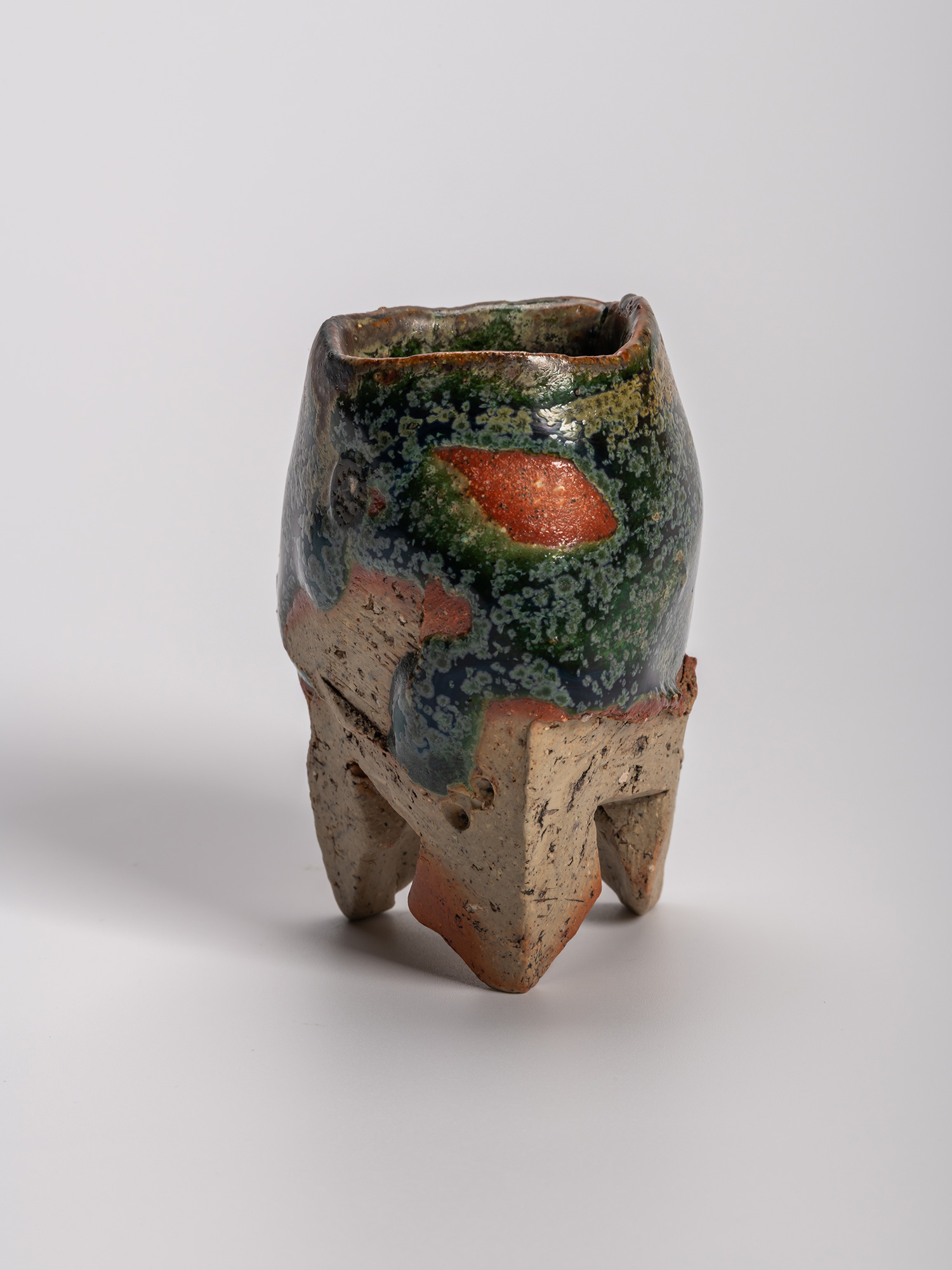
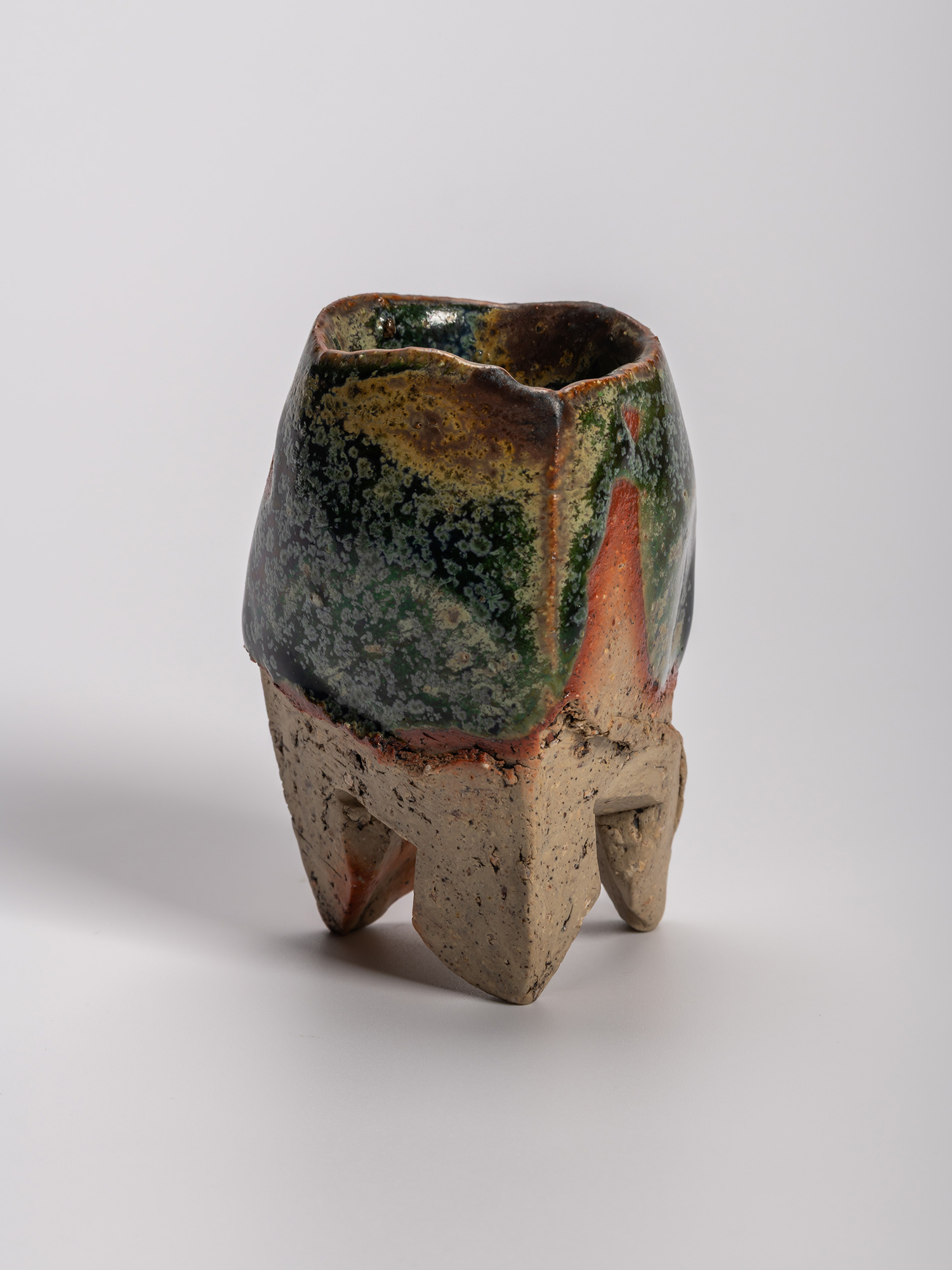
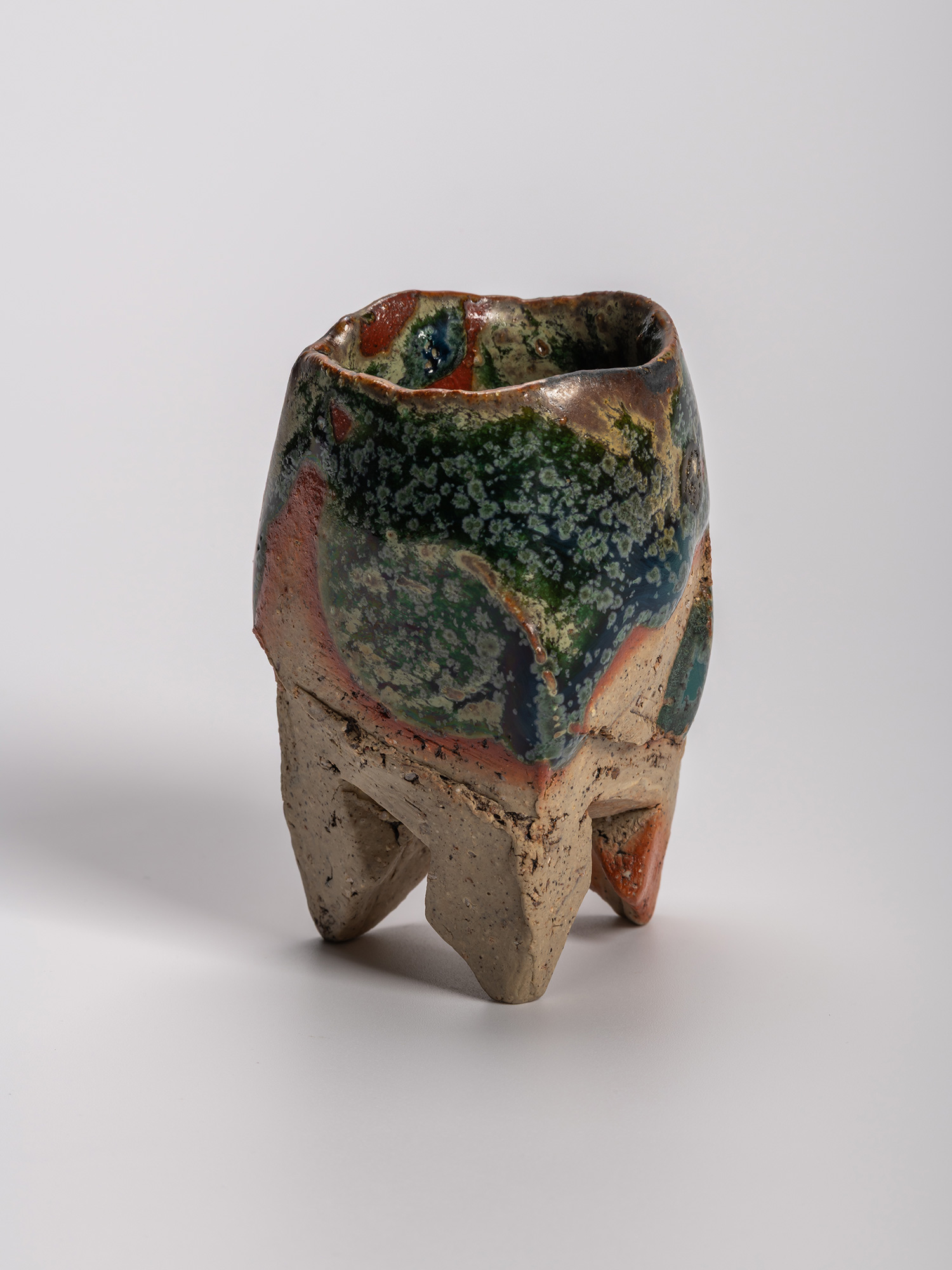
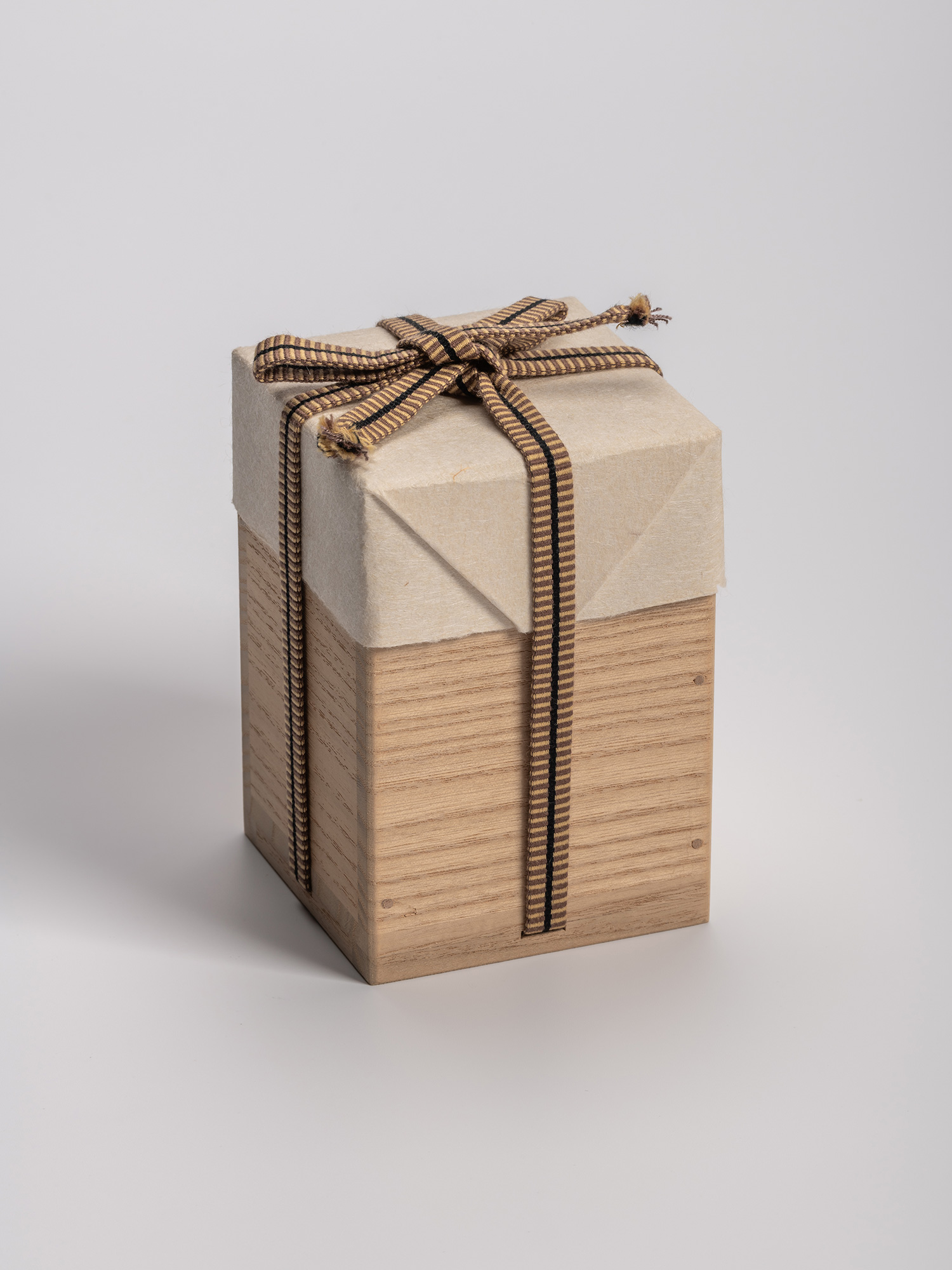
This Iron Oribe sake cup reflects the bold, experimental spirit of Oribe ware, a ceramic tradition that emerged in the early 17th century during Japan’s Momoyama period. Produced in the Seto-Mino region of central Japan, Oribe ceramics were revolutionary for their embrace of asymmetry, painterly decoration, and vivid color, departing from the restrained aesthetics of earlier tea wares. This example belongs to the E-Oribe (Iron Oribe) tradition, distinguished by iron-oxide decoration applied beneath a translucent copper-green glaze.
The cup is formed from a low-iron white clay that has been aggressively worked with a spatula, producing sharply defined planes and an intentionally irregular profile. Oribe glaze is poured boldly over this structured surface, its fluid movement enhancing the vessel’s three-dimensionality and activating the carved geometry beneath. Areas of glaze pooling, exposed clay, and iron-painted motifs interact dynamically, creating a lively contrast between drawing and surface.
The subtly warped form aligns with Oribe’s preference for intentional irregularity, often described as kutsugata (“shoe-shaped”), imparting a sense of movement and spontaneity. Fired in a climbing (noborigama) kiln under oxidizing conditions, the glaze achieves its characteristic green hue while allowing the iron decoration to remain visible below the surface.
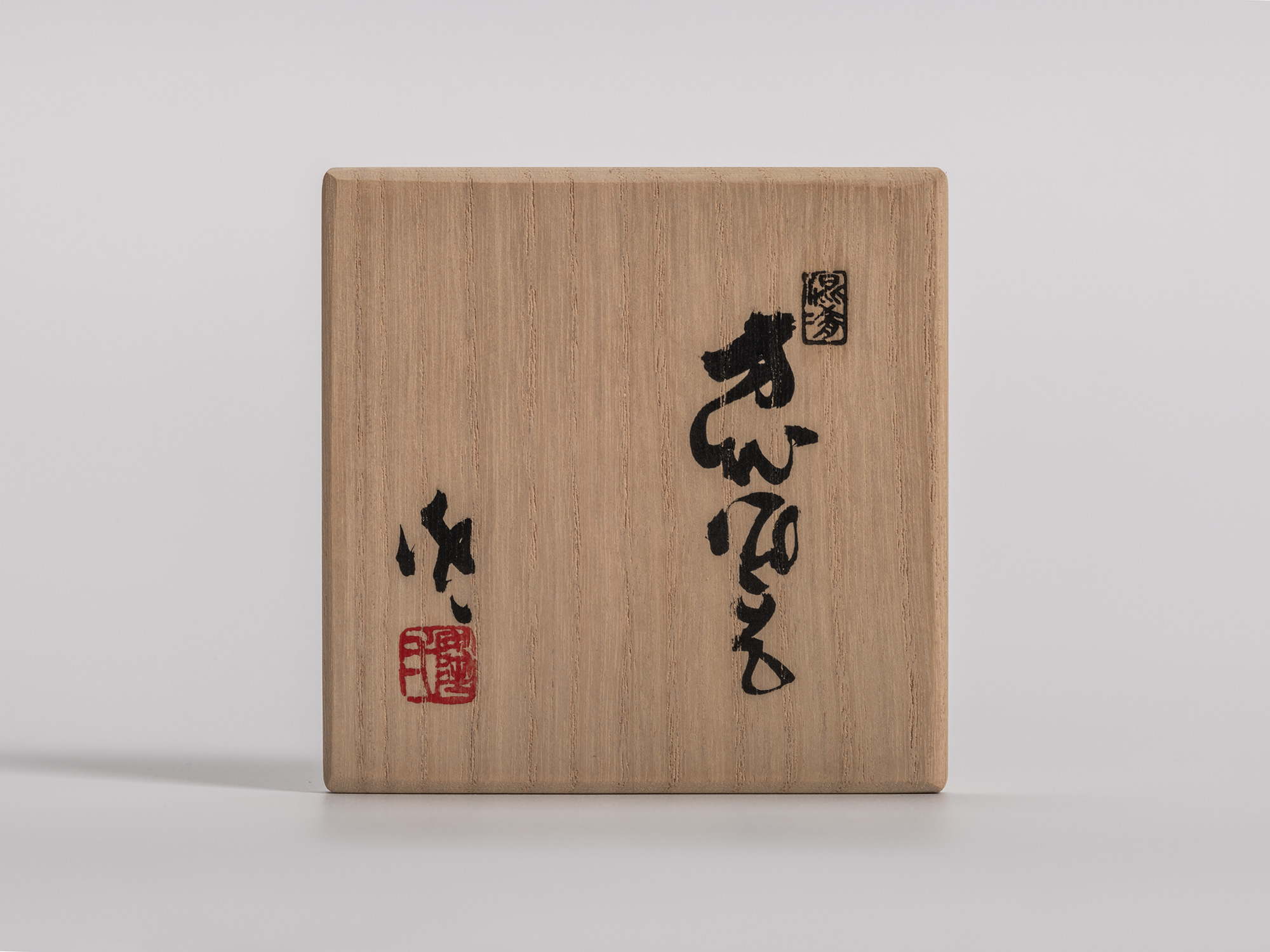
The artist has entitled the piece “Riki-san” (translating to Power or Strength) with the number “3” inscribed on the accompanying box suggests the cup may belong to a related series, indicating a broader exploration of form and motif by the artist rather than an isolated work.