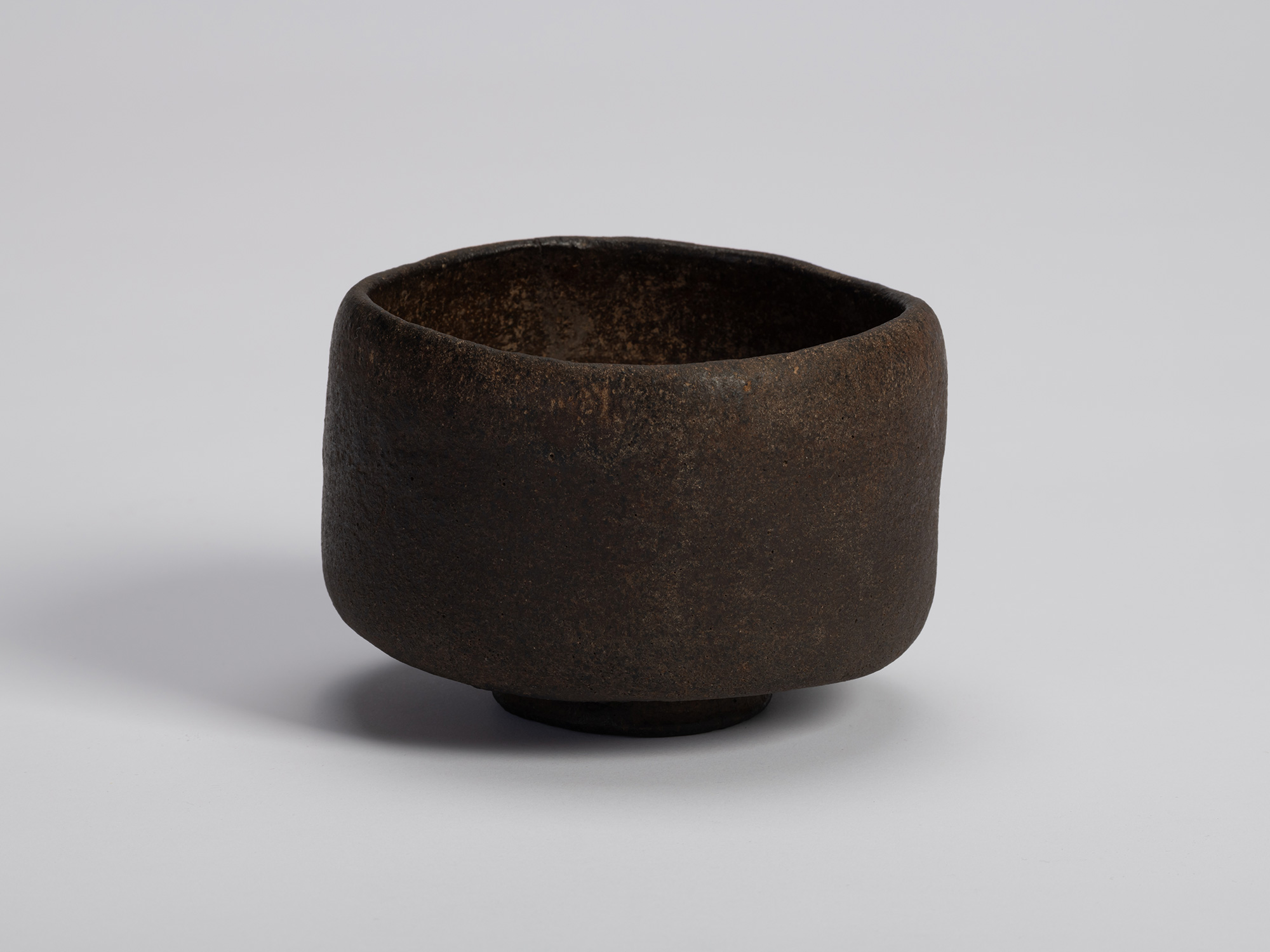
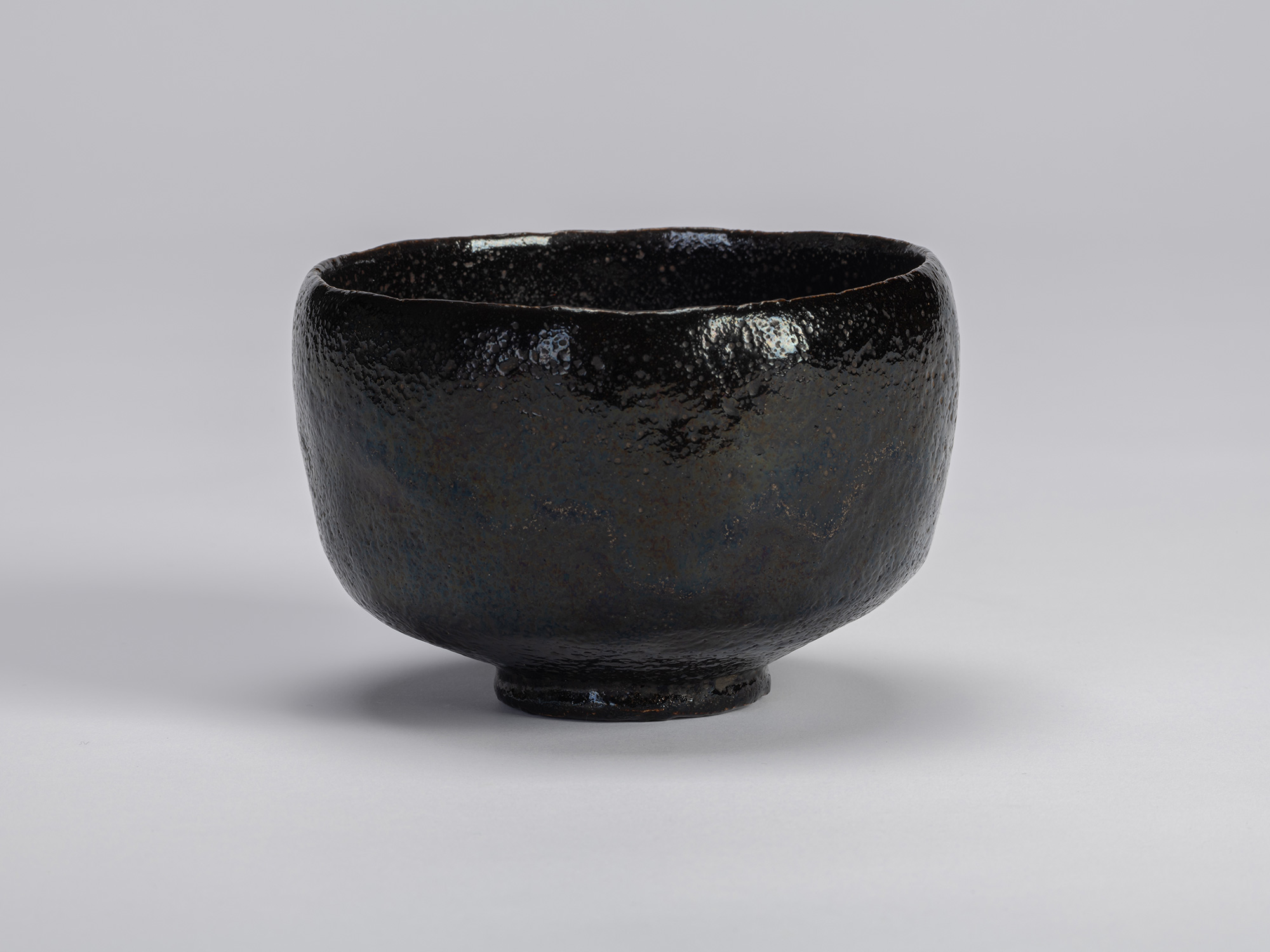
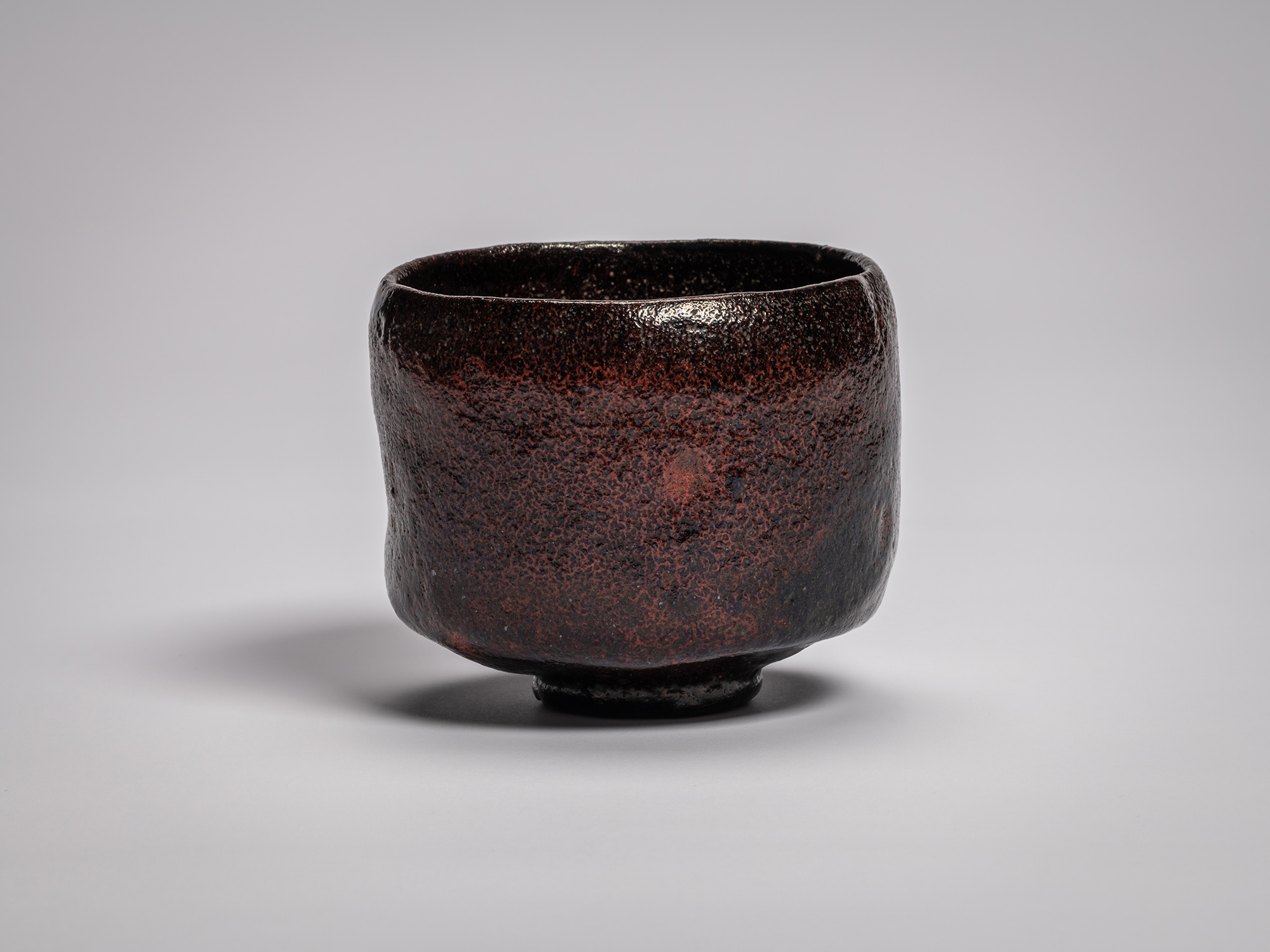
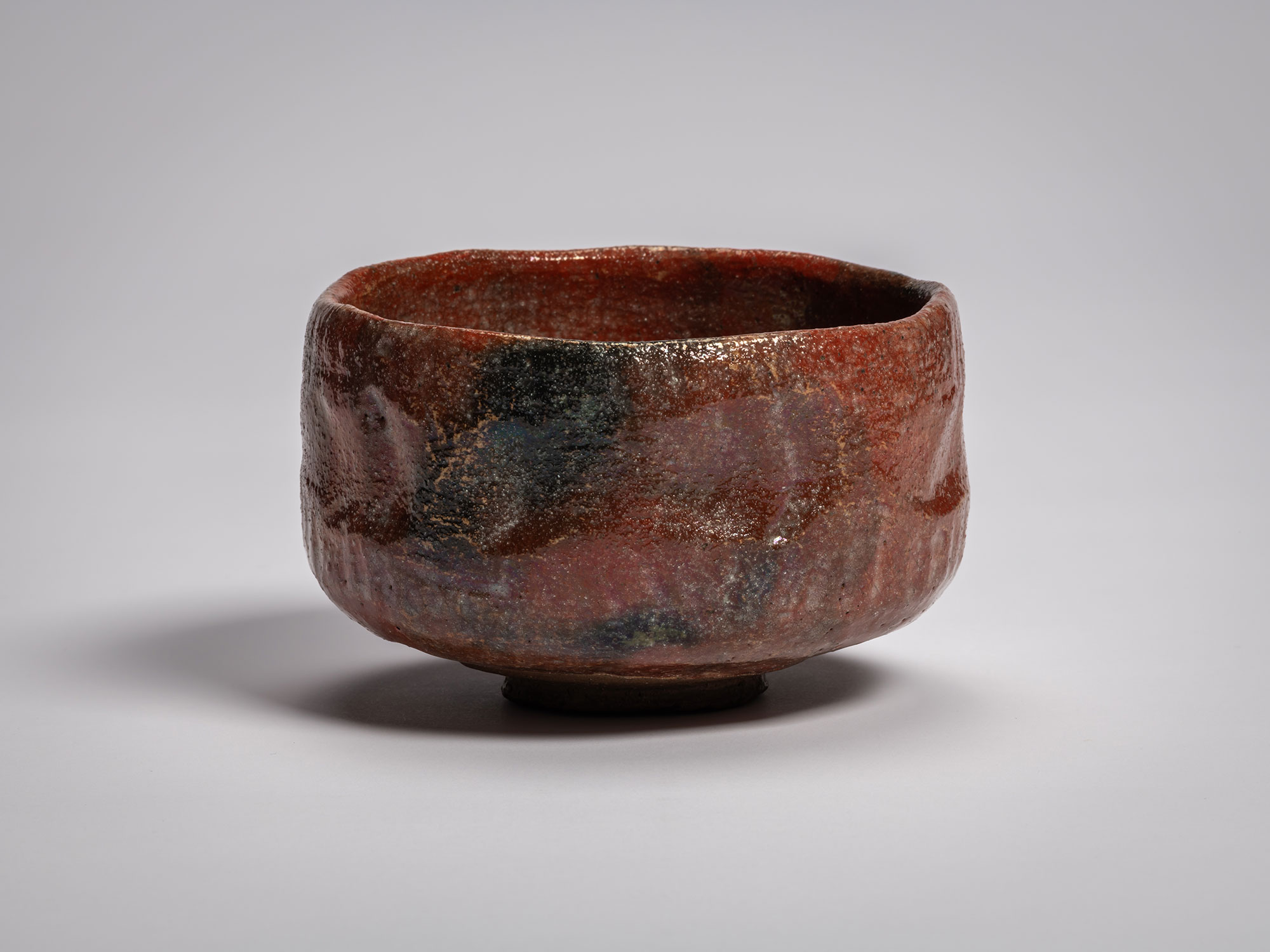
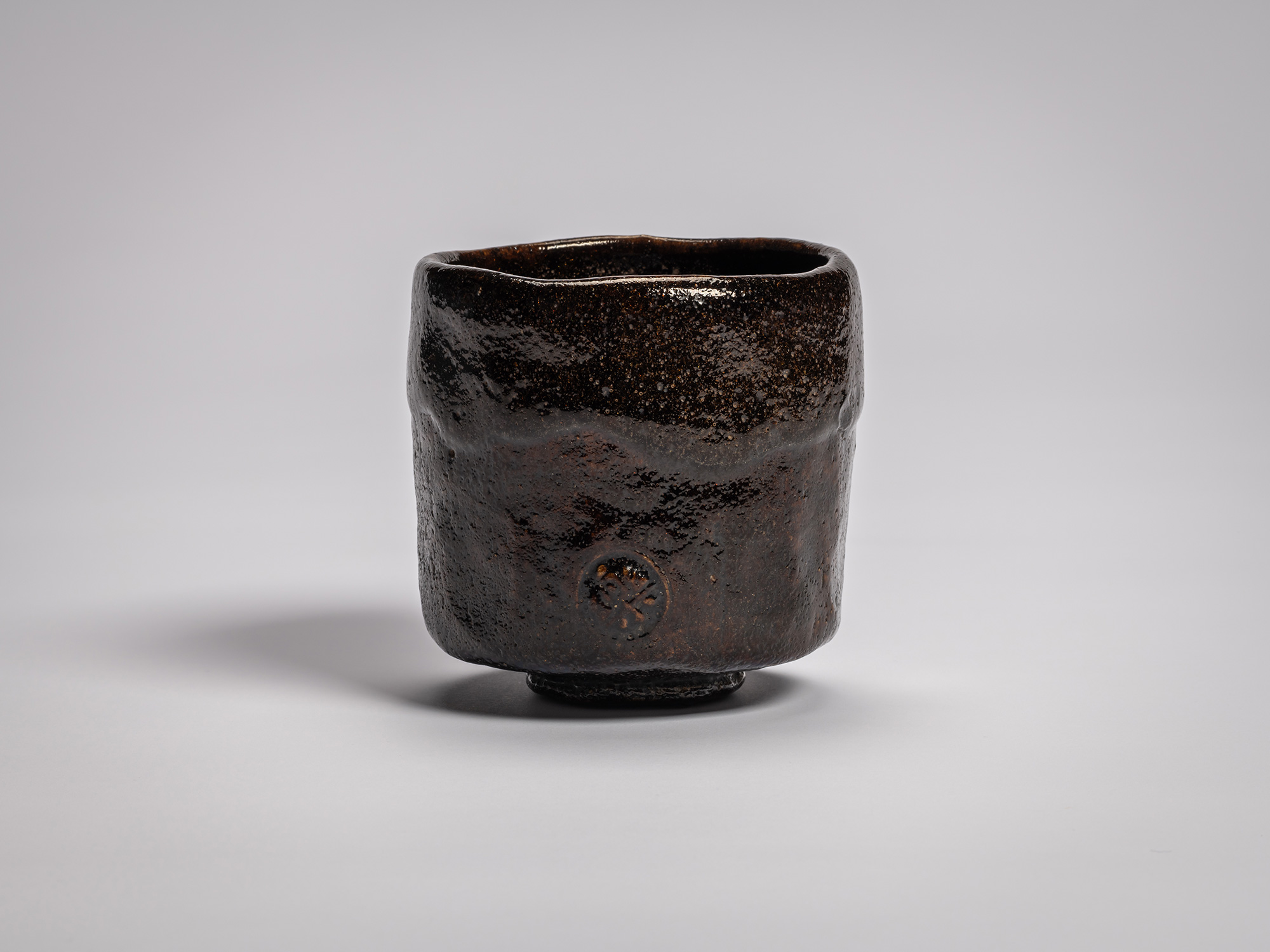
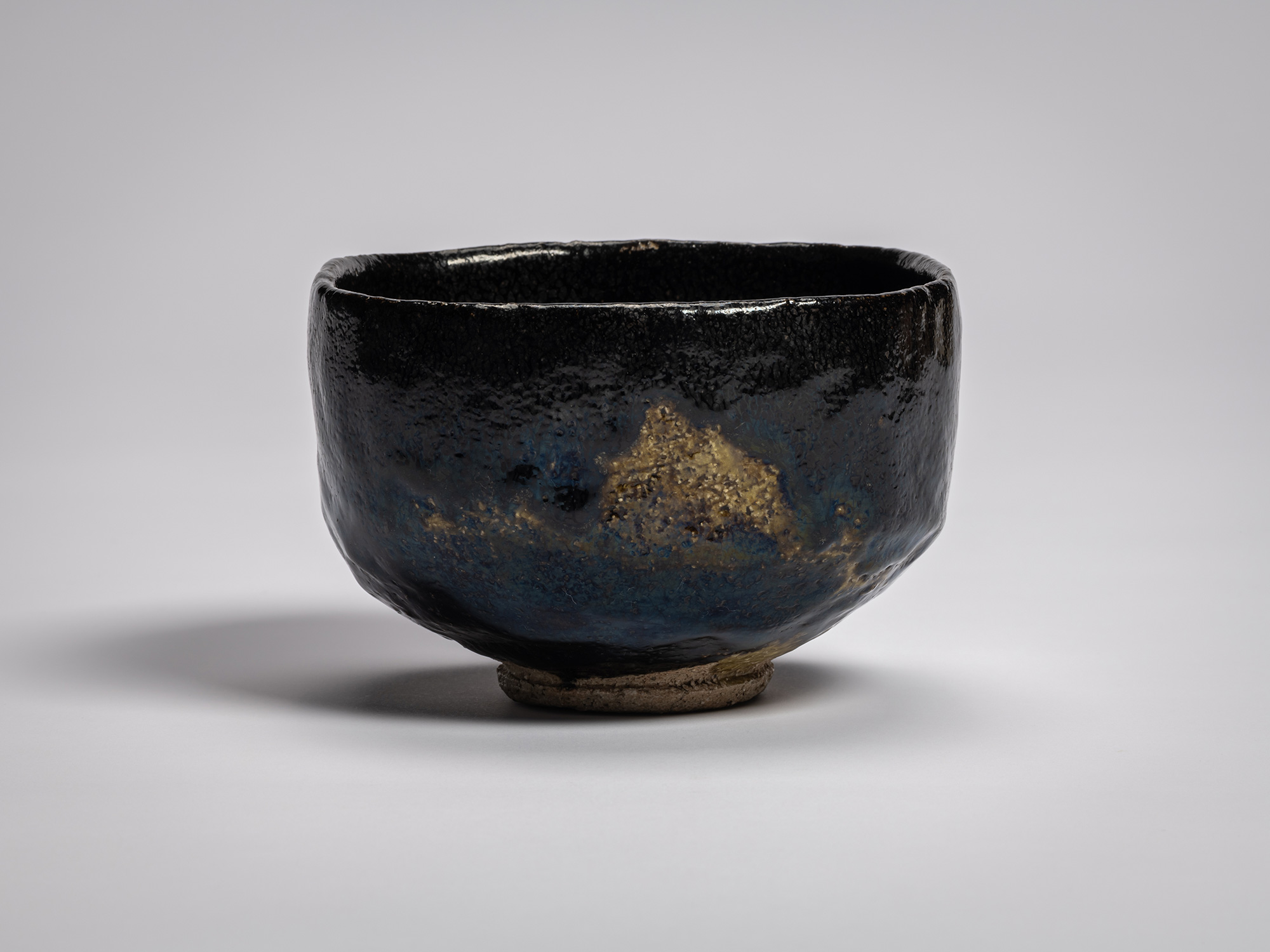
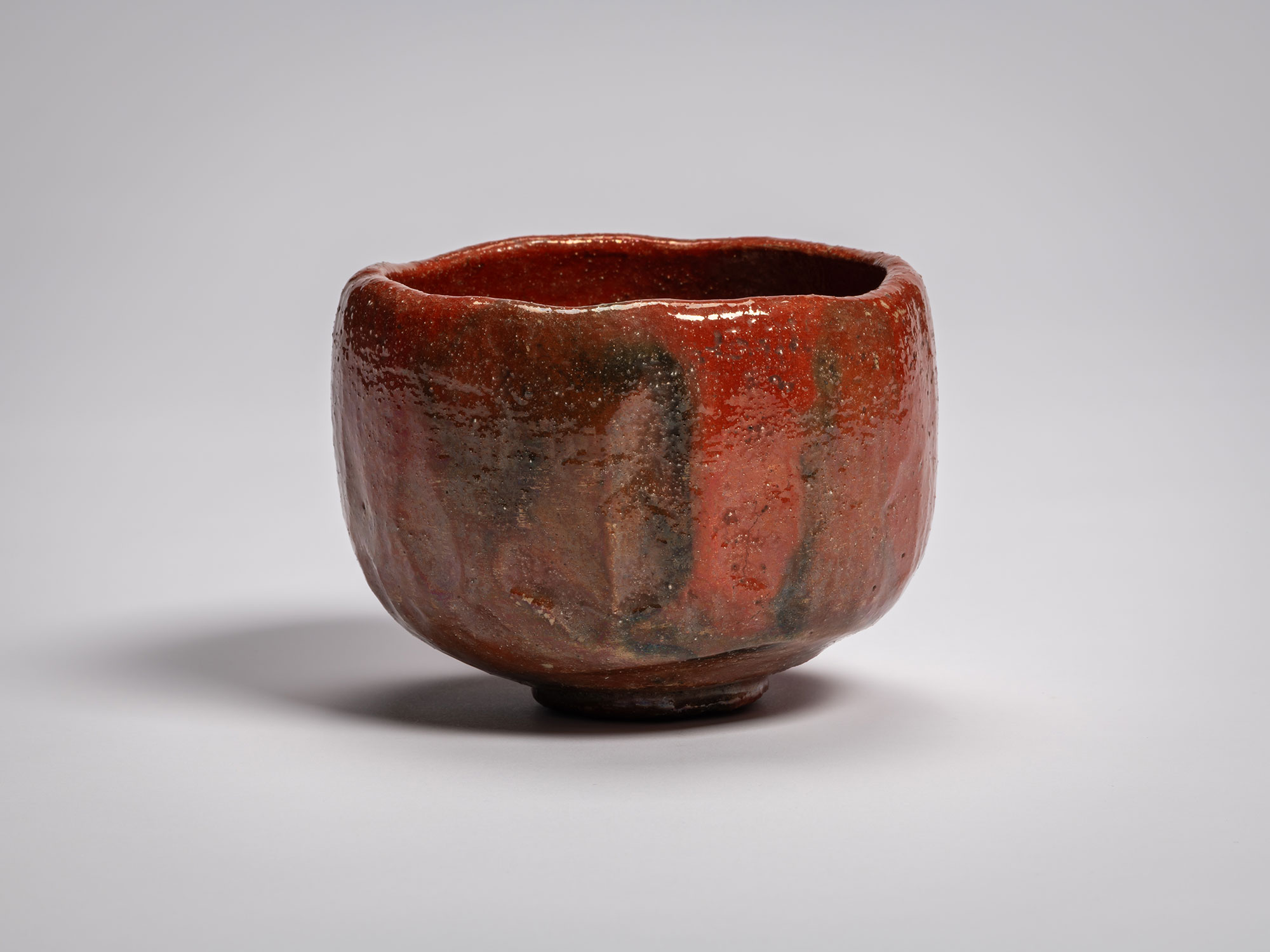
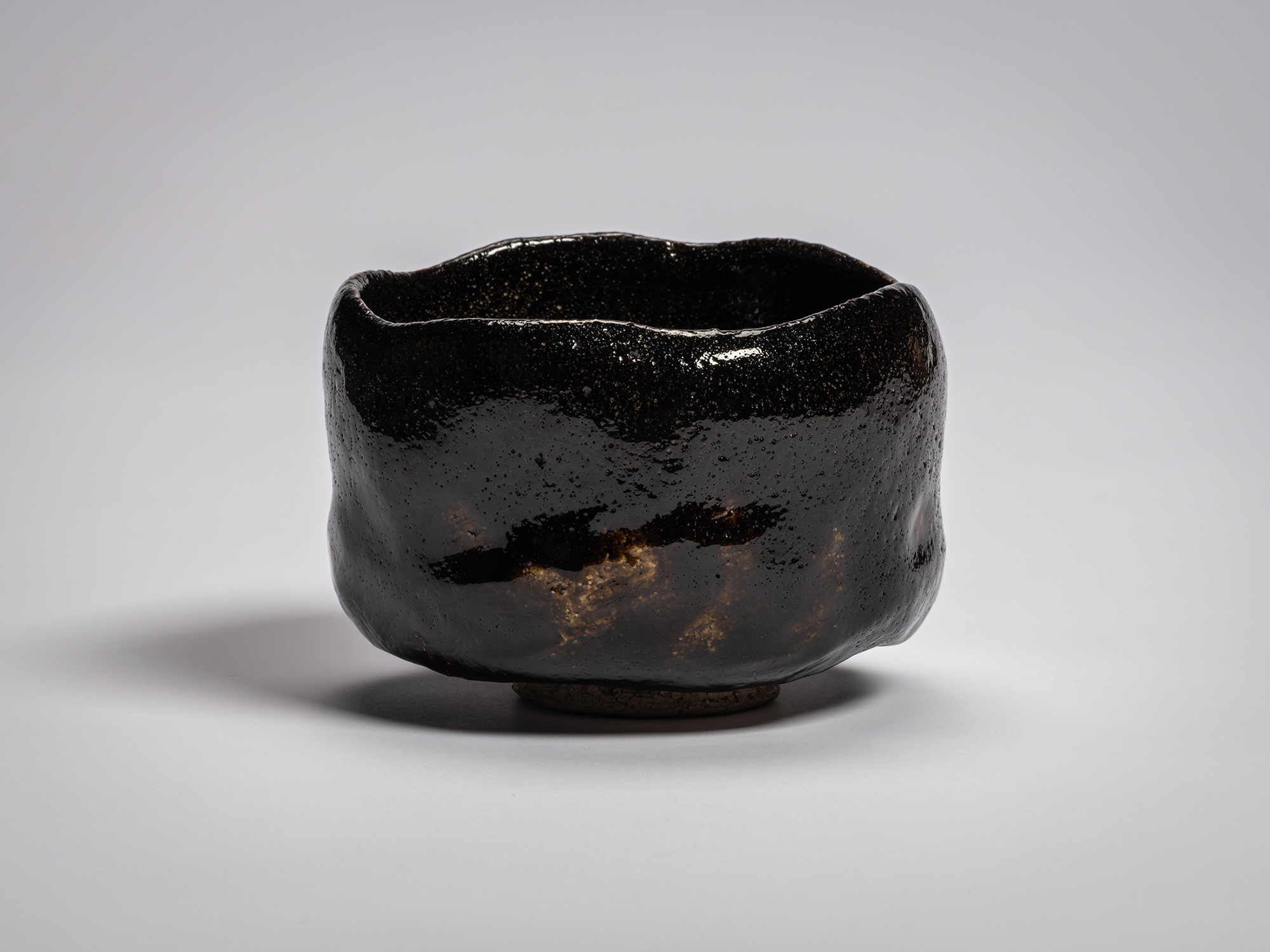
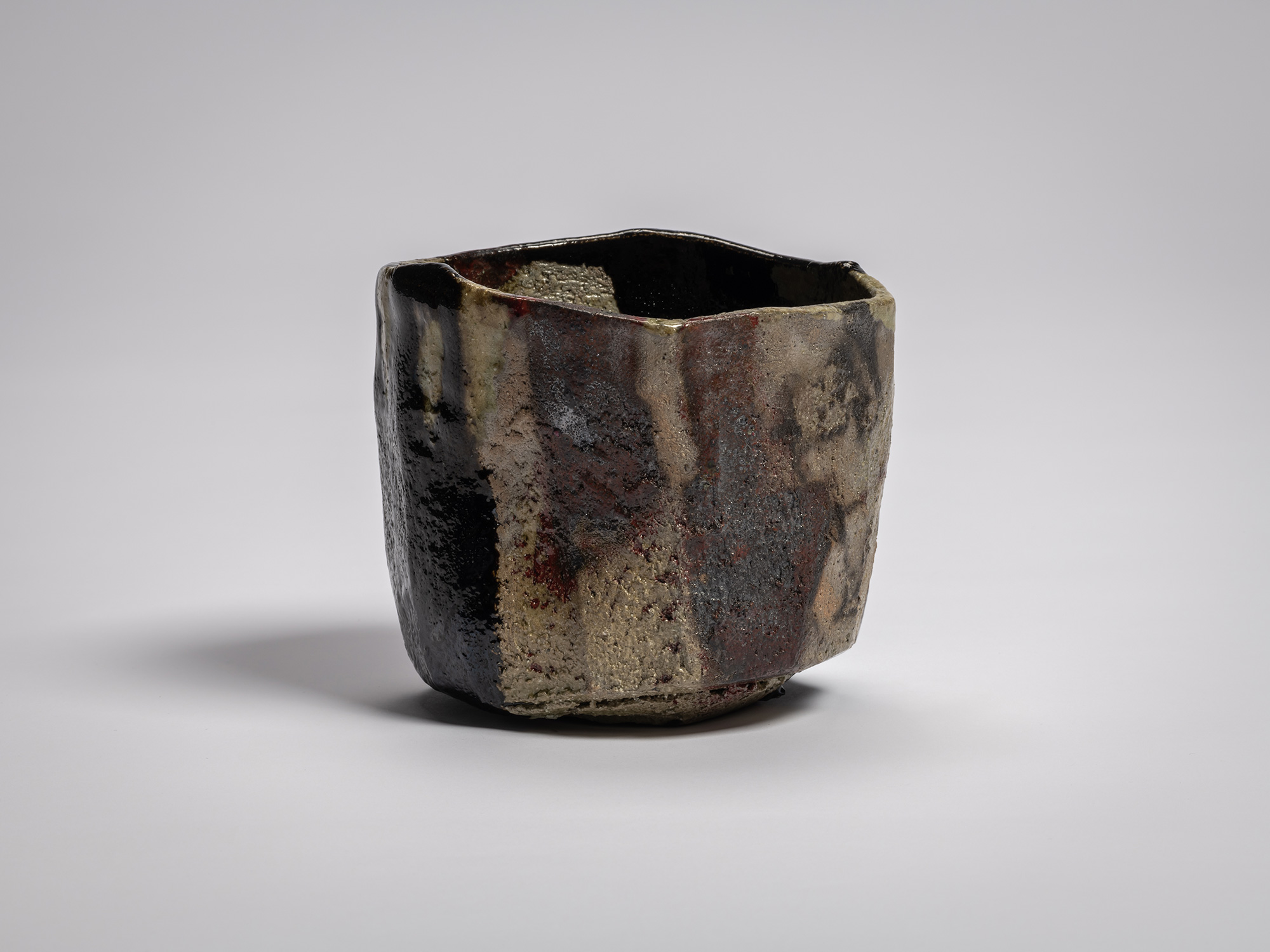
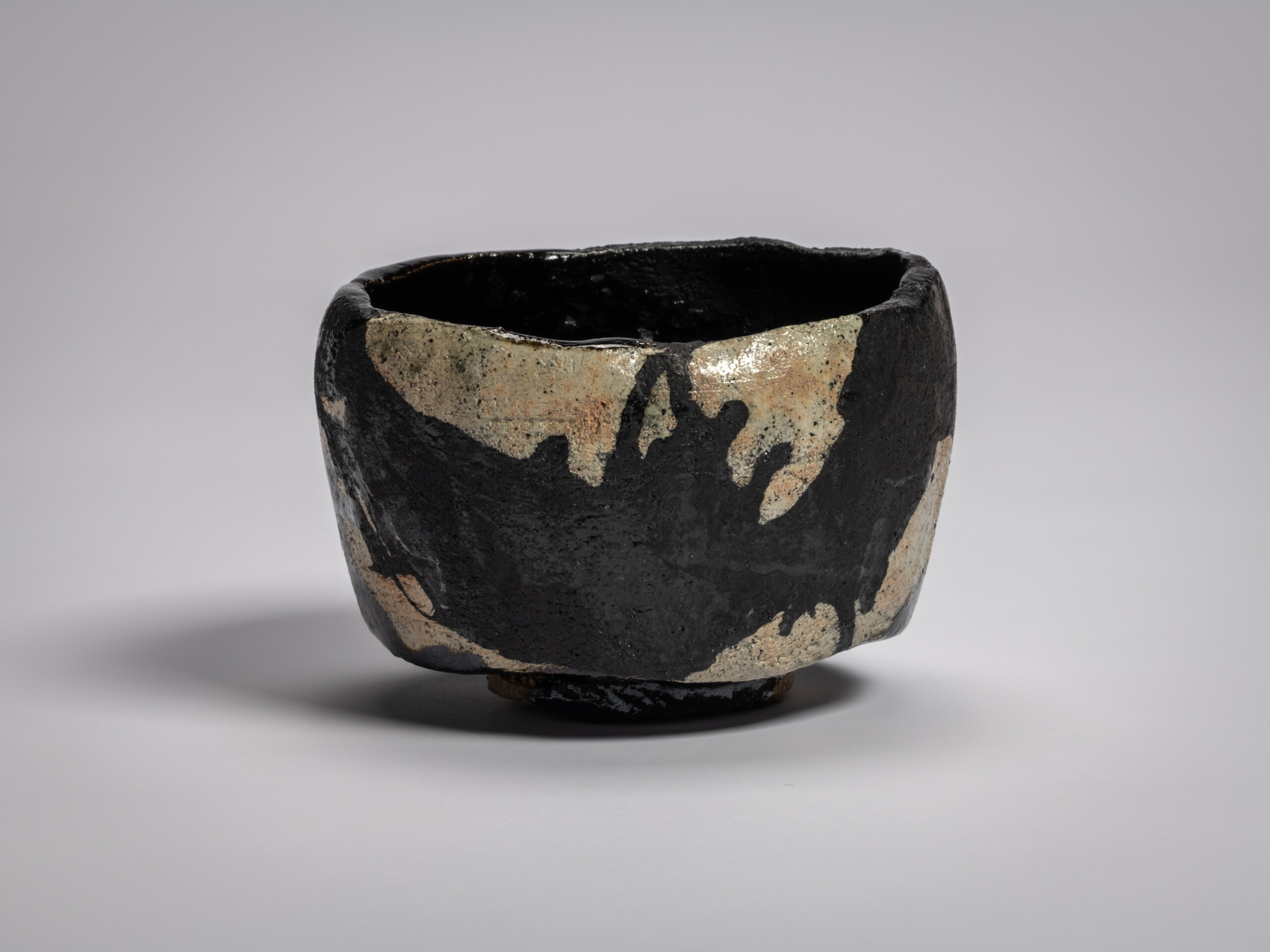
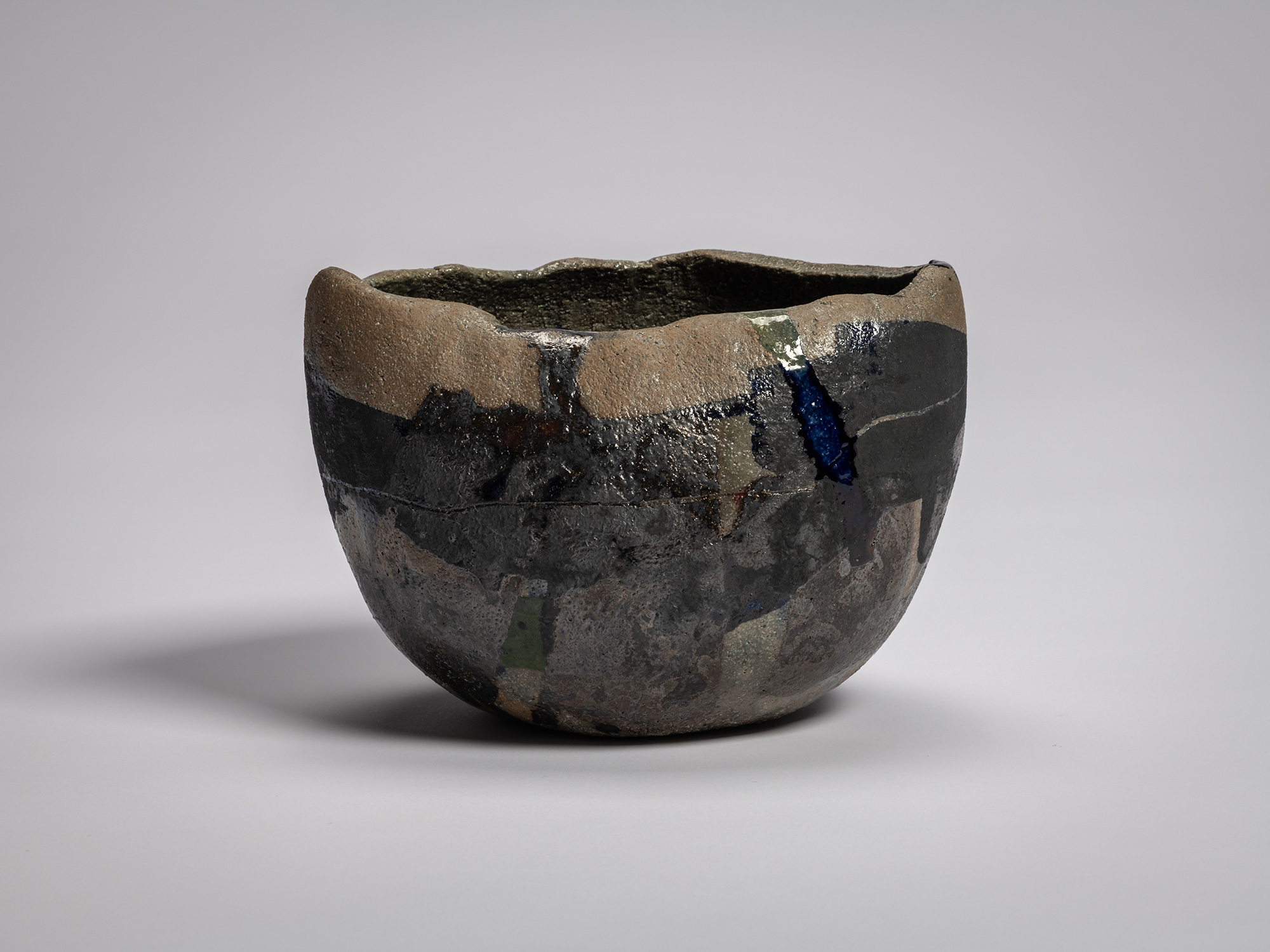
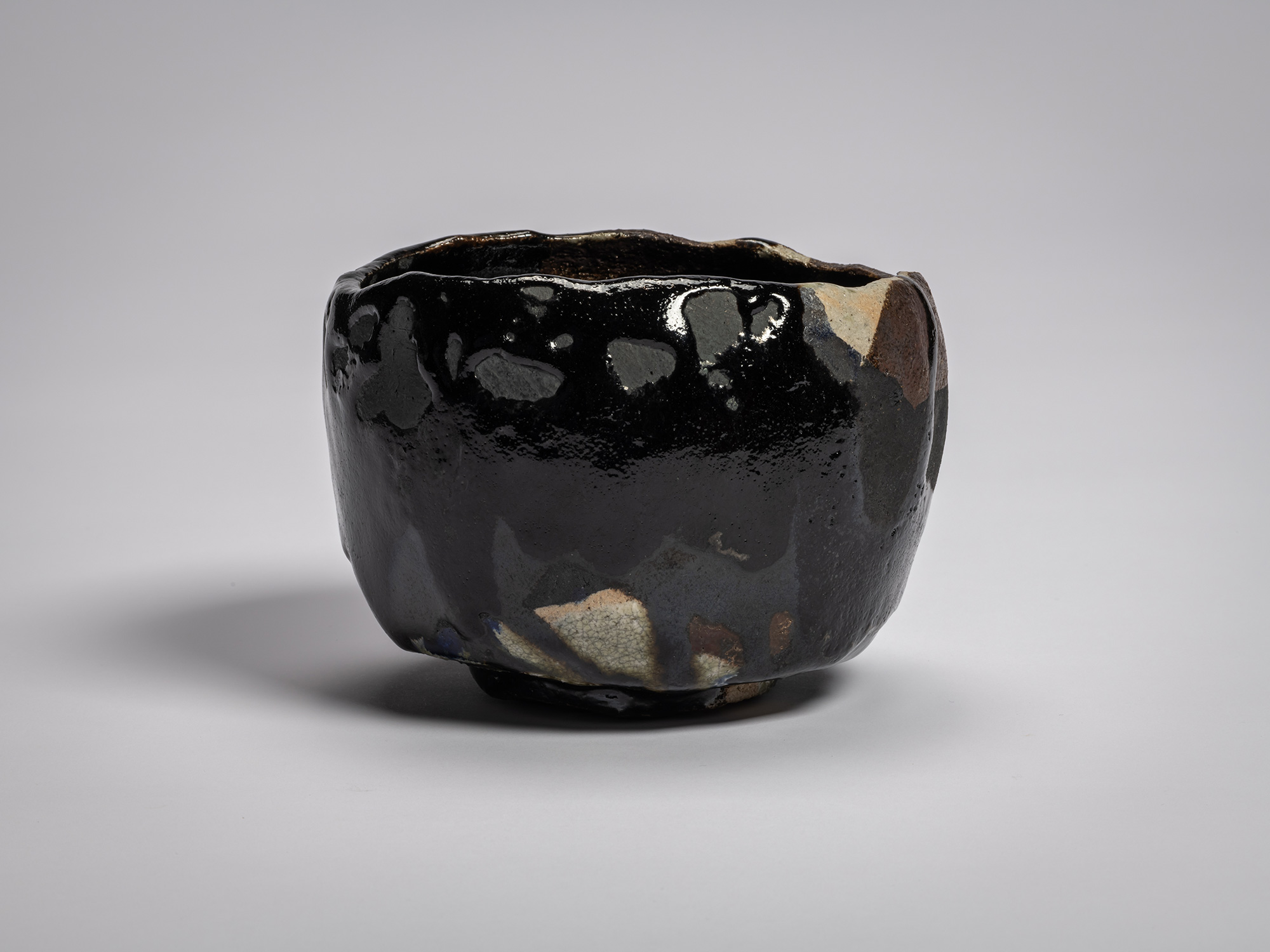
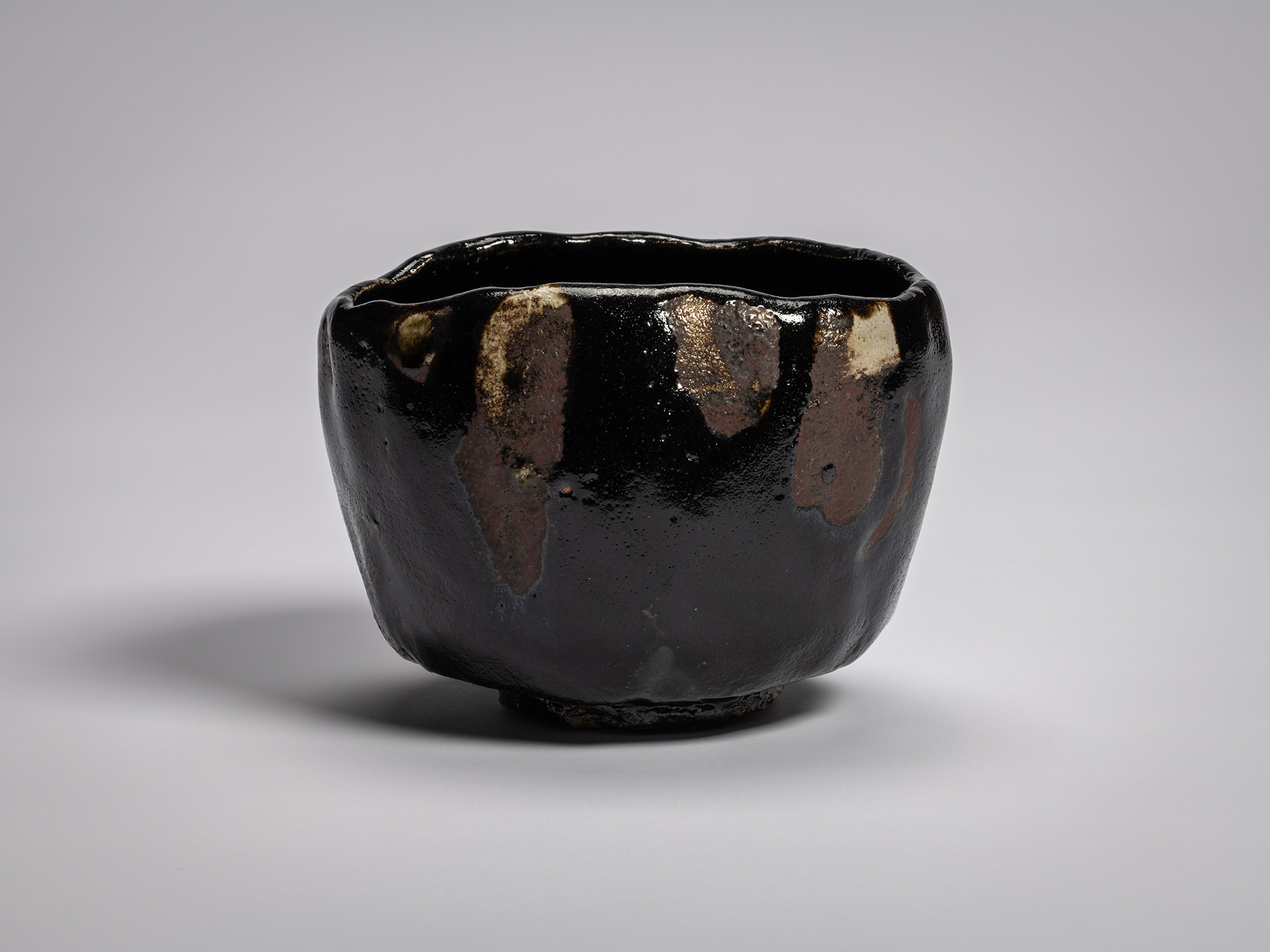
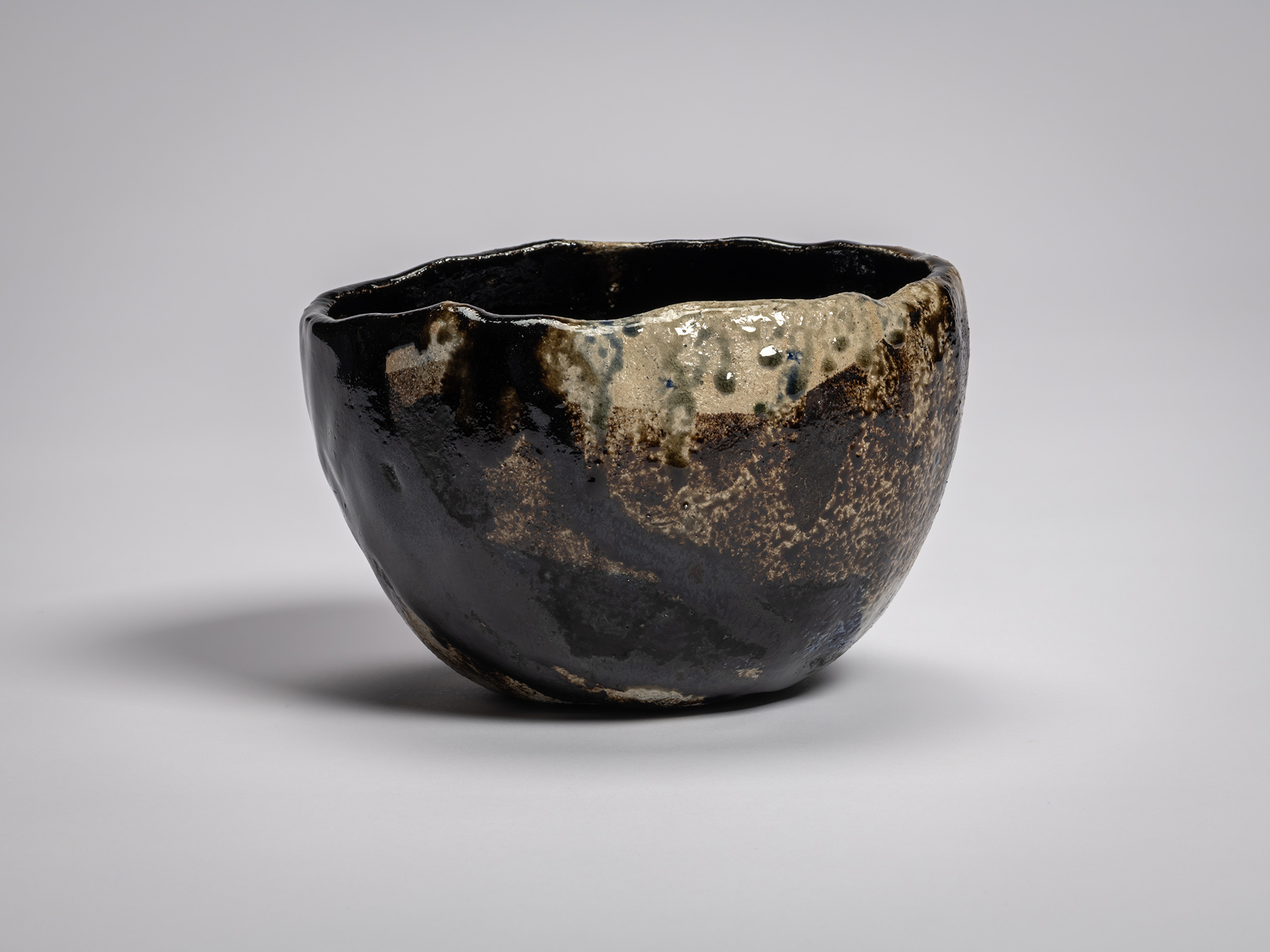
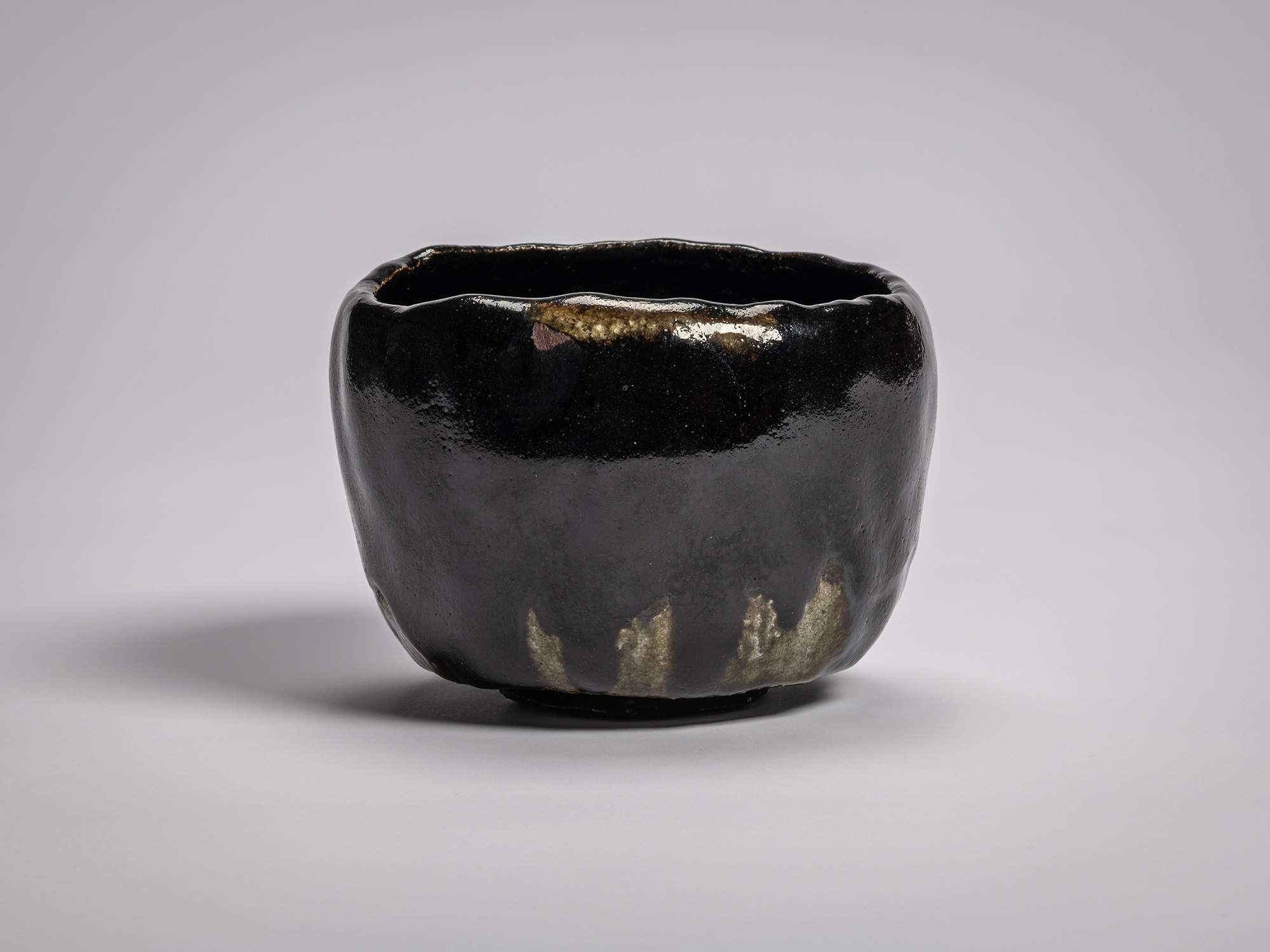
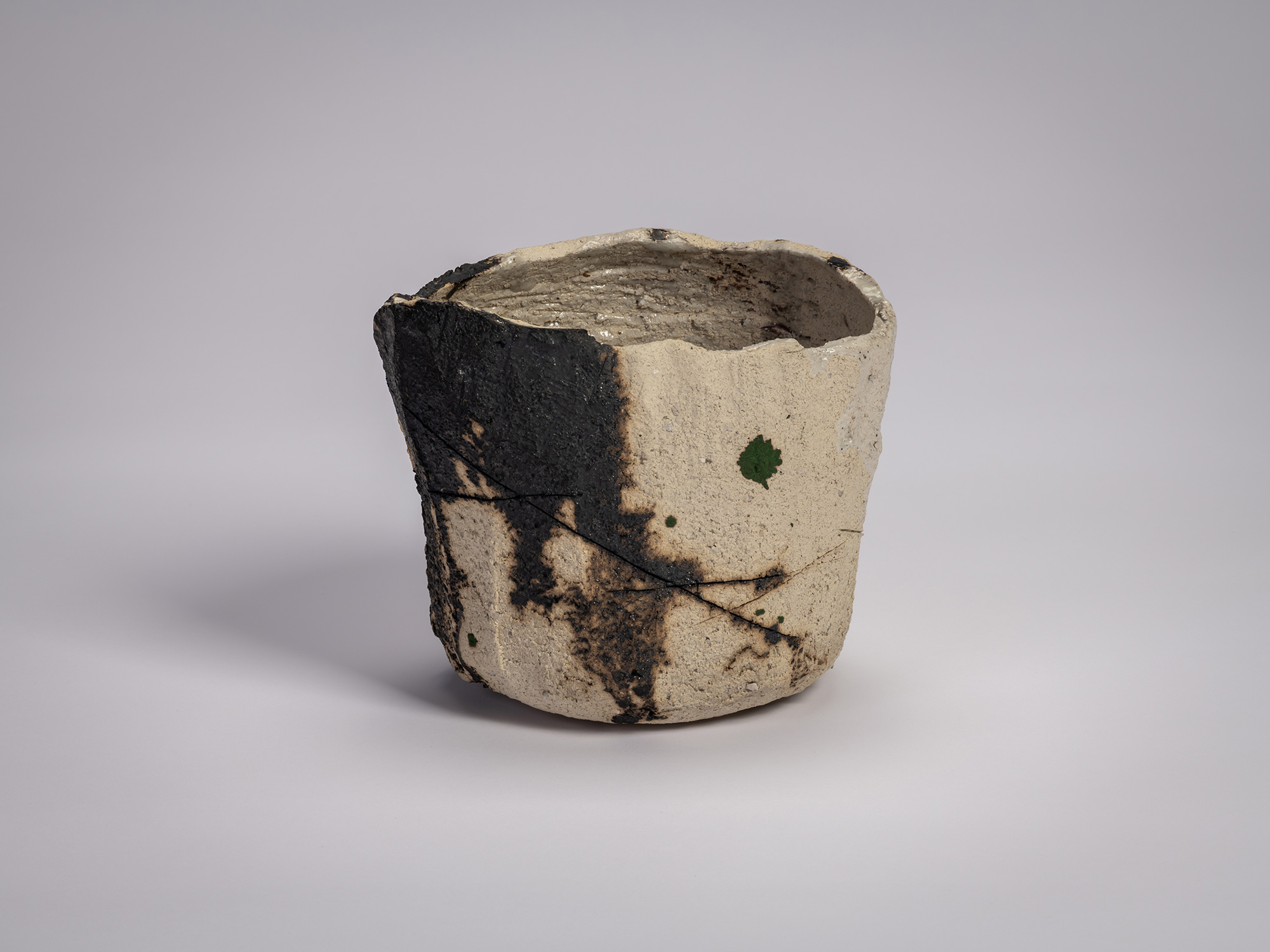
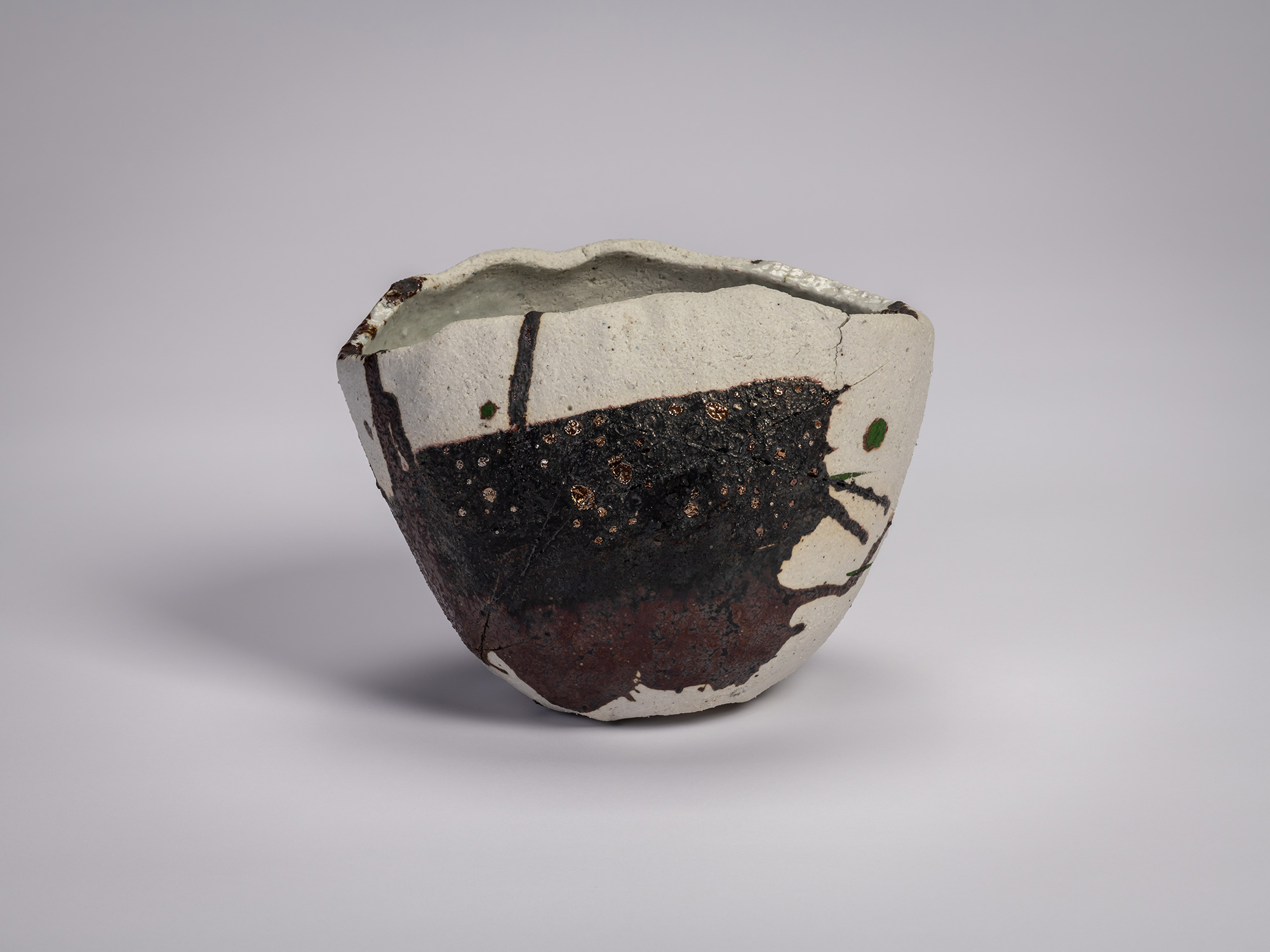
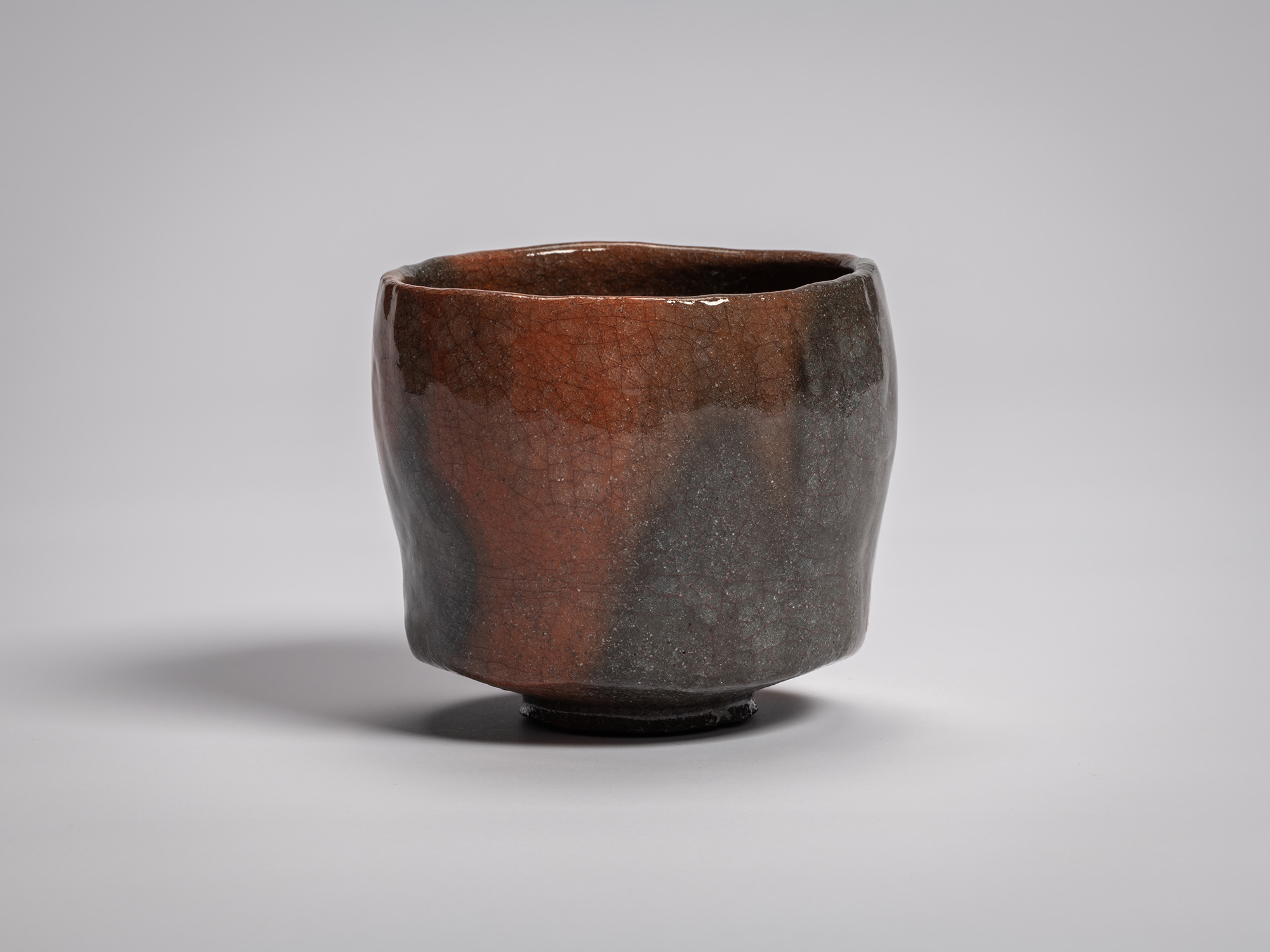
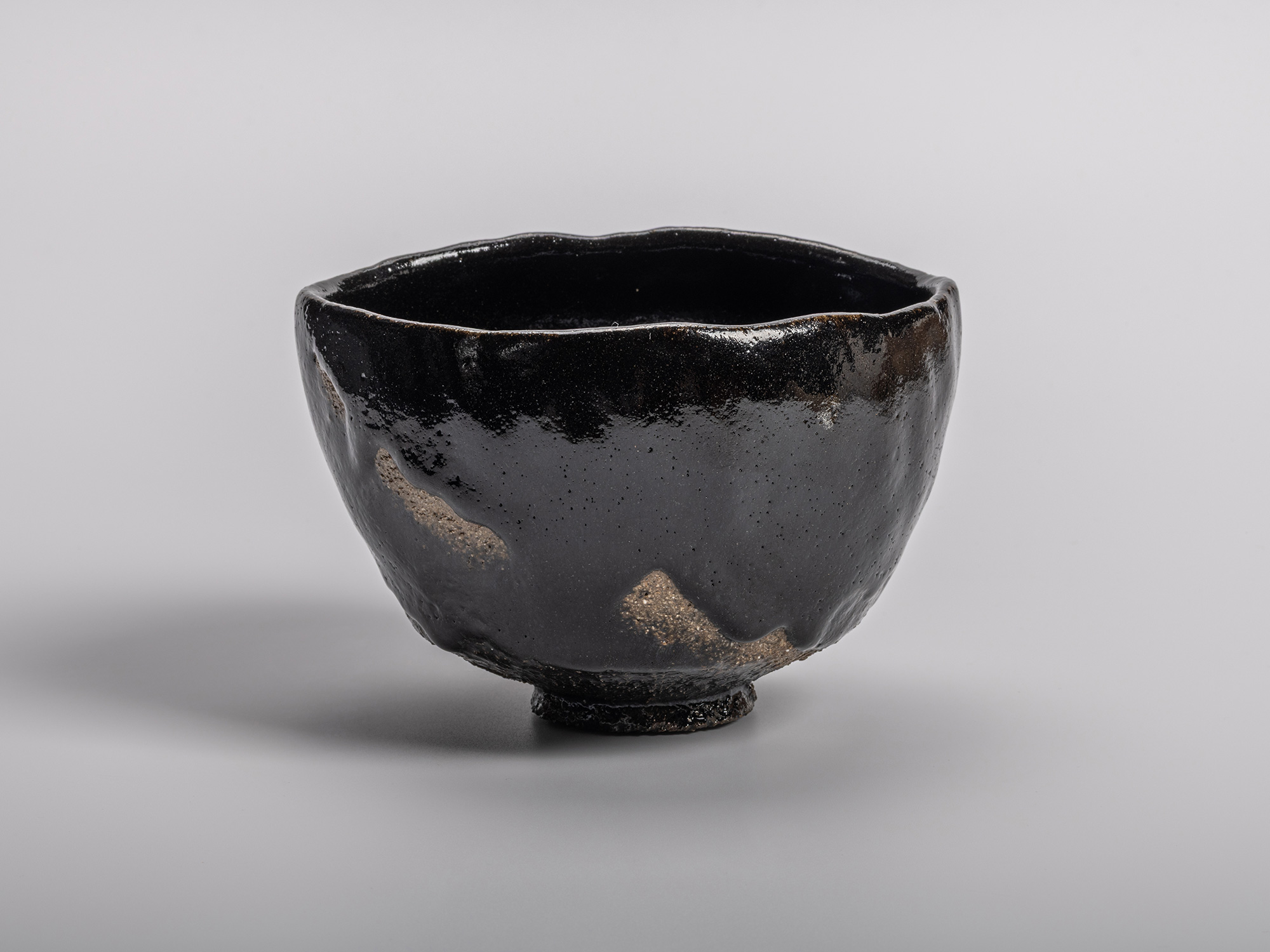
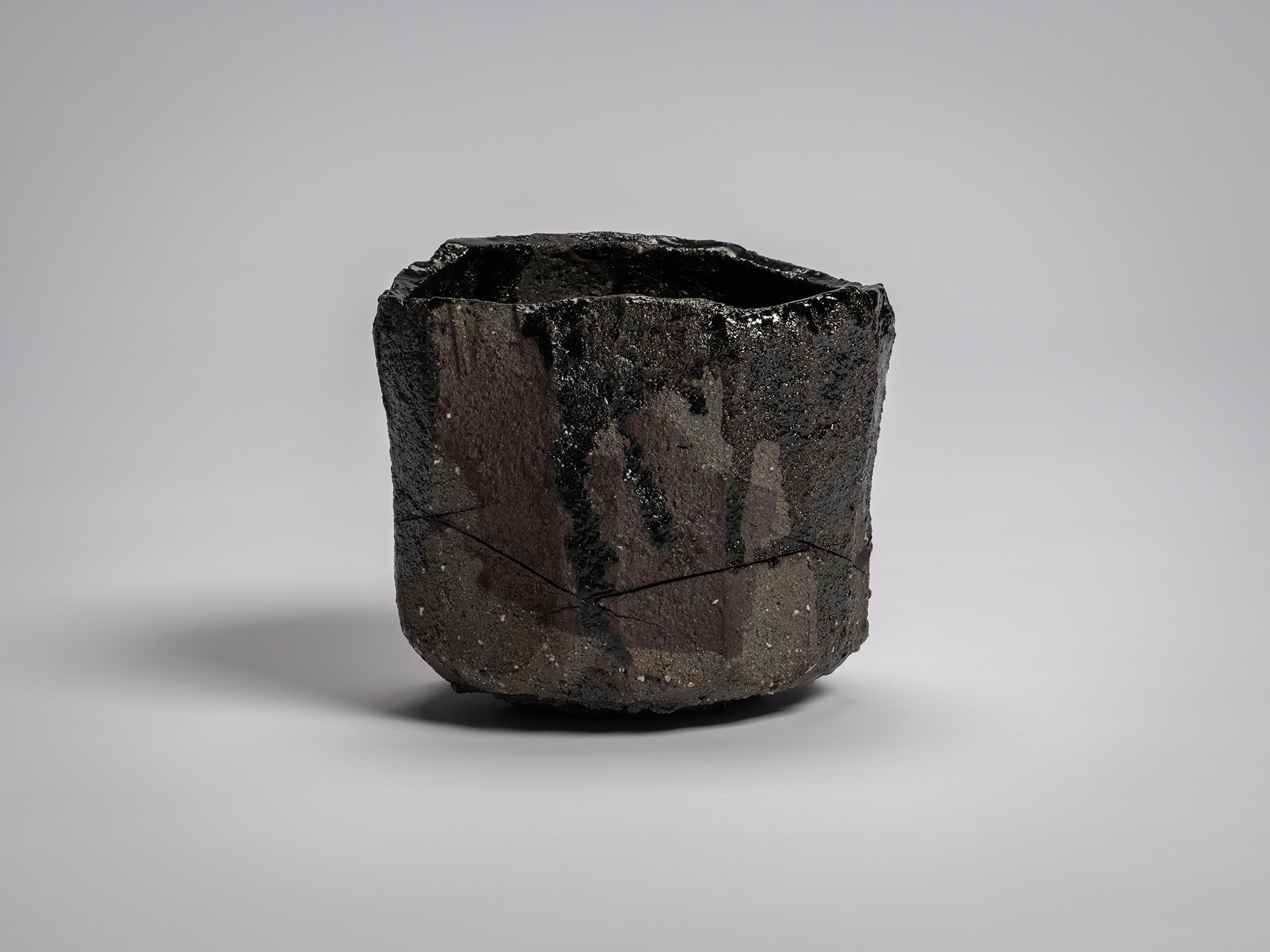
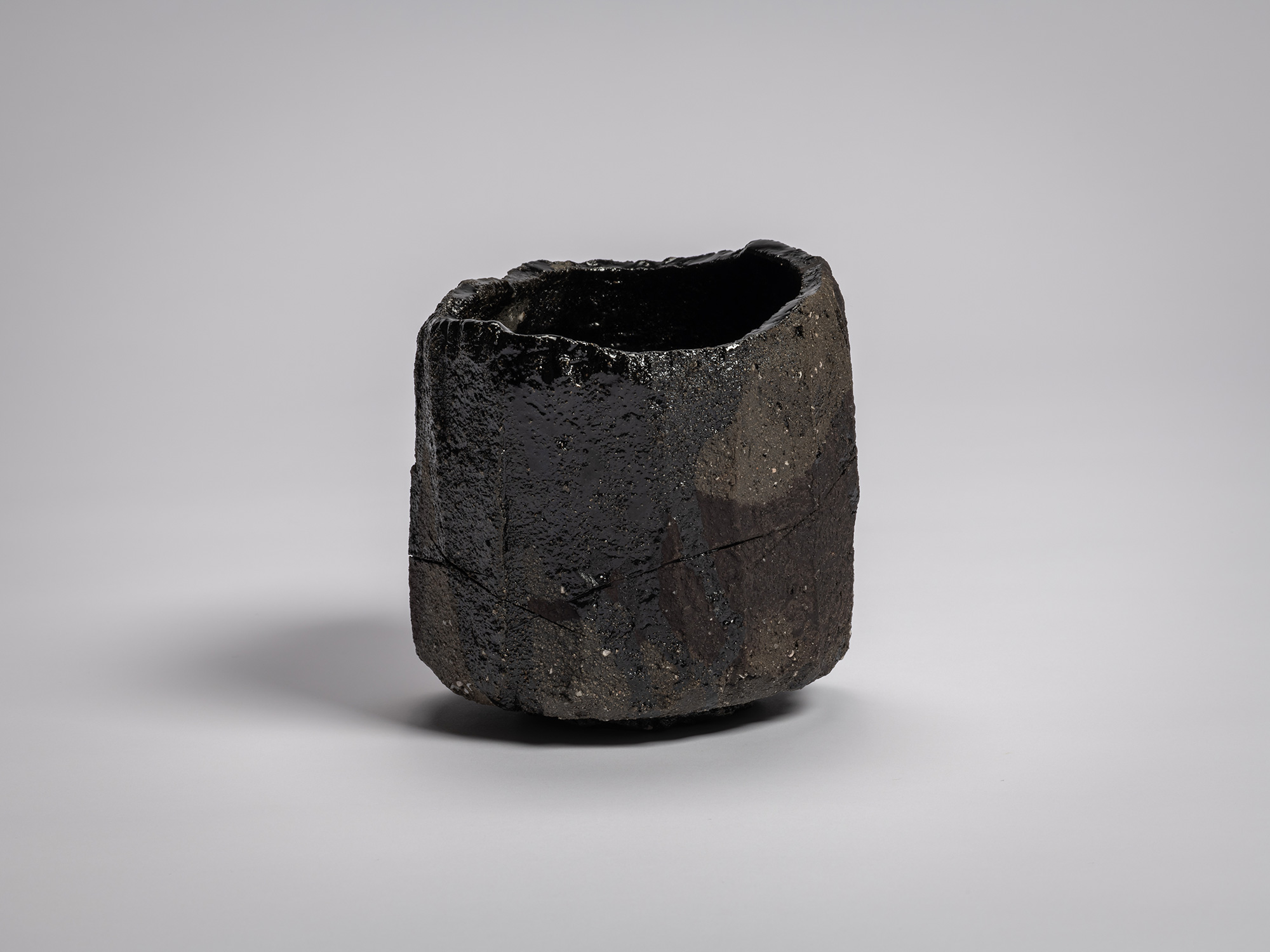
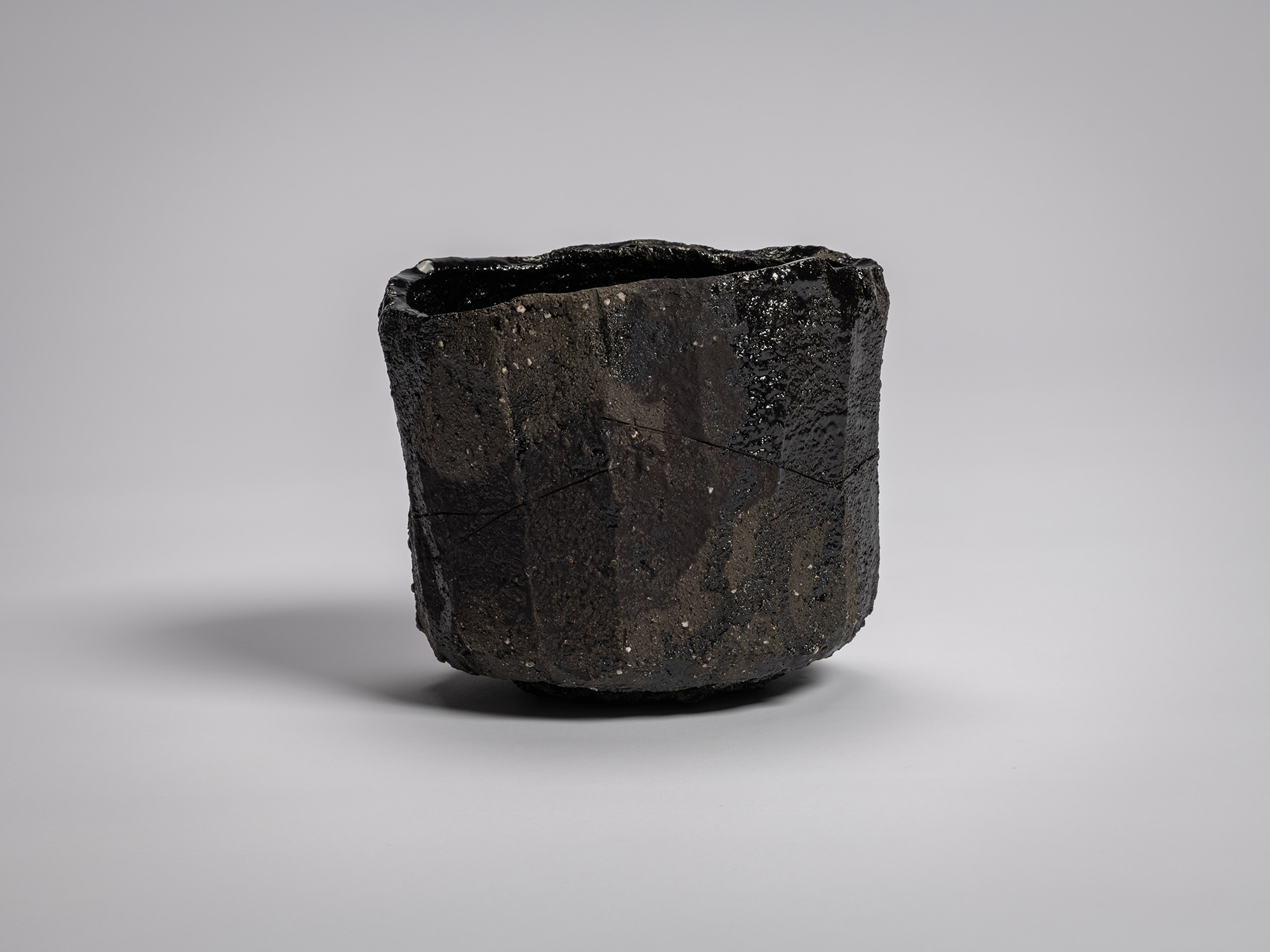
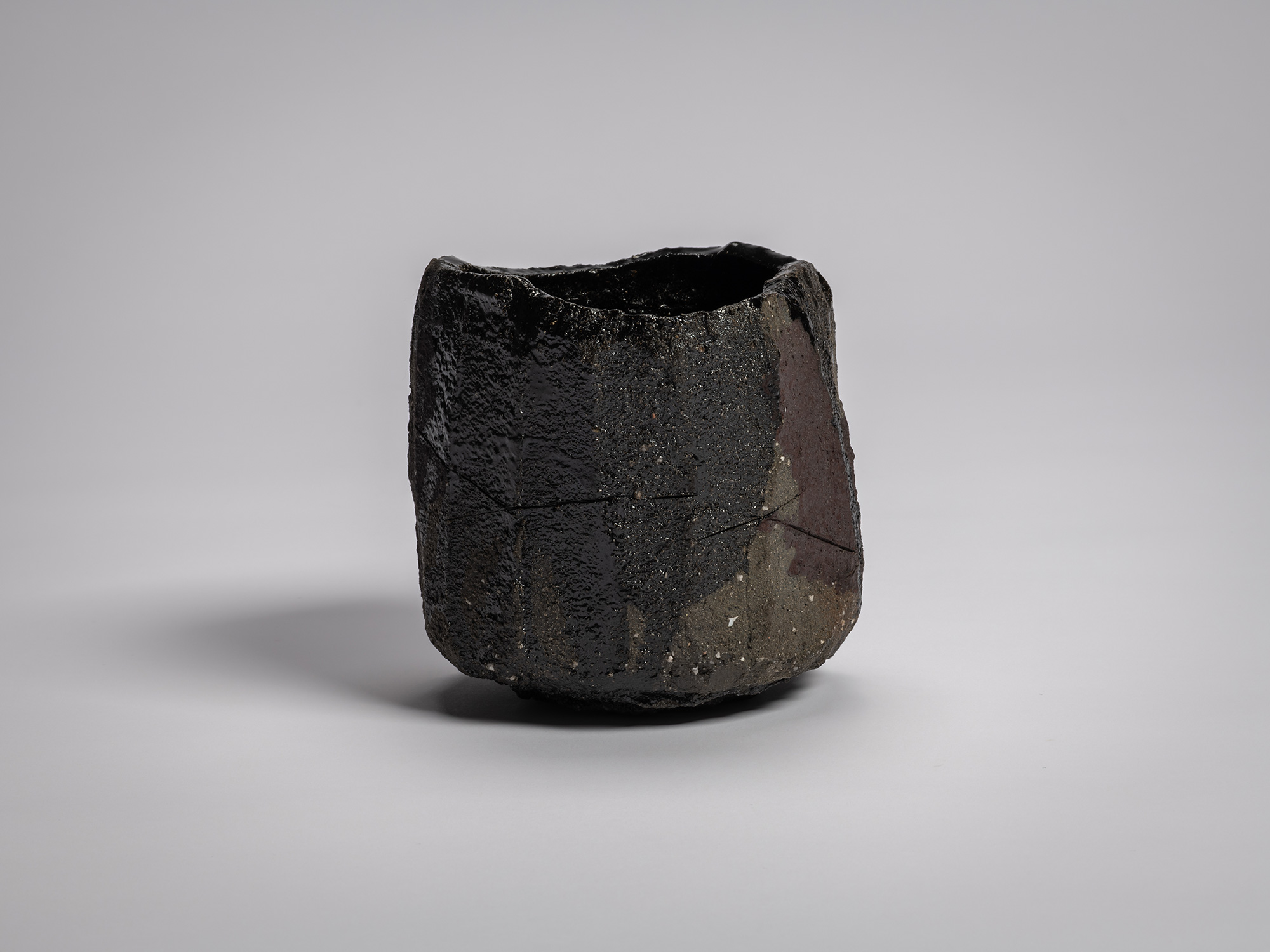
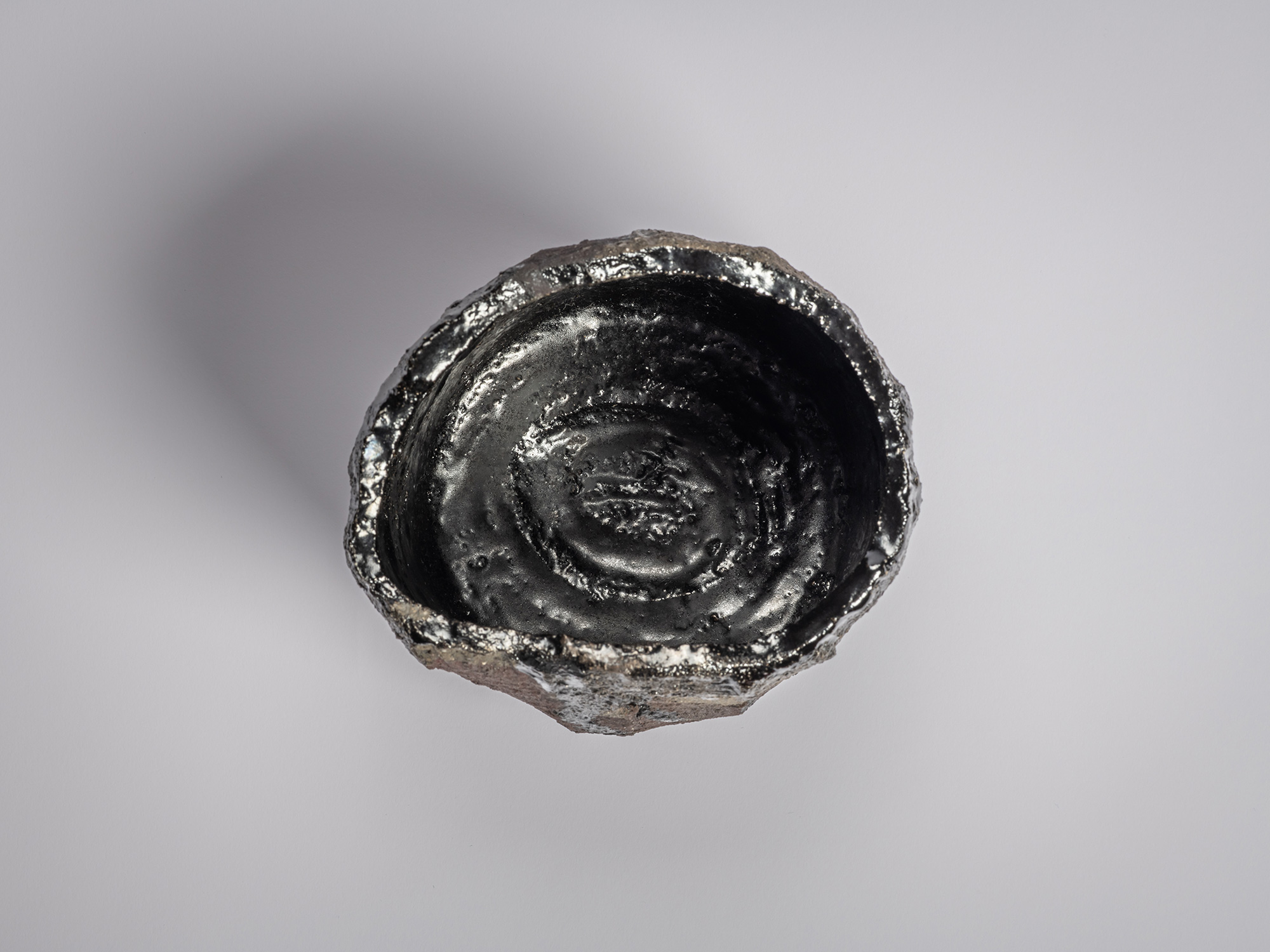
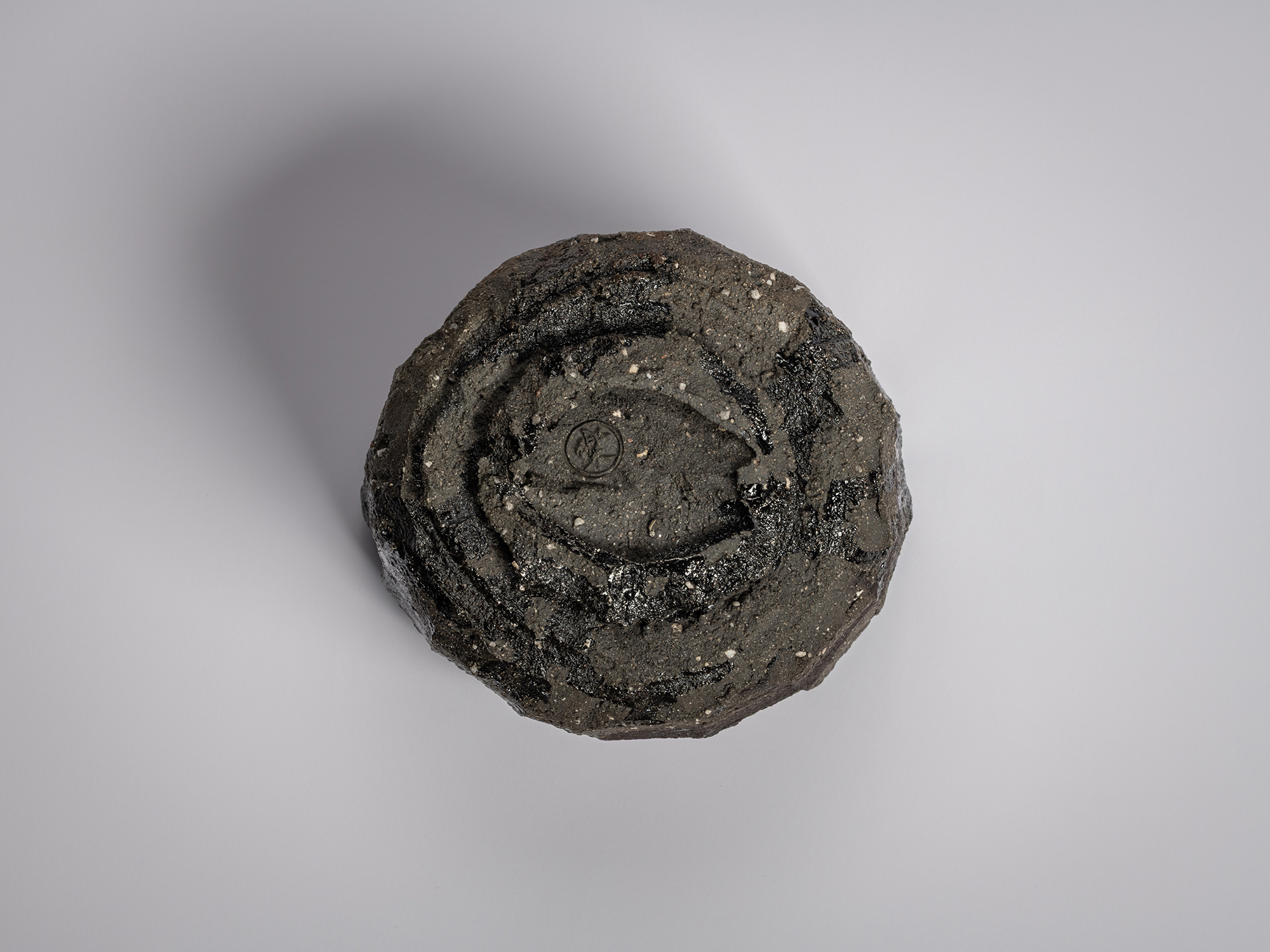
Zan (Things That Are Steep and Lofty Surpass Others) is a Rock Raku tea bowl by Raku Jikinyū, formed from clay excavated from the foundation of the East Pagoda at Yakushiji Temple in Nara. Originally used as stabilizing material when the pagoda was constructed approximately 1,200 years ago, the clay contains abundant sand and small stones. Jikinyū removed only the larger gravel and pebbles, preserving the material as closely as possible to its excavated state.
The bowl’s steep, faceted form was cut with a carving spatula, each decisive stroke altering not only the surface but the vessel itself. Jikinyū describes this act of carving as imparting a “life force” to the bowl: the coarse clay, pronounced undulations of the rim, and sharply defined planes retain the physical evidence of its making.
A thin glaze derived primarily from Kamogawa river stone allows the rugged character of the clay to remain prominent, while areas of Namibian red earth introduce muted reddish-brown coloration. Created for Jikinyū’s Homage to Alban Berg and Toru Takemitsu project, Zan was later exhibited at Museum Eki Kyoto in 2024 and, in 2025, within Isamu Noguchi’s stone garden at Sōgetsu Kaikan in Tokyo. The work transforms earth that supported an ancient structure for centuries into a vessel whose material history remains visibly and physically present.
Exhibitions
Firing Stone/Firing clay Masaomi Raku/Jikinyū Raku – 2024, Museum Eki, Kyoto, JAPAN