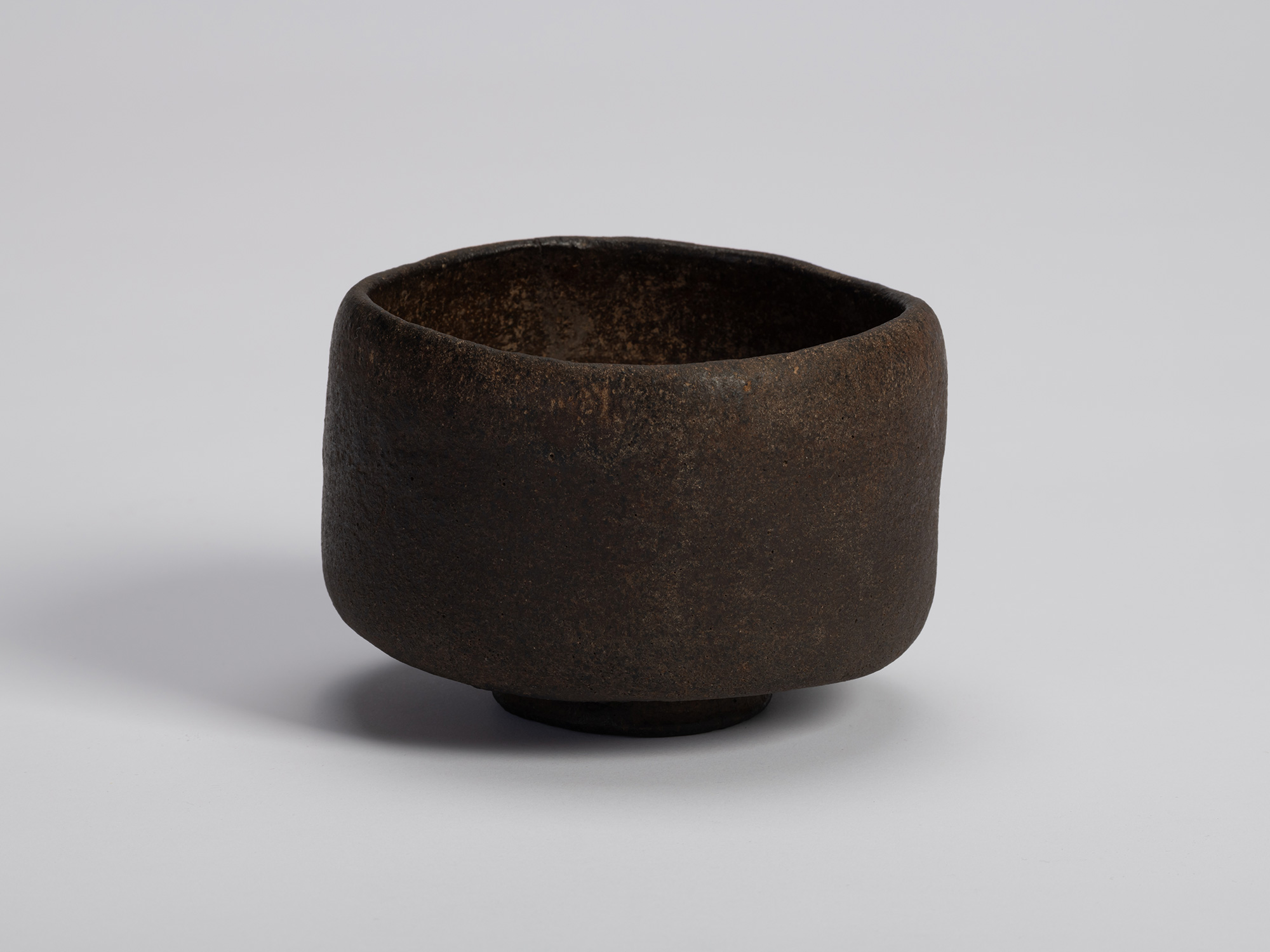
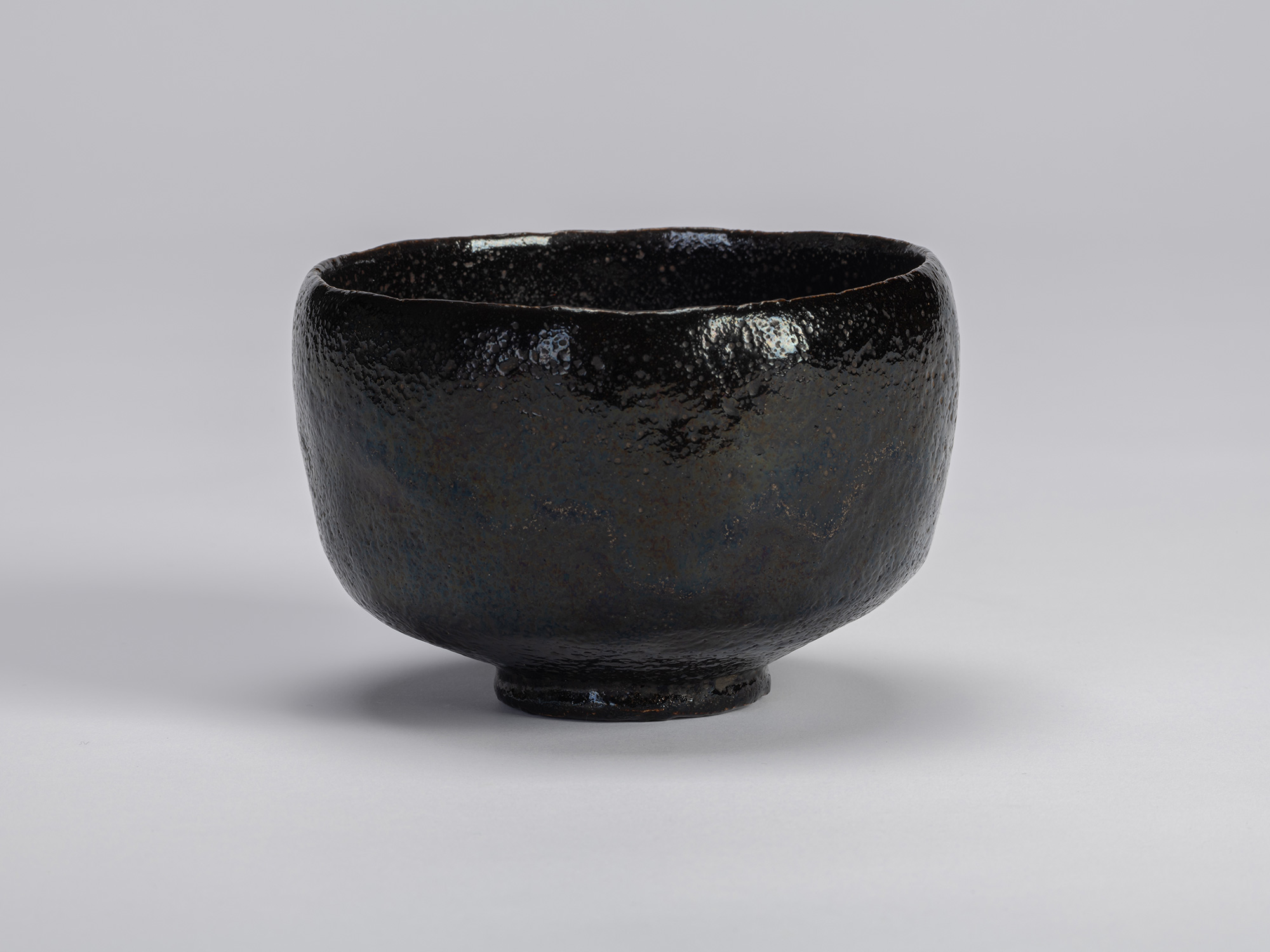
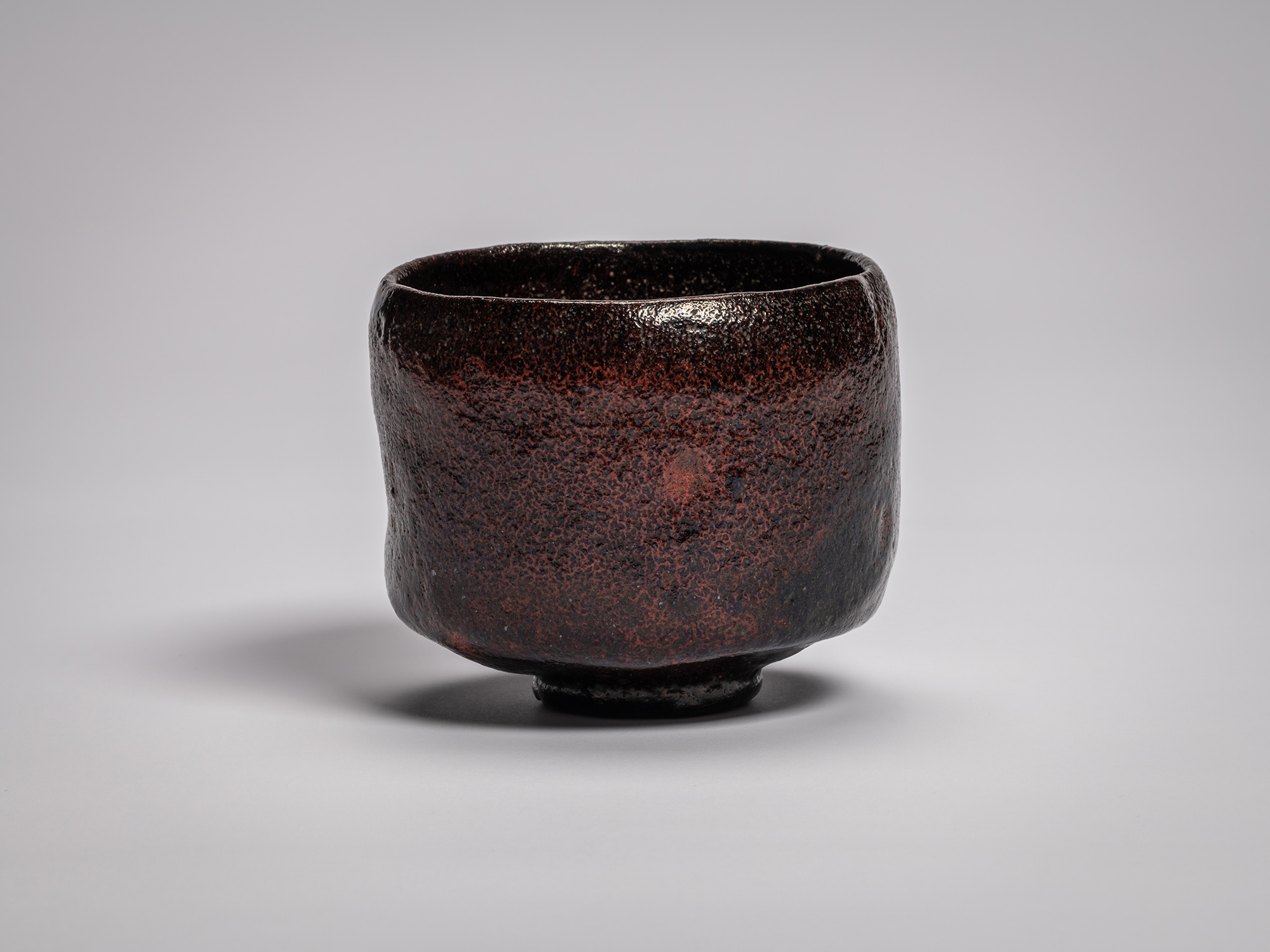
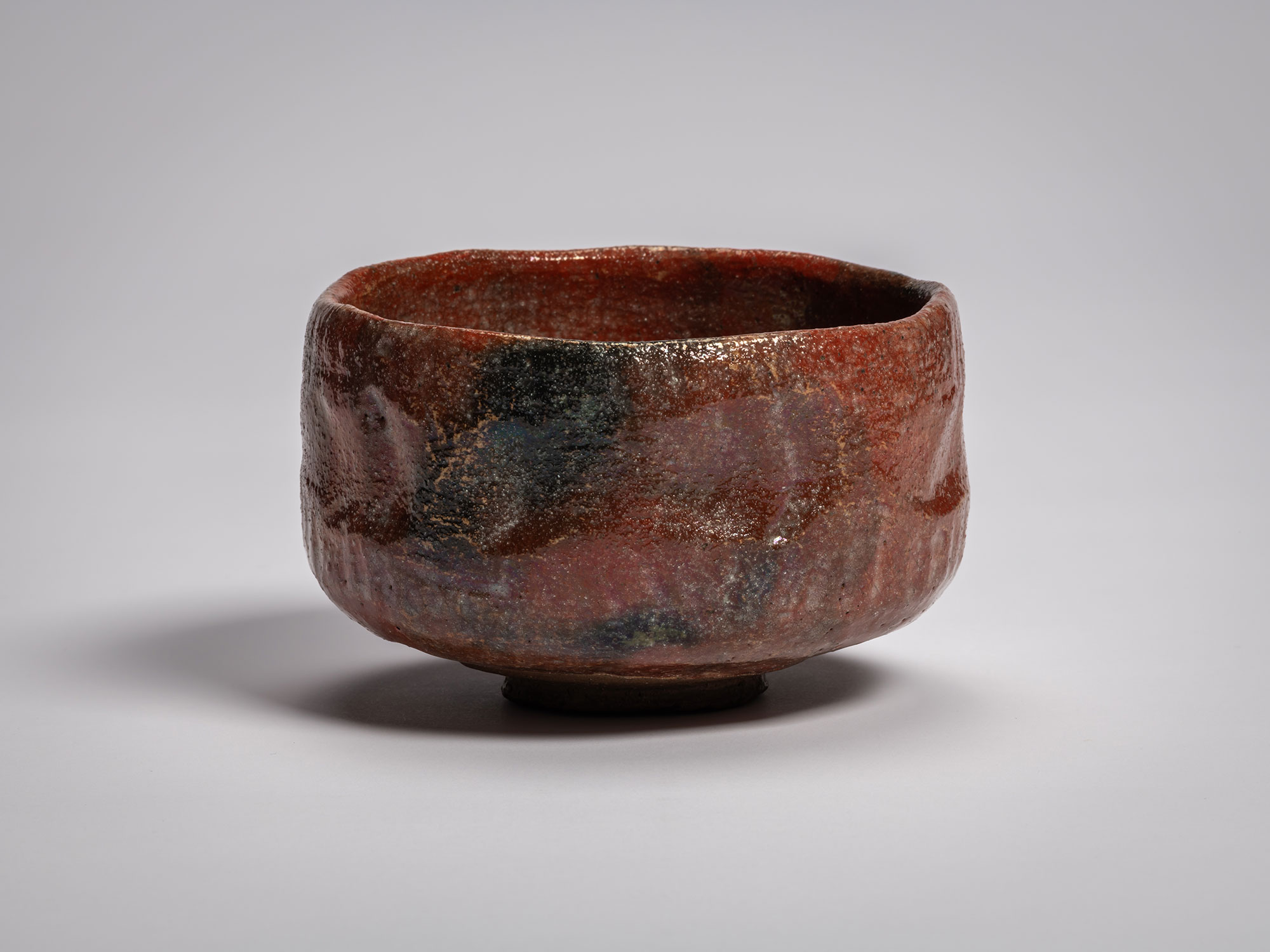
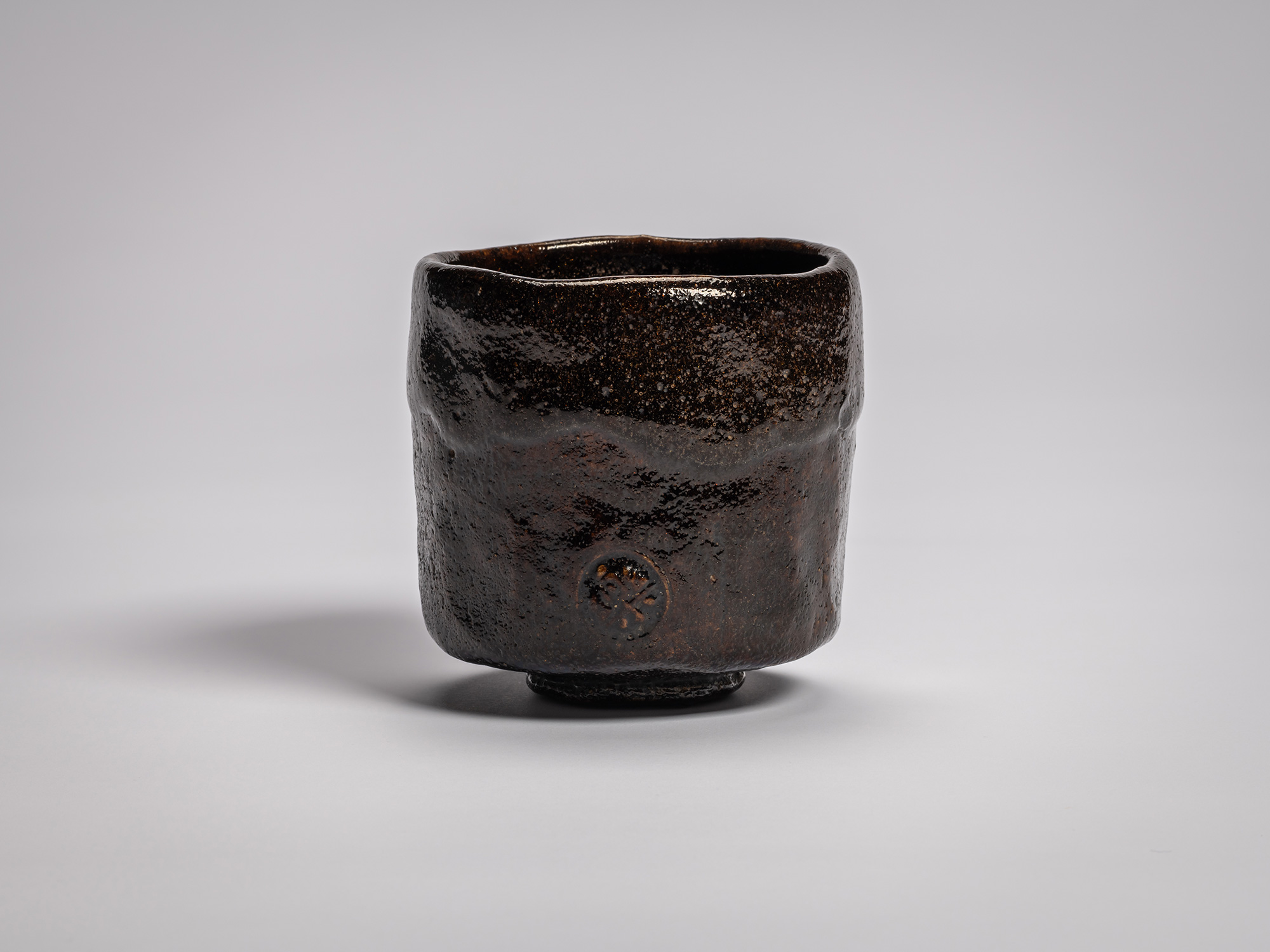
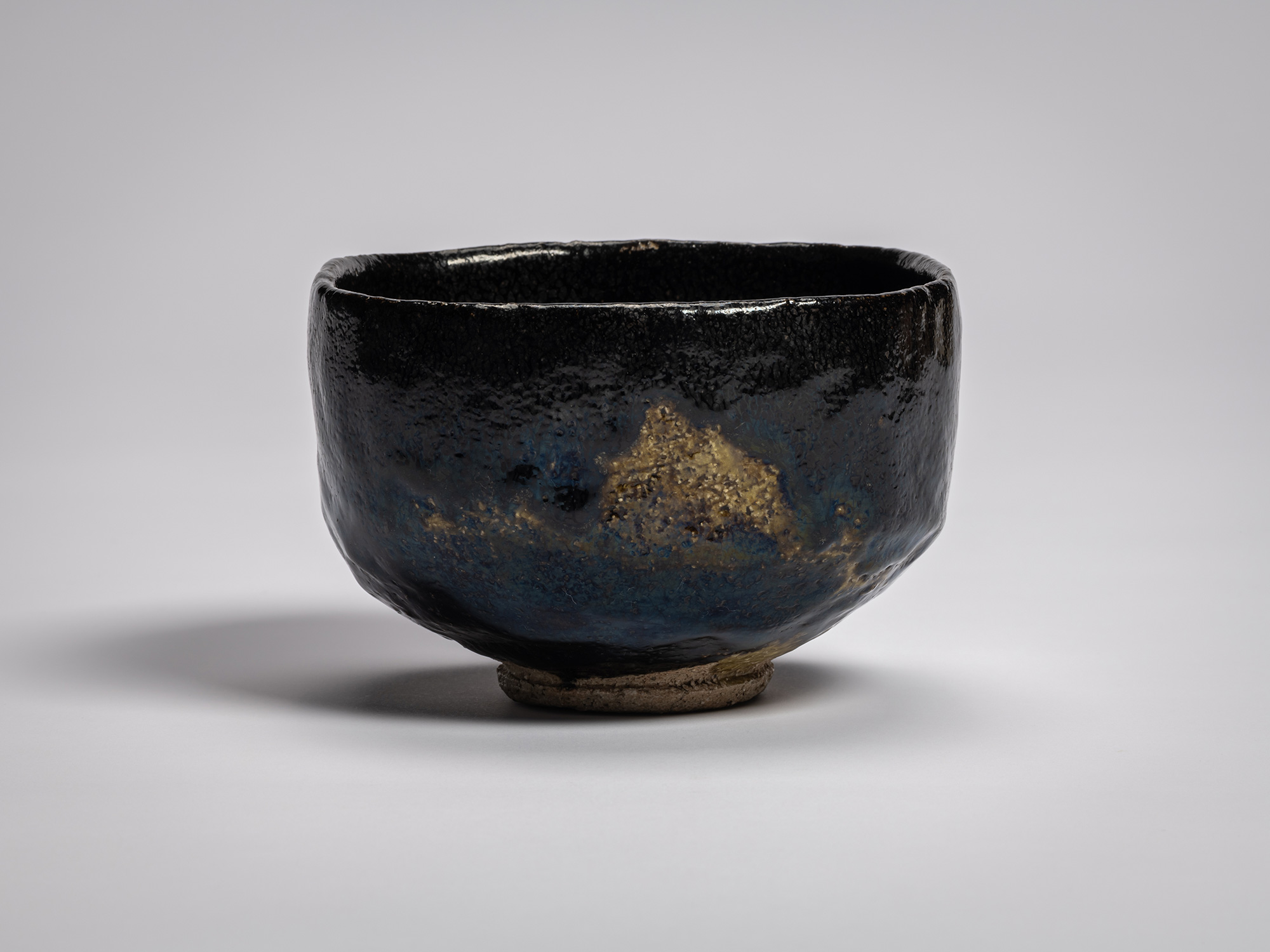
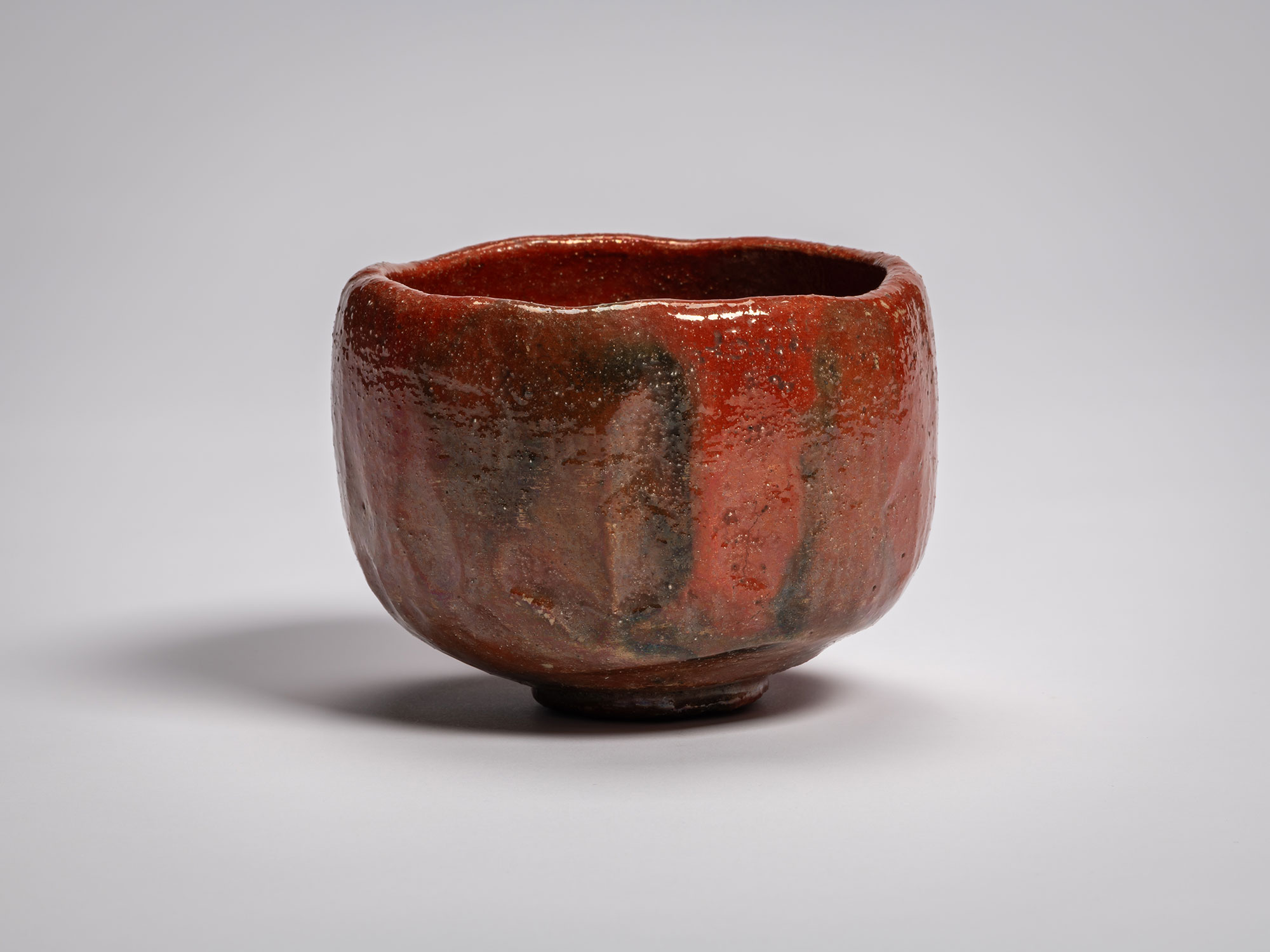
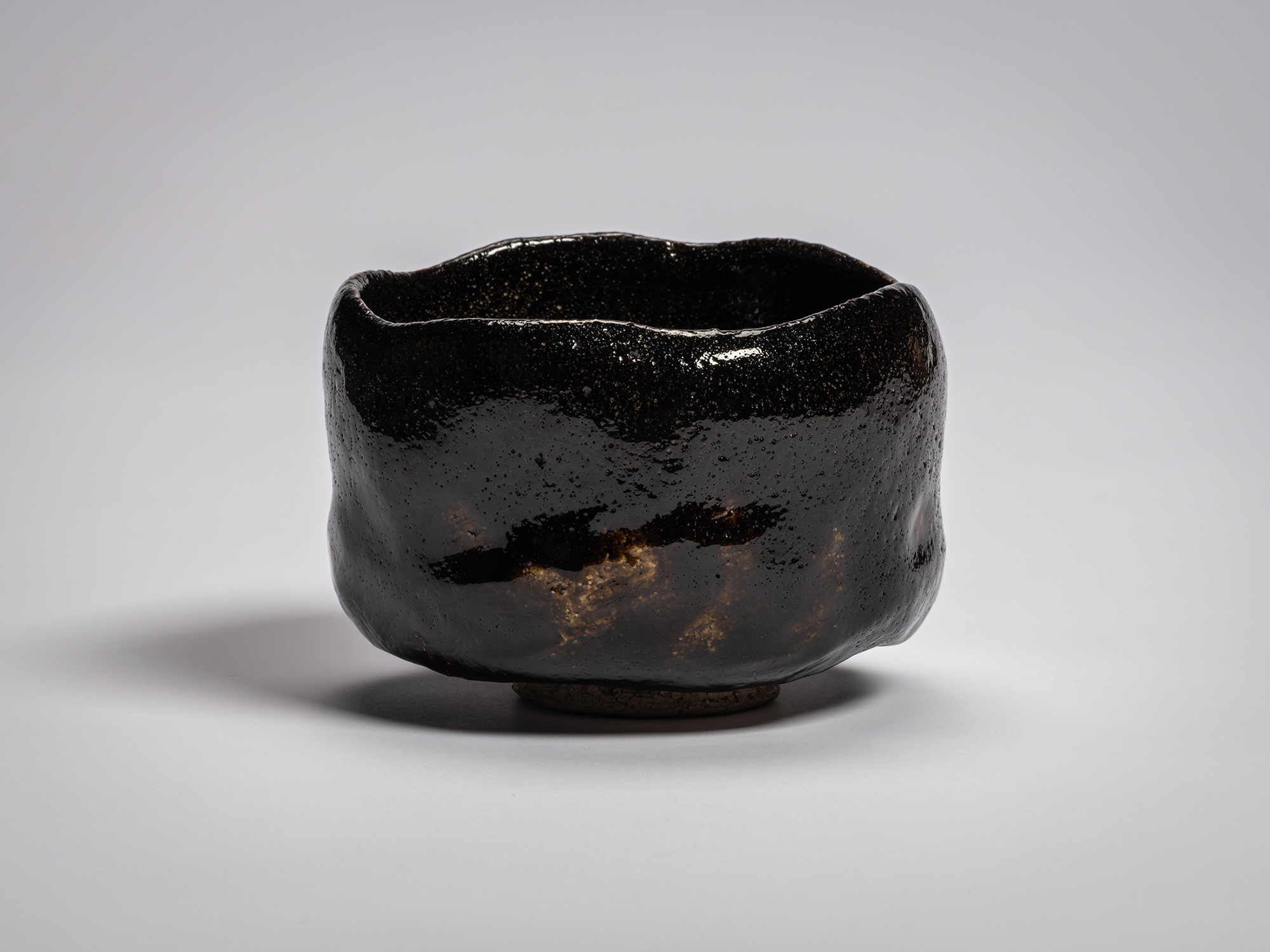
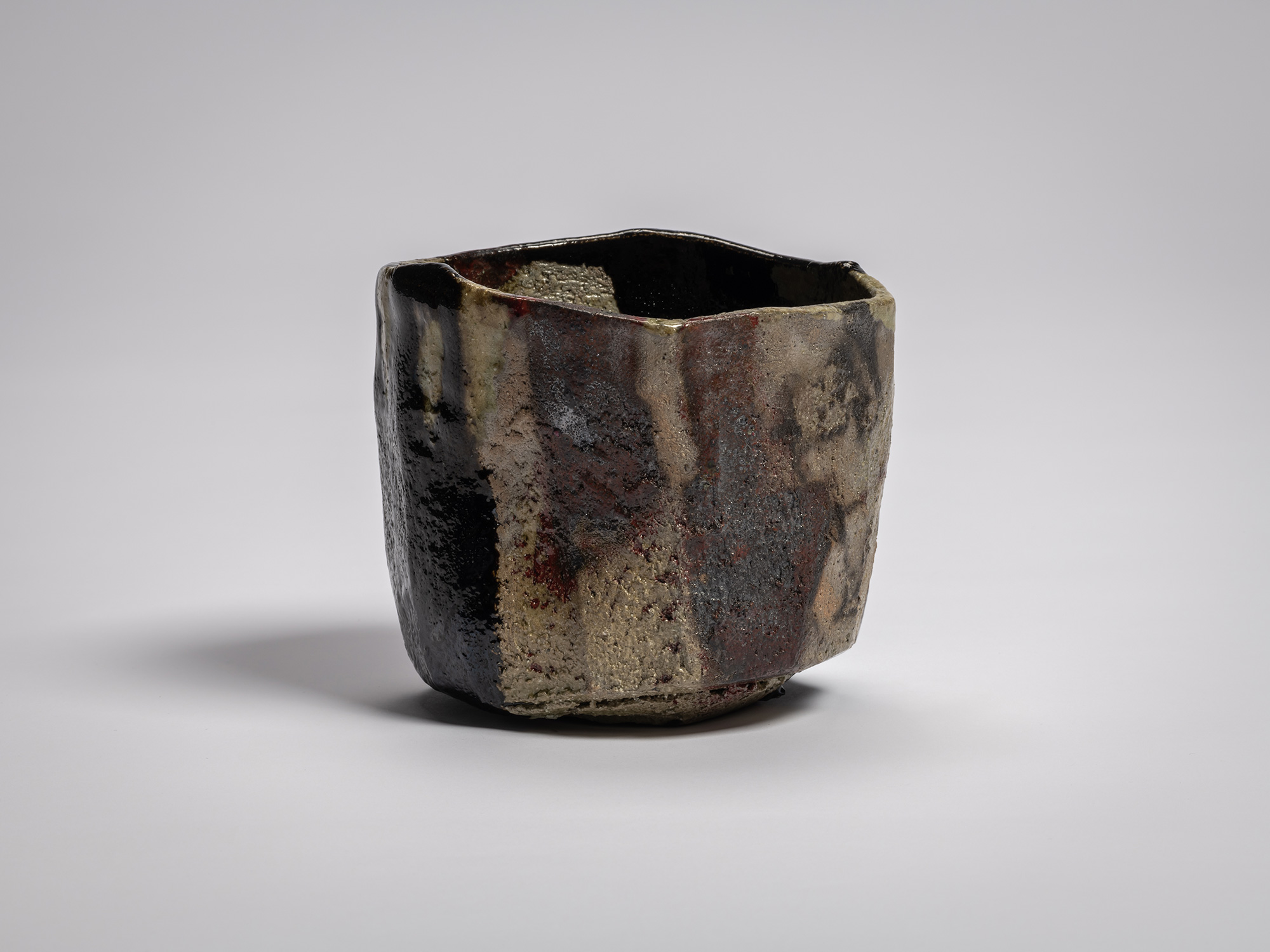
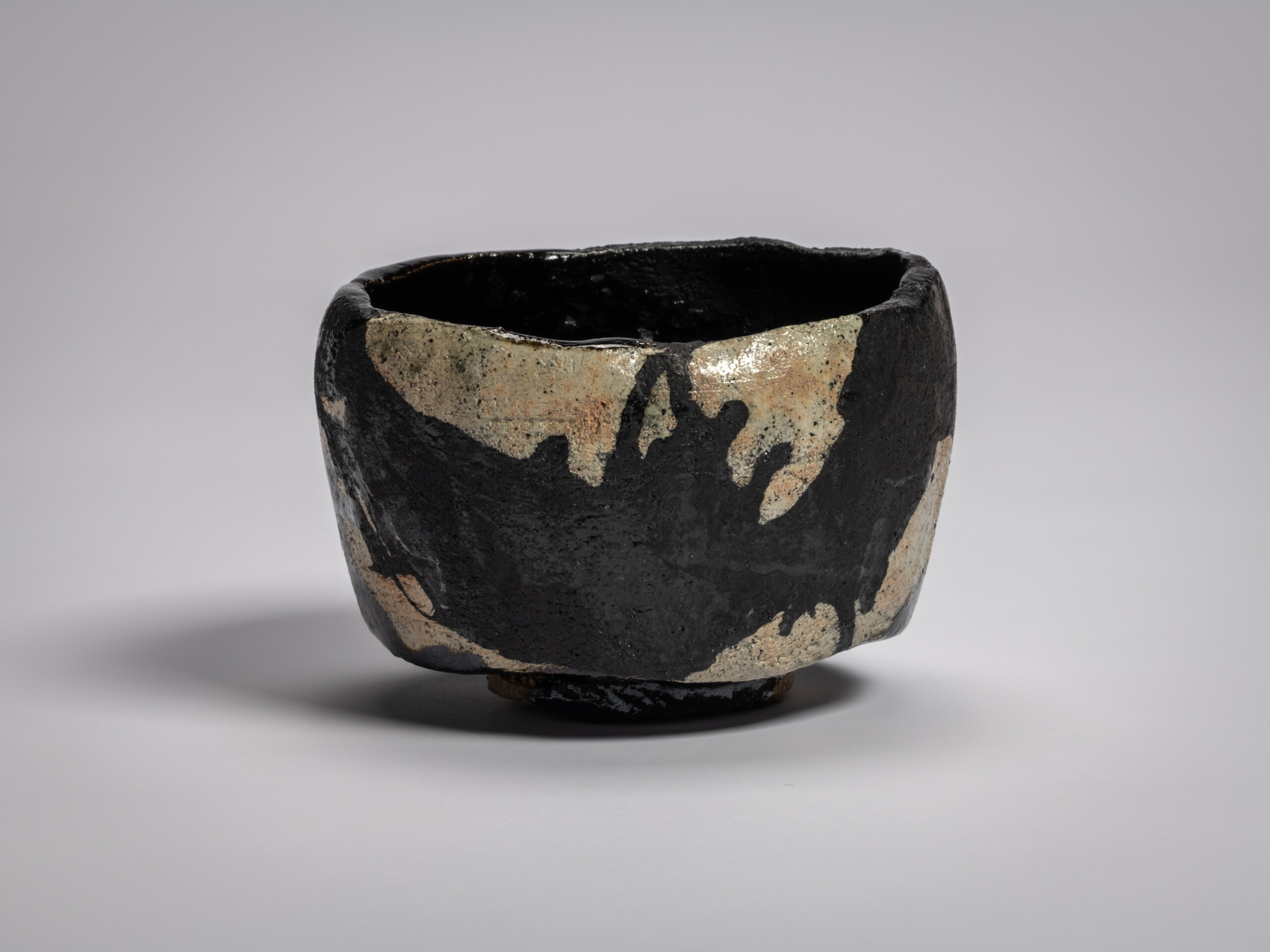
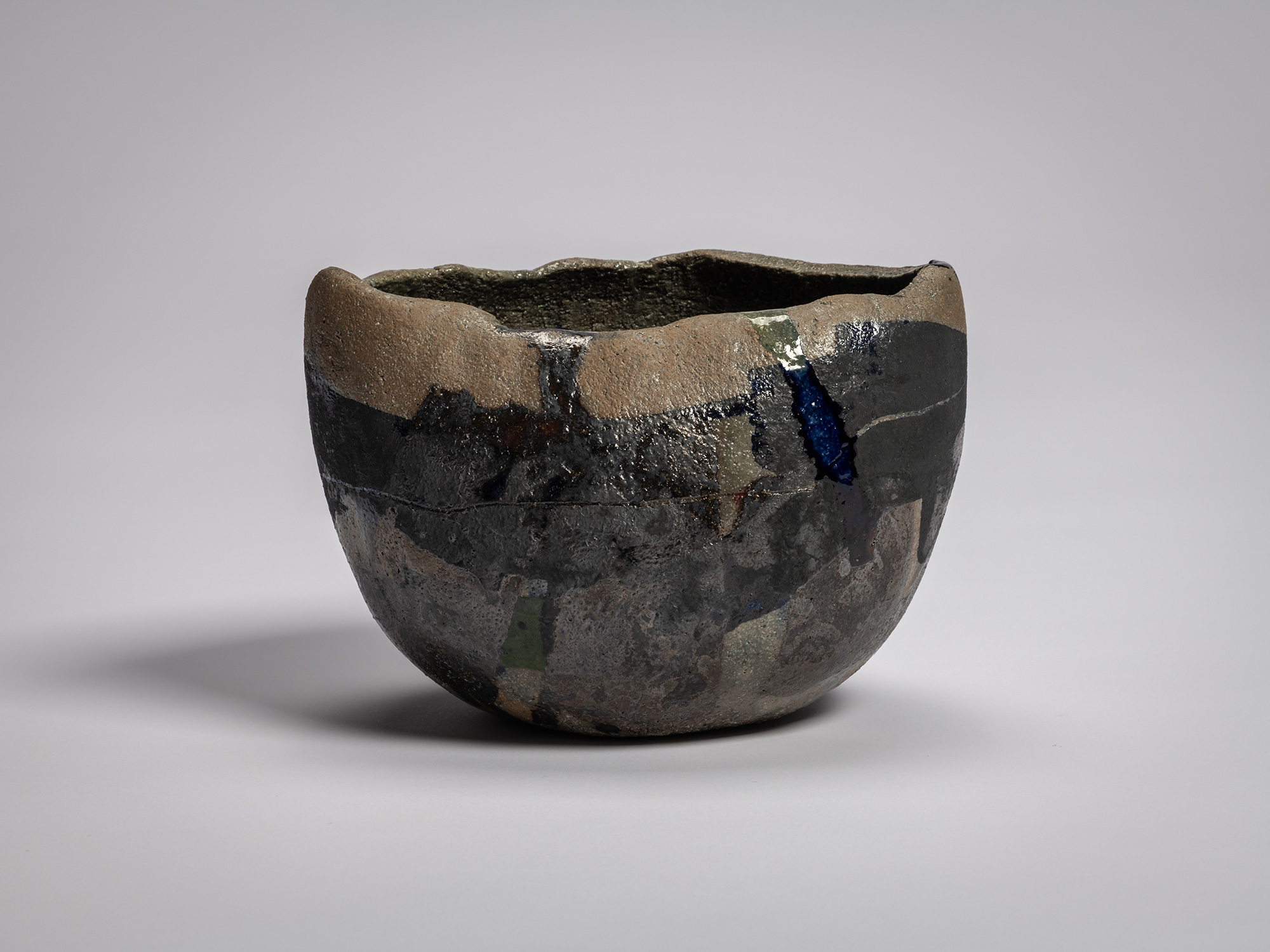
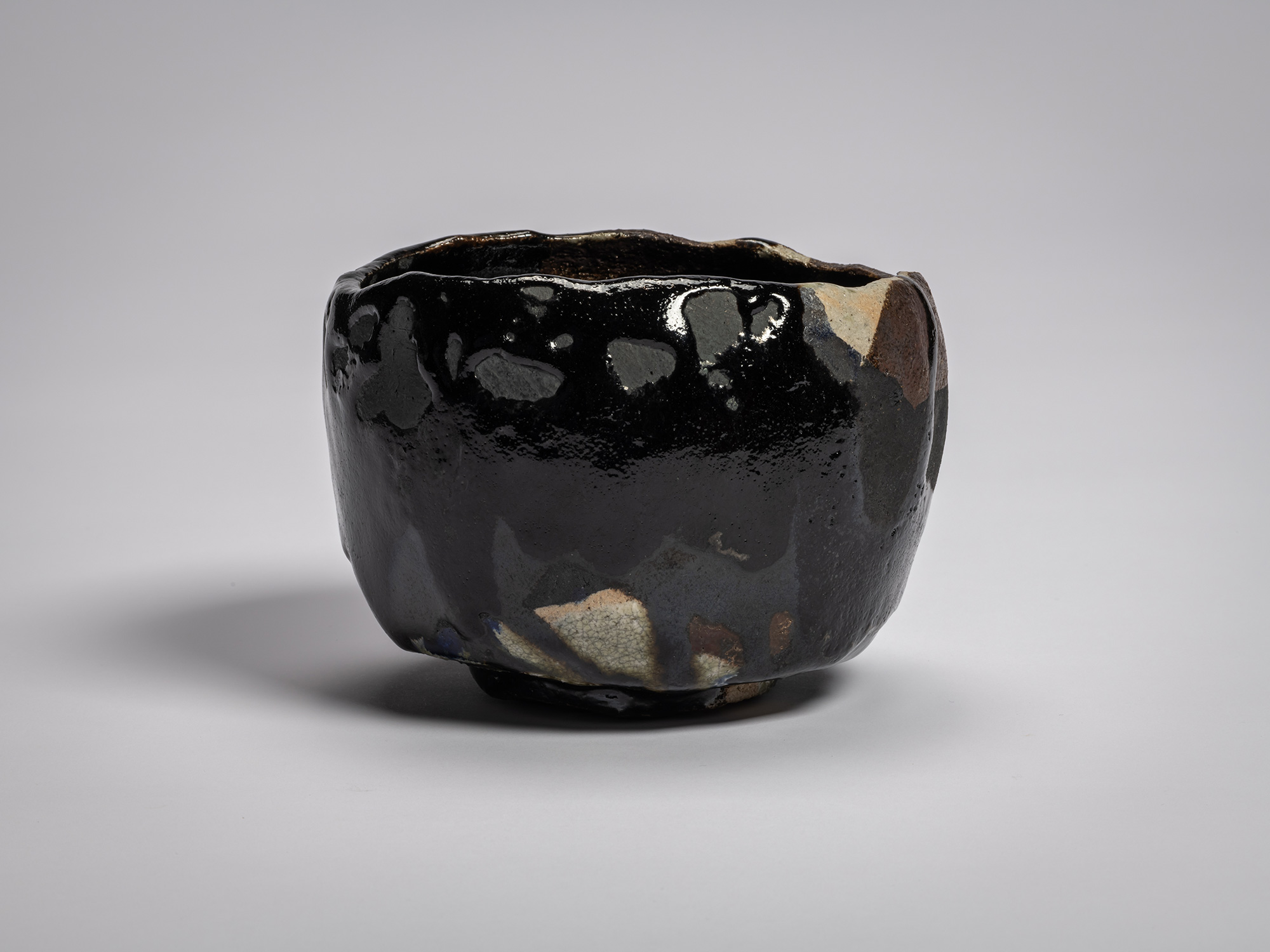
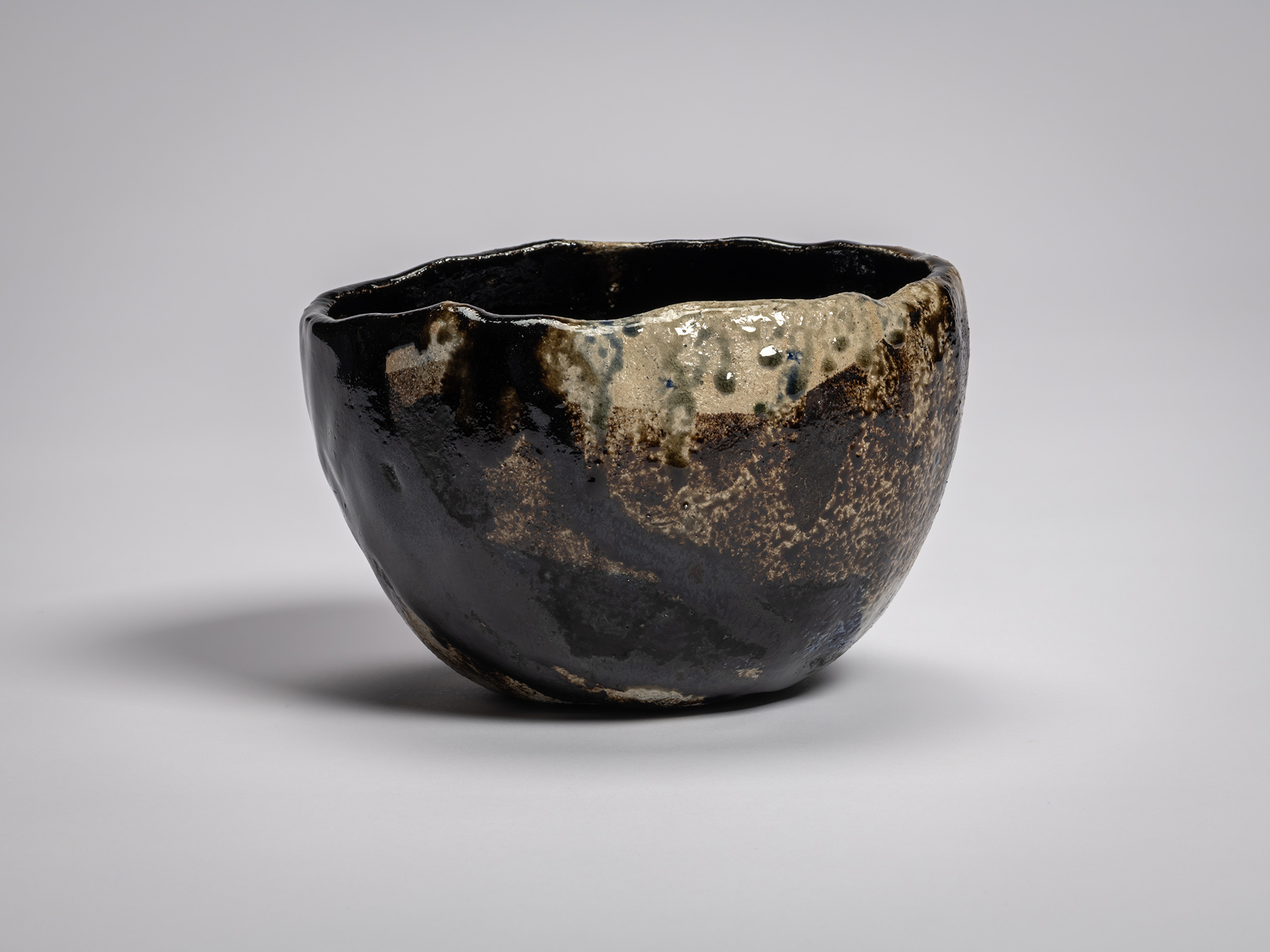
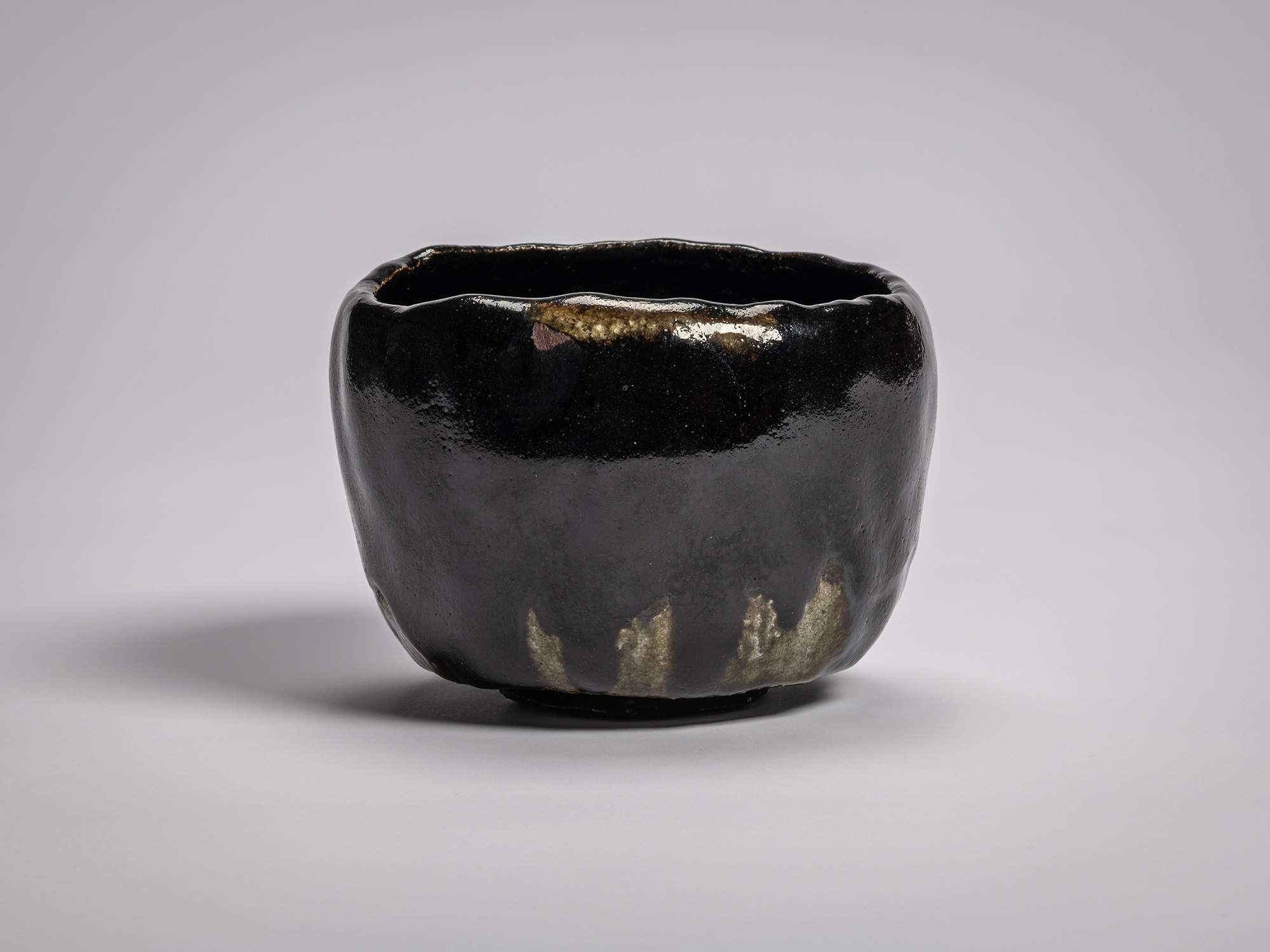
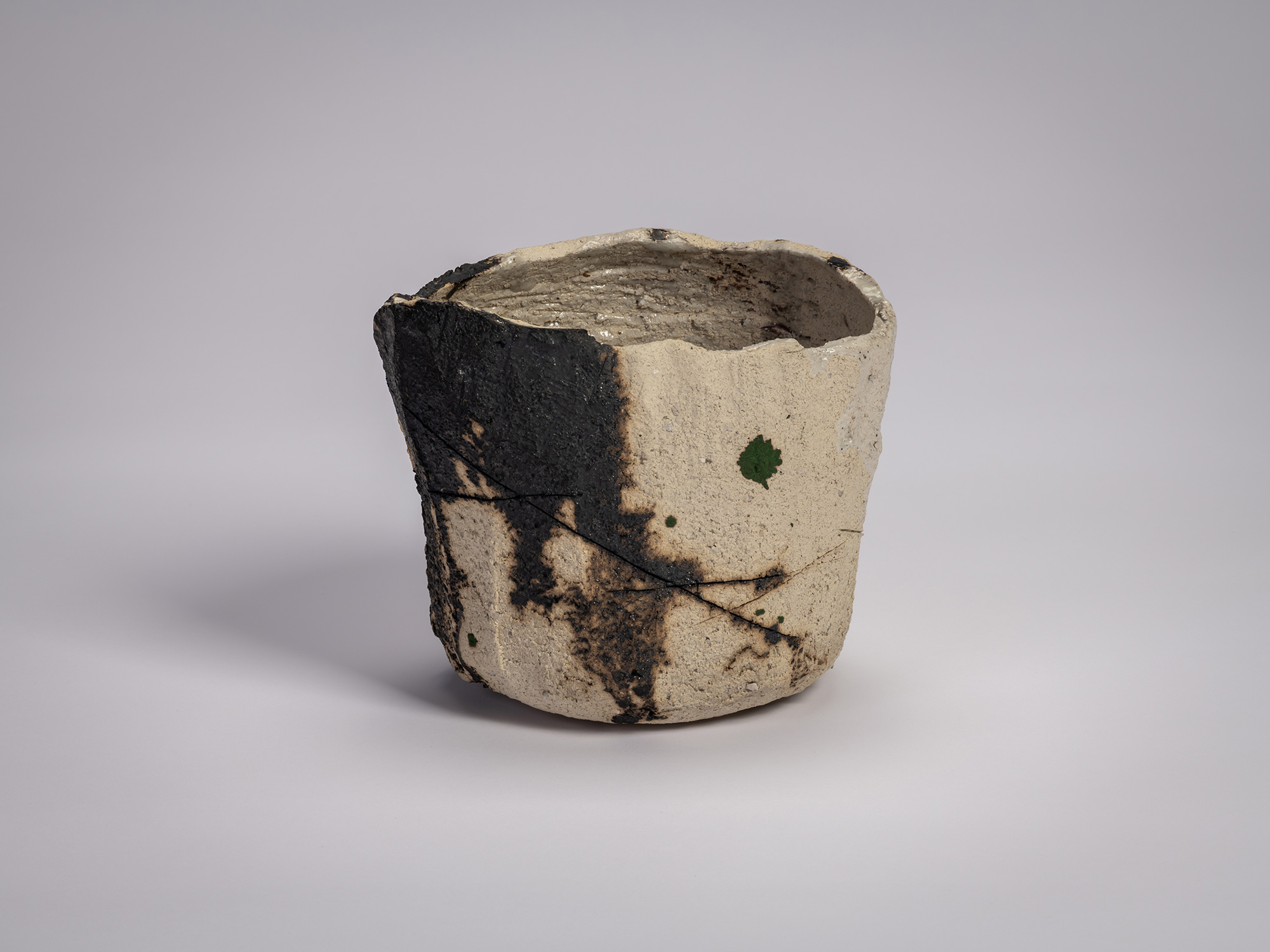
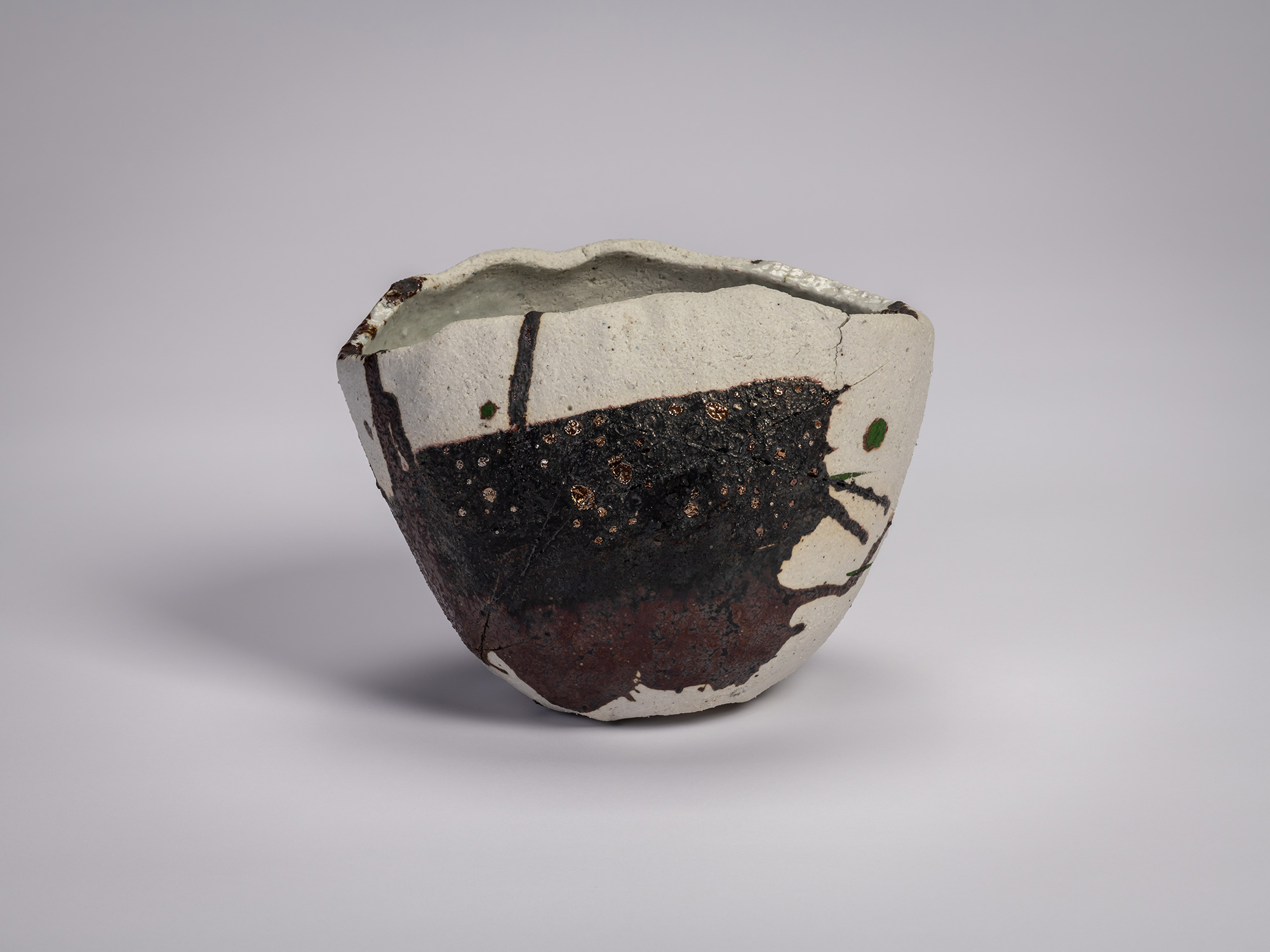
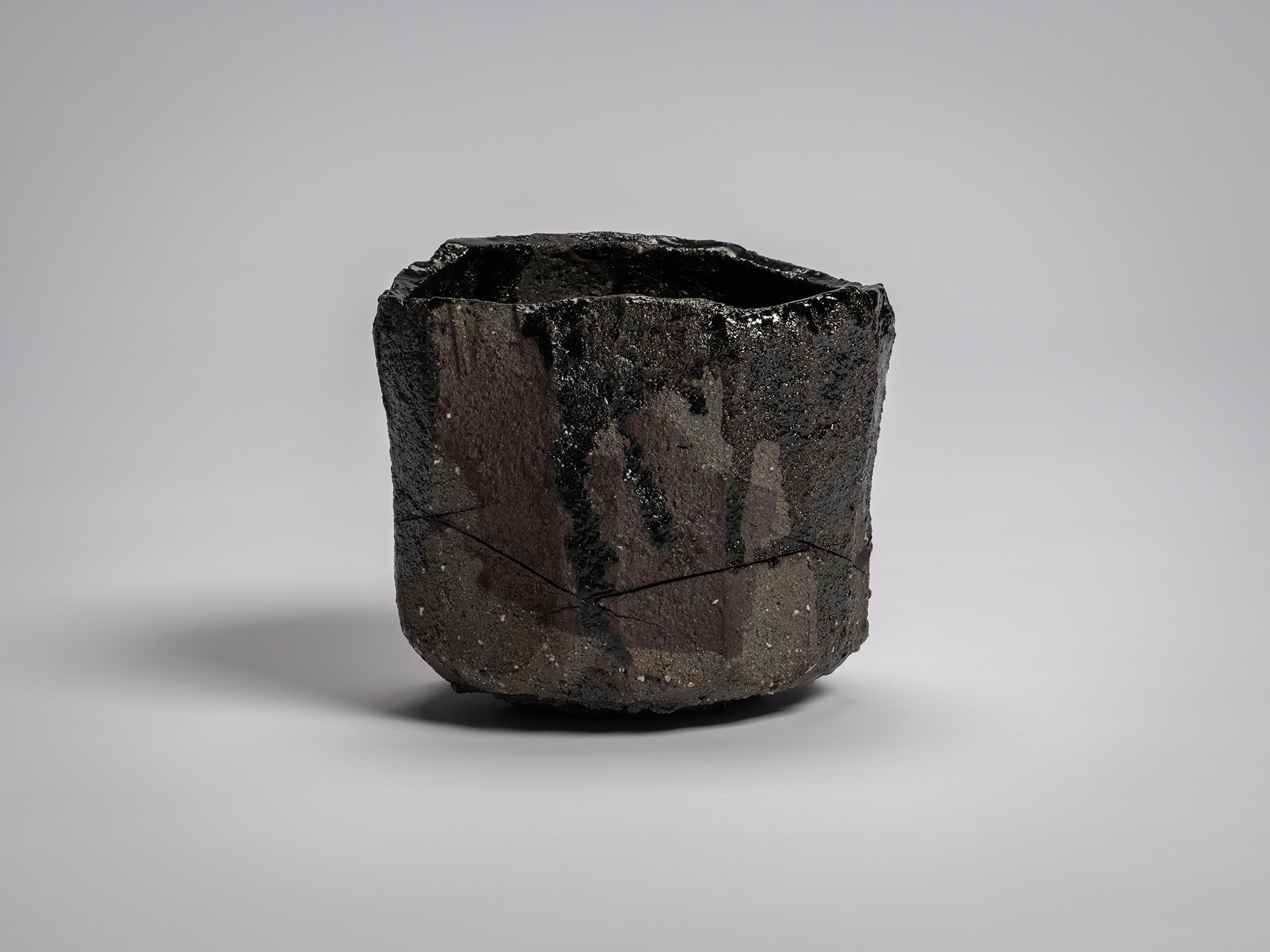
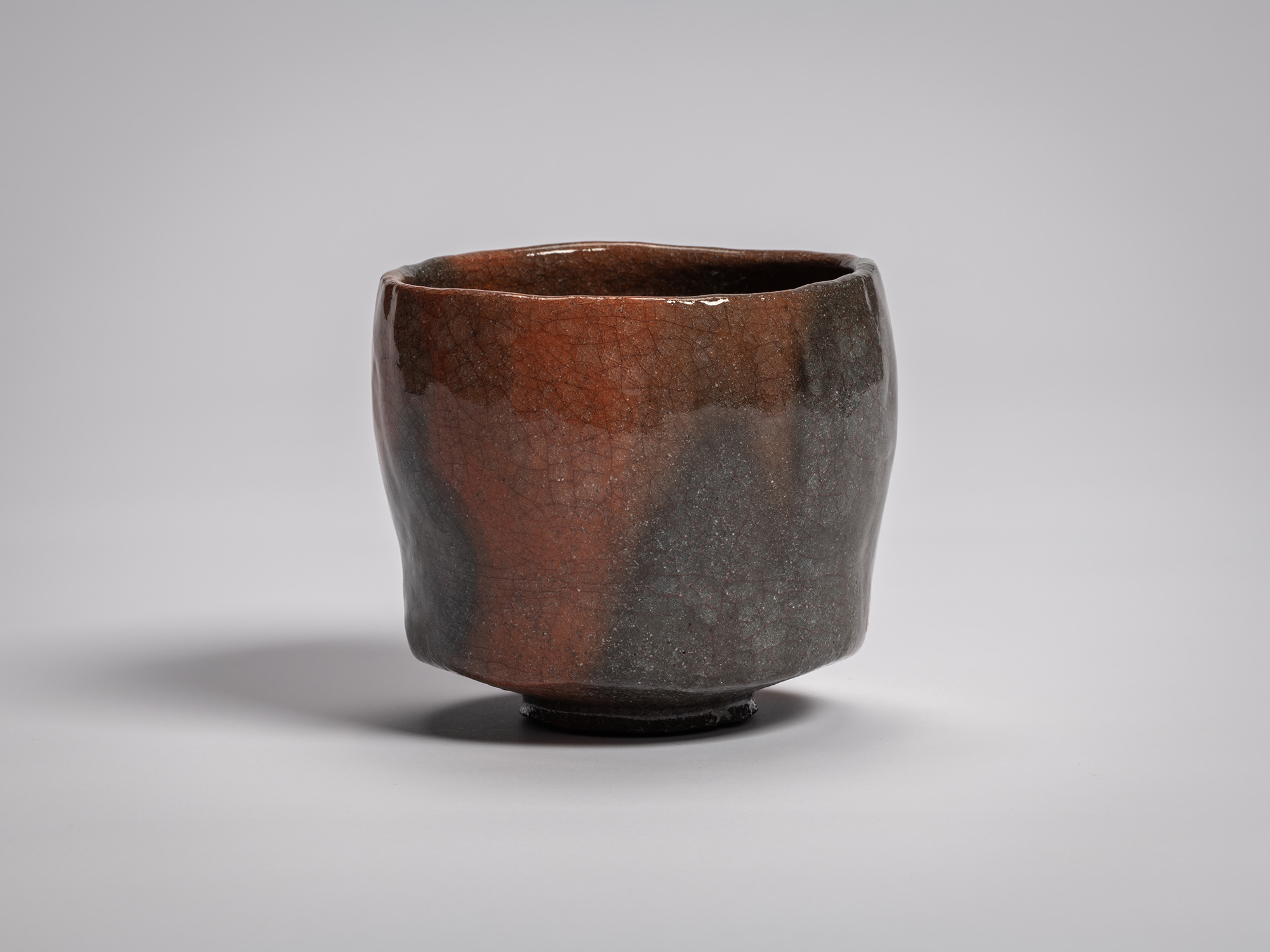
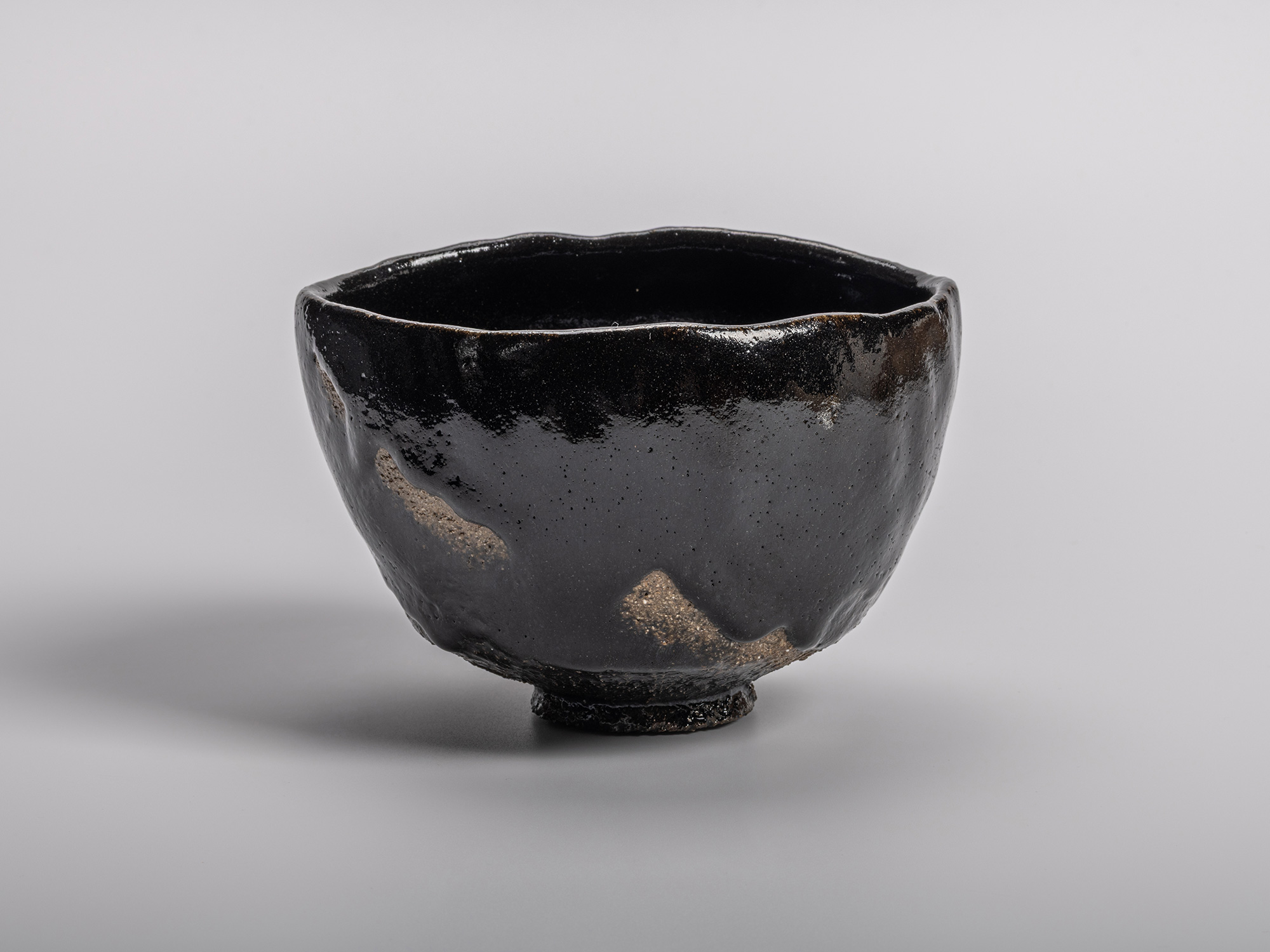
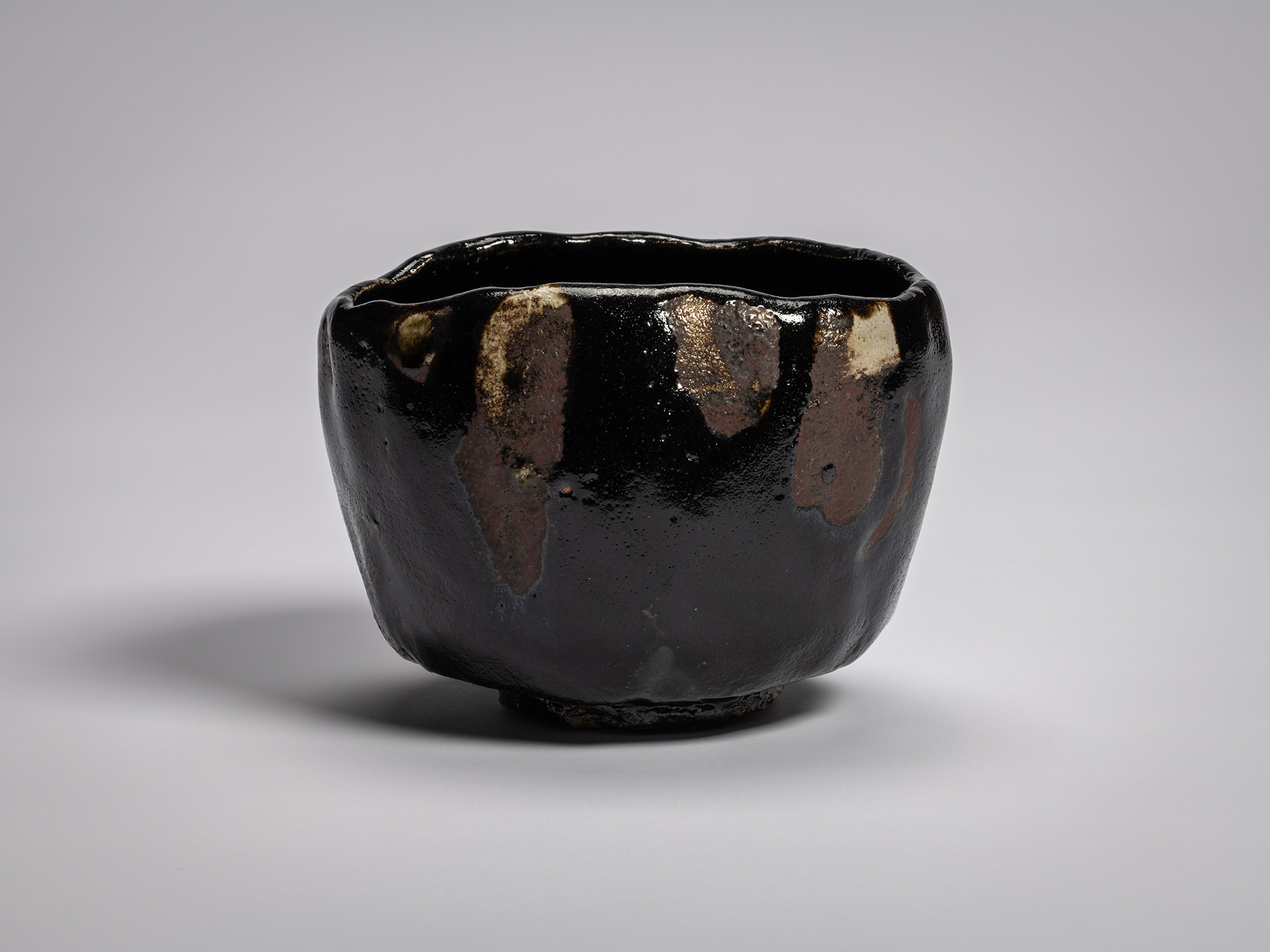
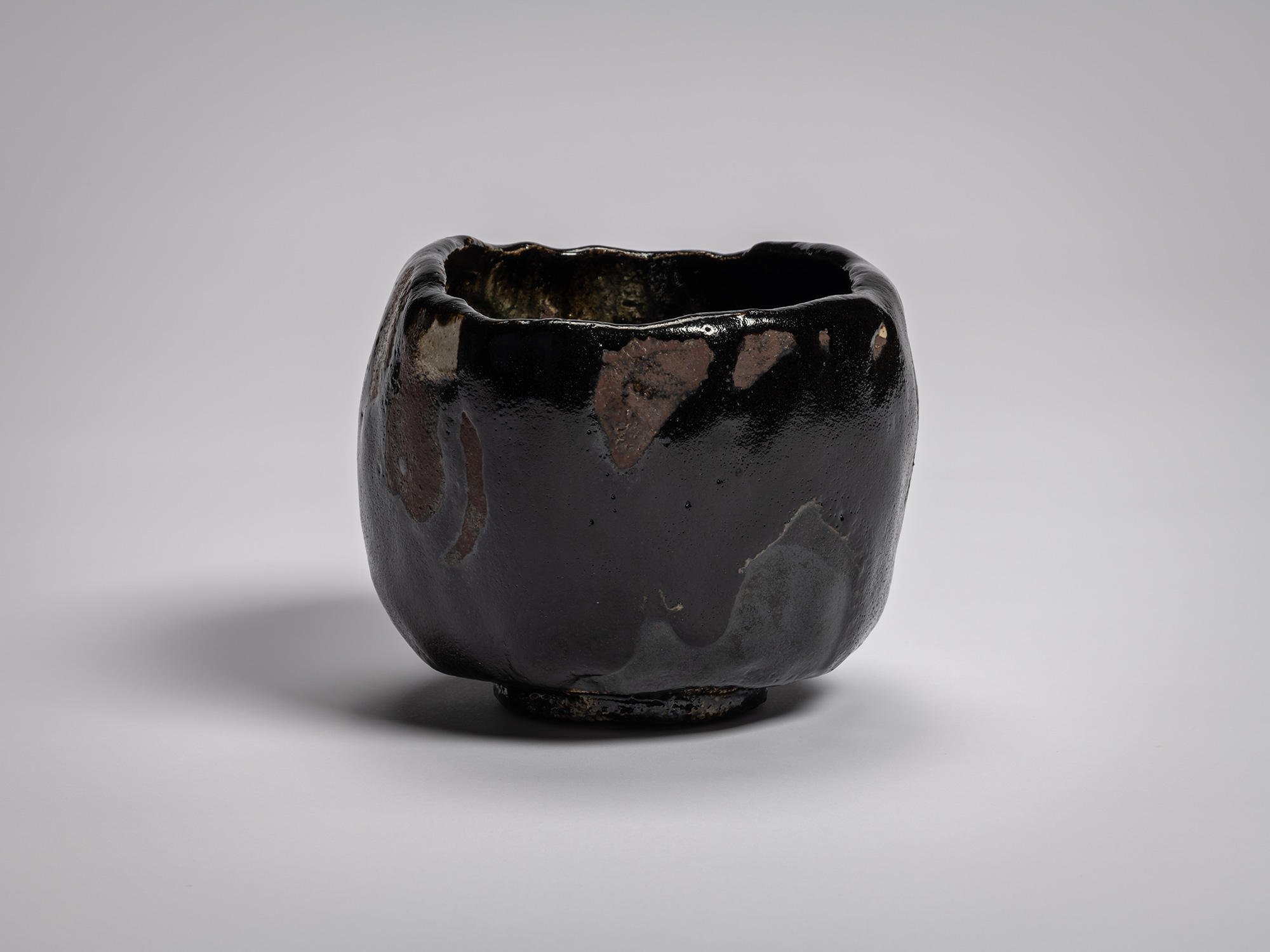
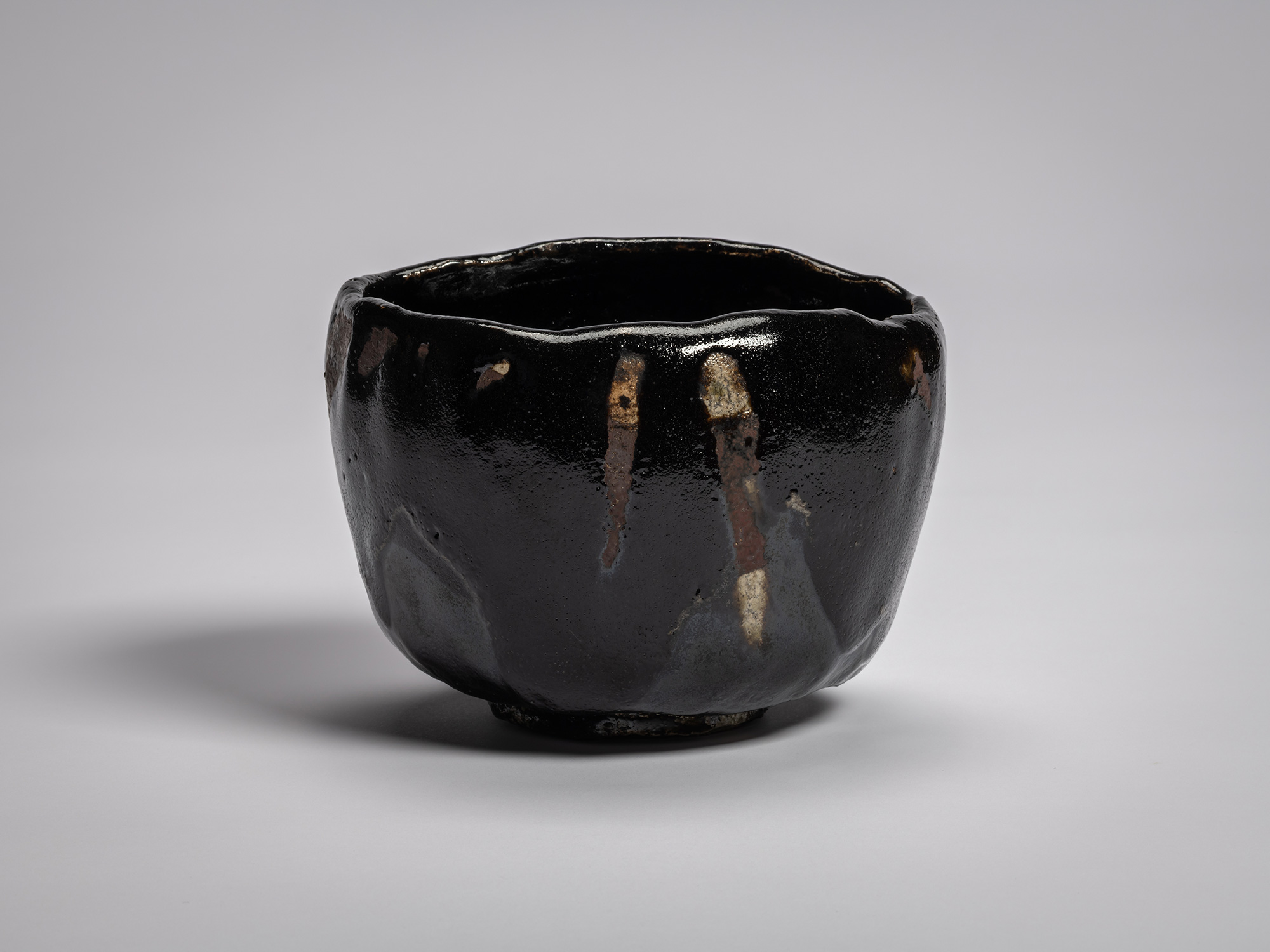
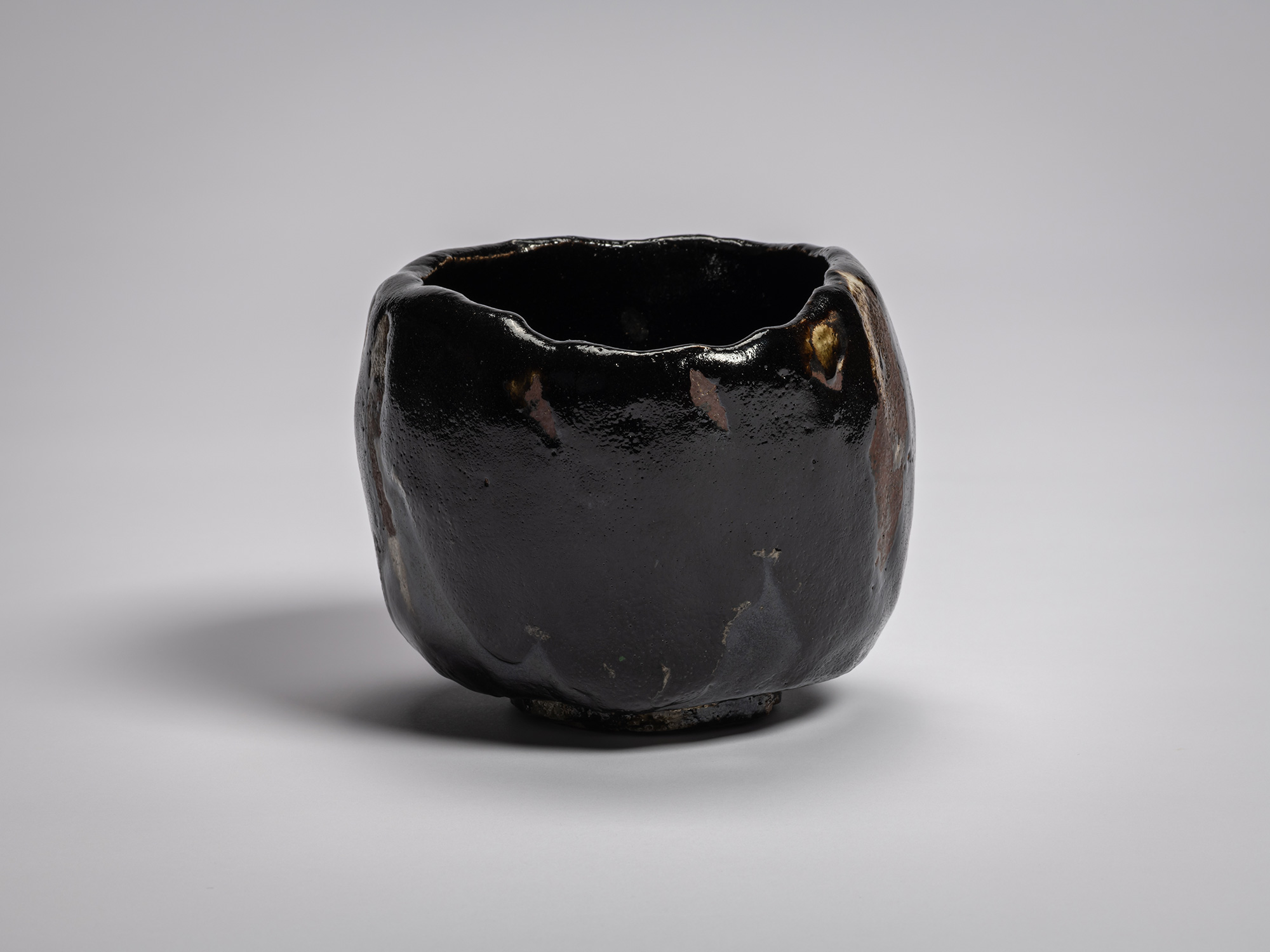
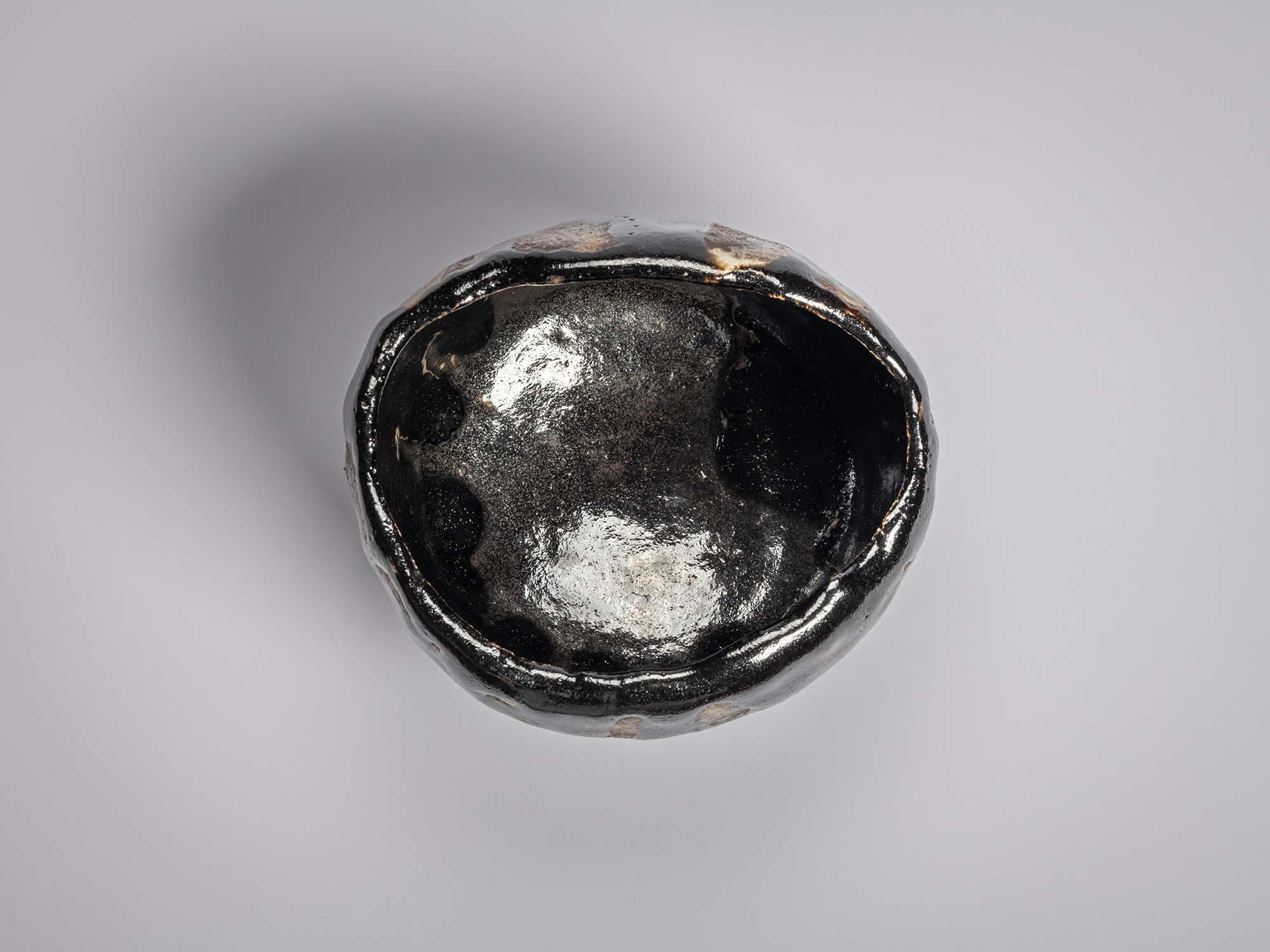
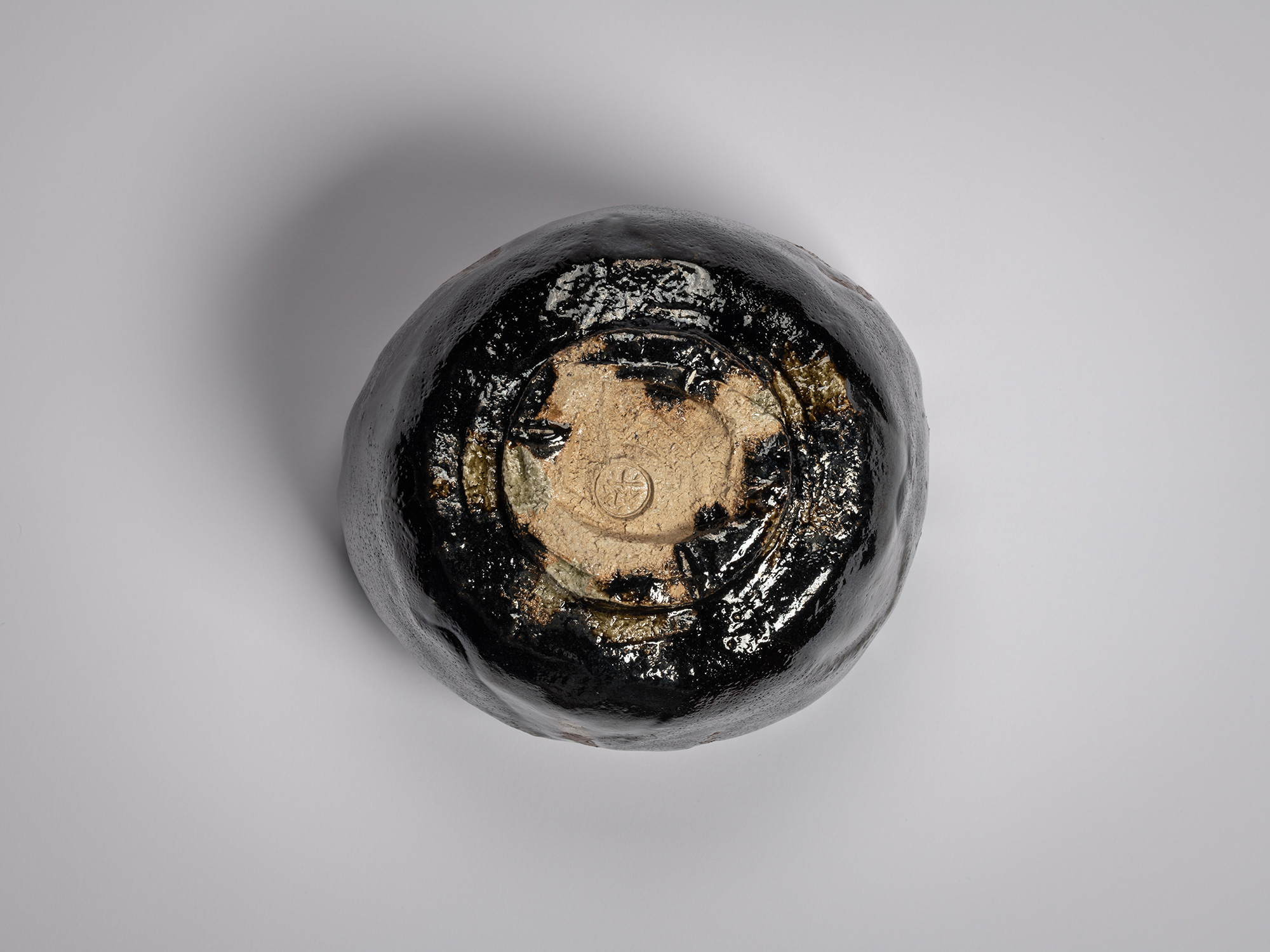
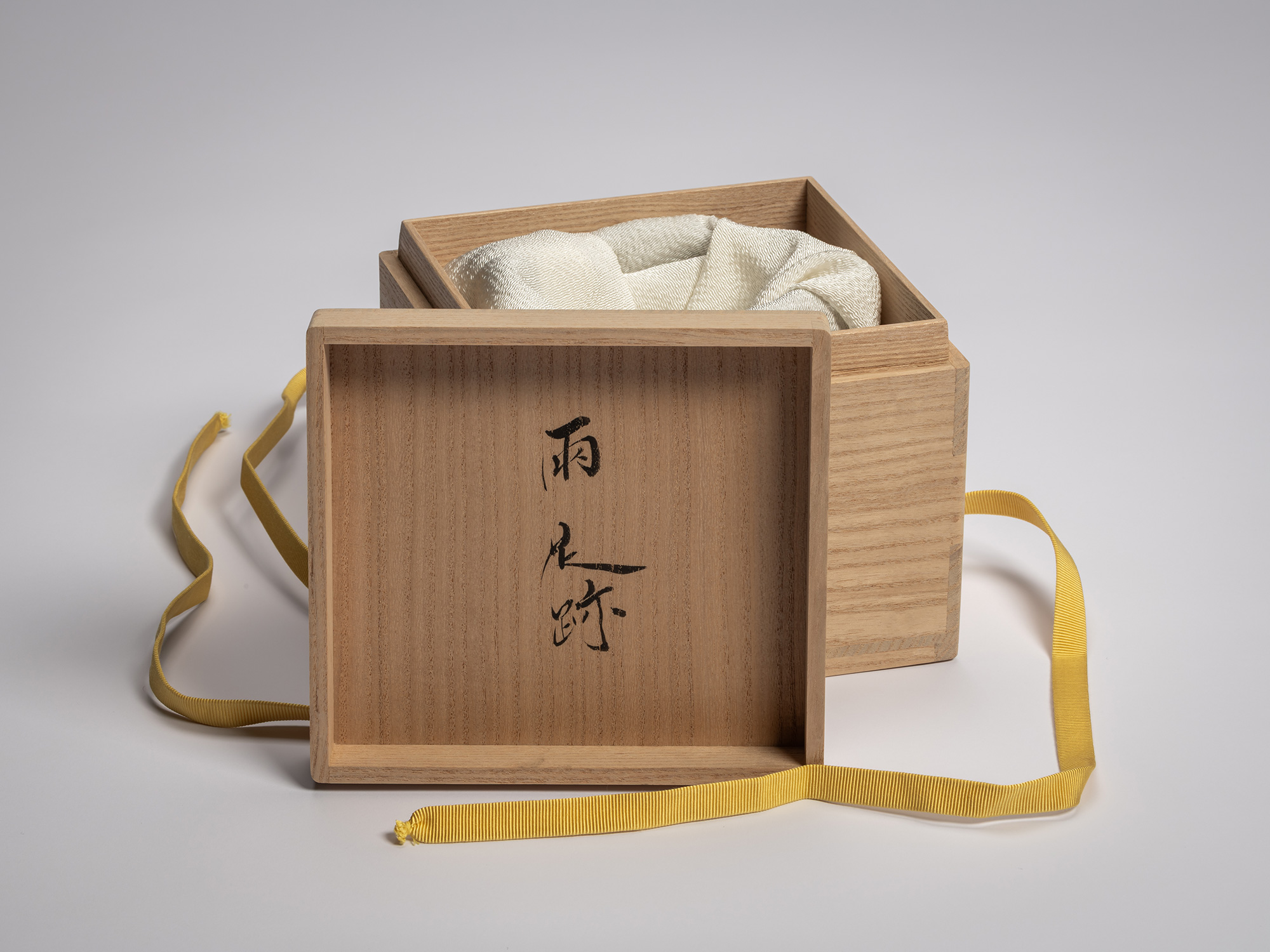
Usokuseki (Traces of Rain) is a Black Raku tea bowl by Raku Kichizaemon XV, now Raku Jikinyū, combining traditional Raku materials with an experimental approach to glazing. Its white Raku clay was collected during the Meiji period by Jikinyū’s great-grandfather, Raku Kōnyū XII, and preserved by the family for use by later generations. Over the clay, Jikinyū applied an iron-rich yellow slip and two layers of Black Raku glaze: shitakusuri, the underlying glaze, and makugusuri, or “curtain glaze,” a thick upper layer that flows down the vessel during firing.
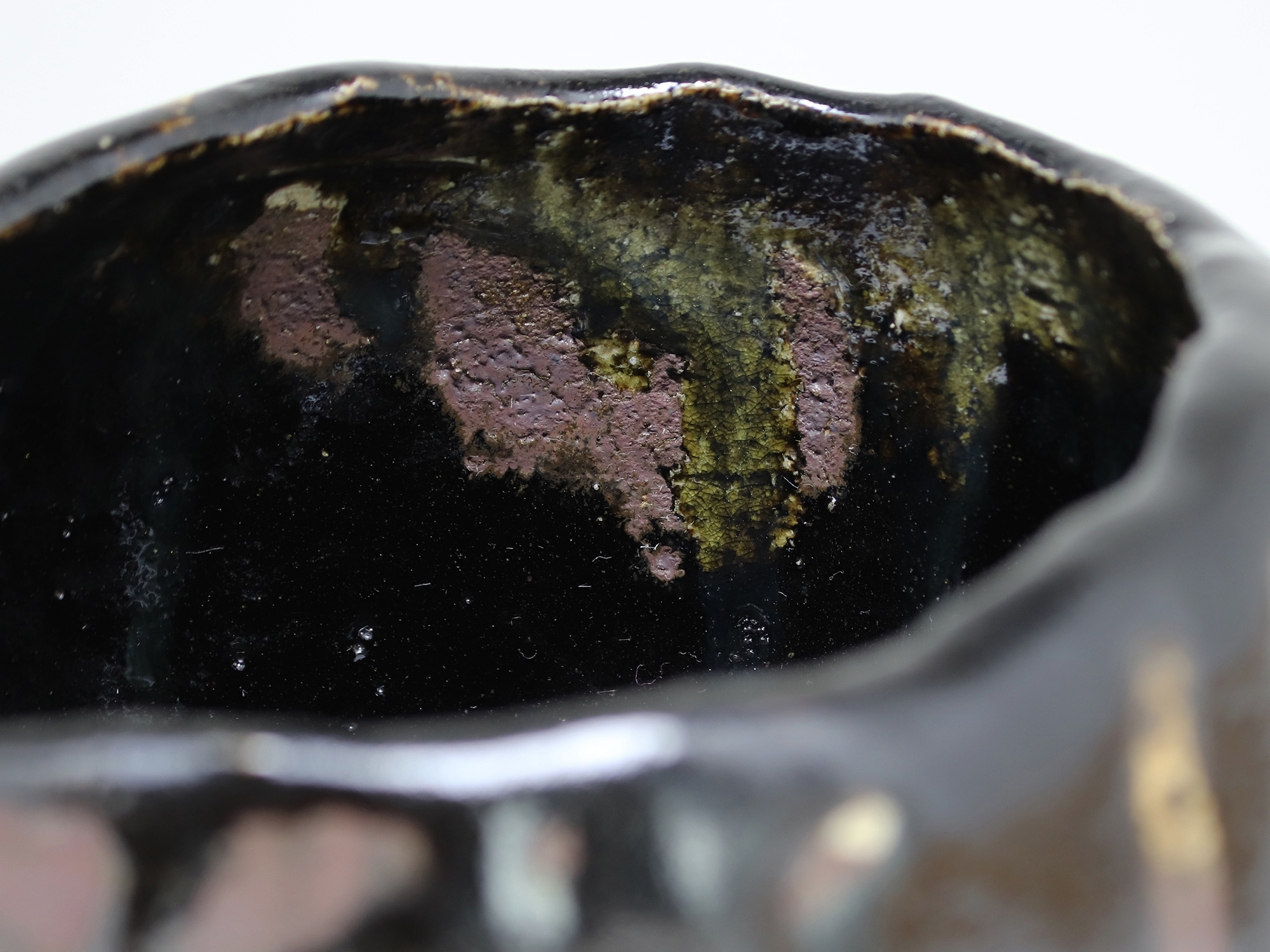
The makugusuri technique was developed by Raku Dōnyū III in the seventeenth century and subsequently explored by later generations. Although the technique has been transmitted within the Raku family for centuries, its glaze formulas are not: each generation develops its own through experimentation. Jikinyū’s makugusuri is notably thick and lustrous, with a textured yuzuhada, or “lemon-peel skin,” surface.
In Usokuseki, areas around the rim were deliberately left unglazed or treated with ash glaze made from the binchōtan oak charcoal used in firing. Elsewhere, portions of the black glaze fell away during firing, exposing the yellow slip and white clay beneath. Jikinyū describes this unpredictable process as “accidental intervention”, an effect he initially regarded as a failure but subsequently explored as a pictorial element. The resulting passages of black, brown, cream, and gray transform a centuries-old glazing technique into a surface that could never be entirely predetermined or repeated.